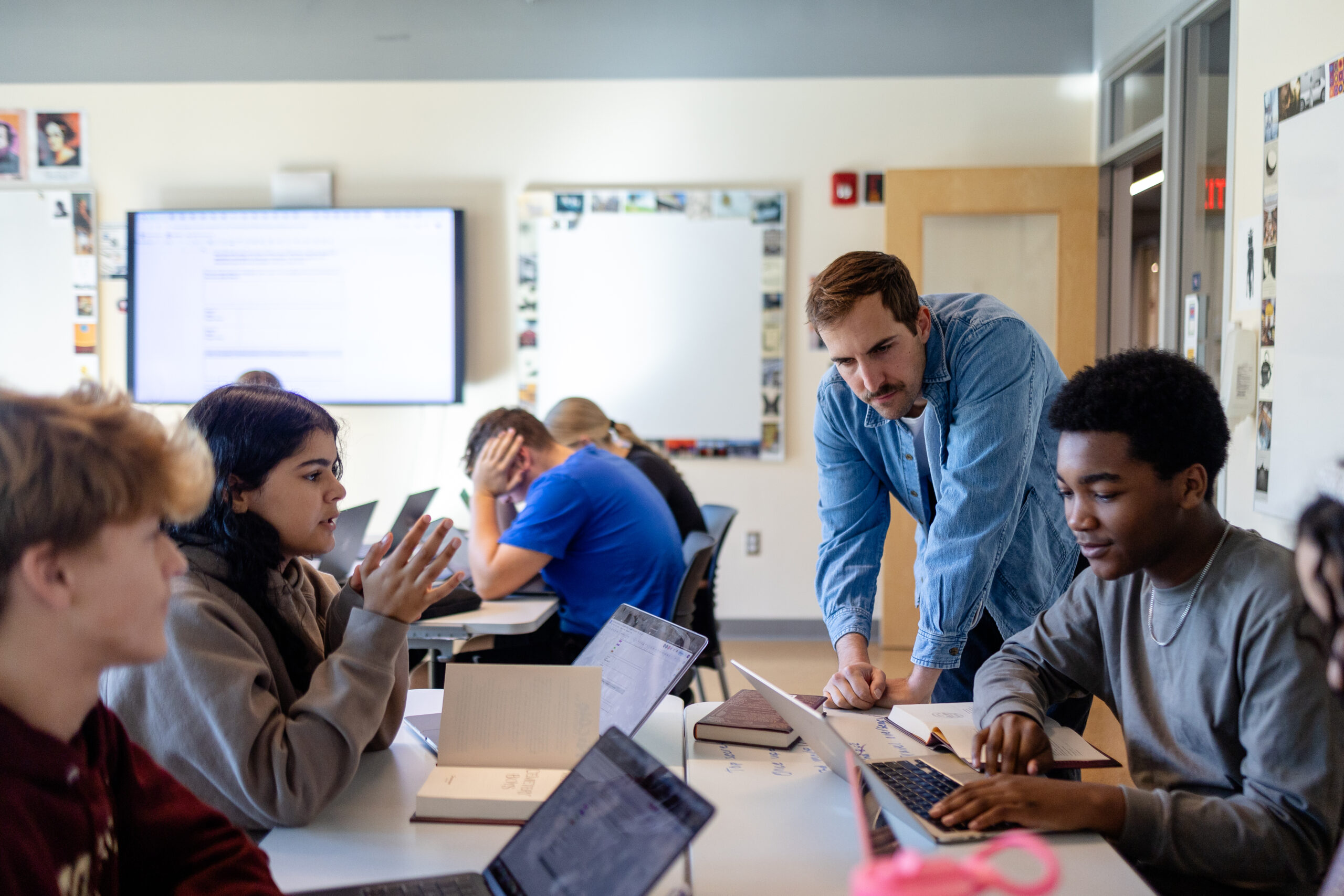
A noisy classroom might seem at odds with studying literature, but Perry Eaton argues it’s exactly what the discipline demands. As an Upper School English Teacher and English Department Head, Eaton strives to create an environment where conversation and collaboration are the primary tools used to explore English. This approach empowers students to develop their voice, challenge their worldviews, and shape their own philosophies.
Eaton works with both Upper and Middle School teachers across disciplines to design learning experiences that stoke curiosity and encourage deeper learning. From writing essays exploring identity to creating Zillow listings for fictional estates, Beaver’s English department tasks students with approaching the topic from all angles.
In the interview below, Perry Eaton discusses Beaver’s approach to English.
How would you describe Beaver’s approach to teaching English?
The English curriculum is centered around the building of essential skills and the repeated practice of those skills, with students receiving detailed feedback and coaching and having the opportunity to iterate based on this feedback. While there are a number of skills of focus, paramount among them are analytical writing, creative writing, active reading, and discussion.
Our teachers encourage students to access their imaginations and intellects. We help students develop the means of confidently and skillfully expressing and developing their voice both in writing and speech.
Perry Eaton, English Department Head, Upper School English
The reading list at Beaver evolves every year based on student feedback and aims to reflect a diversity of perspectives and interests, giving us the chance to explore various parts of our identities, be culturally responsive, challenge our biases, build empathy, and grapple with novel language and concepts. The idea of a “text” can take a number of different forms in a Beaver classroom, including both contemporary and canonical fiction and non-fiction; plays, scripts and poems; and even film, music, and other forms of media, allowing us to challenge and expand what it means to be a “classic.” Through writing, discussion, and collaborative projects, students are not only able to make connections within these texts, but are able to apply concepts from them to the real world. And students are assessed in ways that both build skills and allow them to use their creativity, their hands and their imaginations, and to tell stories of their own.
How do Beaver English teachers expand learning outside of the classroom, helping to show students how concepts can be applied elsewhere?
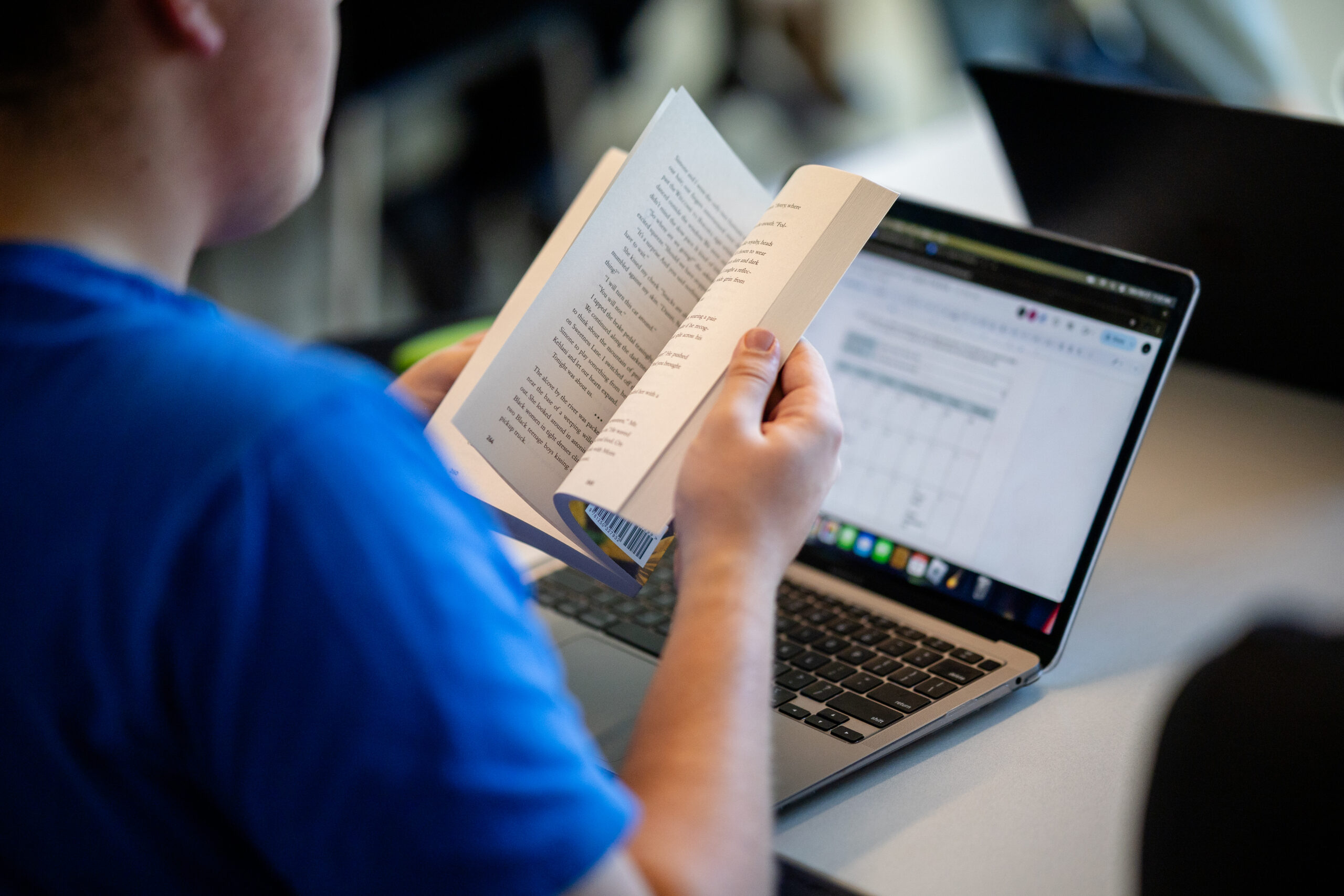
Even within the classroom we strive to build an environment where students feel comfortable sharing their voice, but whenever possible, we aim for students to write and create for an audience beyond the classroom. This could mean a storytelling and social change workshop where students share their short stories that they have written and facilitate a community dialogue. It could mean trips to Haley House where students are able to share writing about the role that food plays in their identity. Or it could mean students crafting “This I Believe” narrative essays and displaying them for the school community as a means to share wisdom and advice that they have gathered in their lives. Students are encouraged to submit their writing for outside consideration as well. For many this has meant recognition in the annual Scholastic Writing Awards, registering their own original screenplays with the Writer’s Guild of America, or publishing in Beaver’s own literary journal The Heliconian.
In my English classes, I aim to create spaces where students can disagree, can share what’s really important to them, and can find authentic ways to bridge our topics of exploration to what they care about in the world beyond Beaver.
Perry Eaton, English Department Head, Upper School English
What assignments or projects highlight the department’s approach to teaching?
One great example in middle school is a novel engineering project that is assigned while reading The Boy at the End of the World, a story about a character named Fisher navigating a post-apocalyptic Earth. Students are tasked with identifying a “need” for Fisher’s survival, and then prototyping, designing, and building a product that will address this need. Students then use evidence from the text to include in a Shark Tank-style pitch that they deliver to a panel of “investors” who, in the end, will provide funding to these various creators and their products. The project is a great example of combining literacy skills with design thinking.
In the Upper School, the 10th grade Hyphen-Nation project is a chance for students to consider which parts of their identity fit the mold of a stereotypical American and which ones feel unreflected by American culture in comparison. Students learn how to make stop-motion animation as a means to tell visual stories about these various parts of their identity. While reading The Great Gatsby, students have the opportunity to identify and examine an American myth that is found in the story and make a case for its ongoing relevance. Students have created everything from true crime podcasts about Daisy Buchanan to a detailed Zillow listing of Jay Gatsby’s mansion.