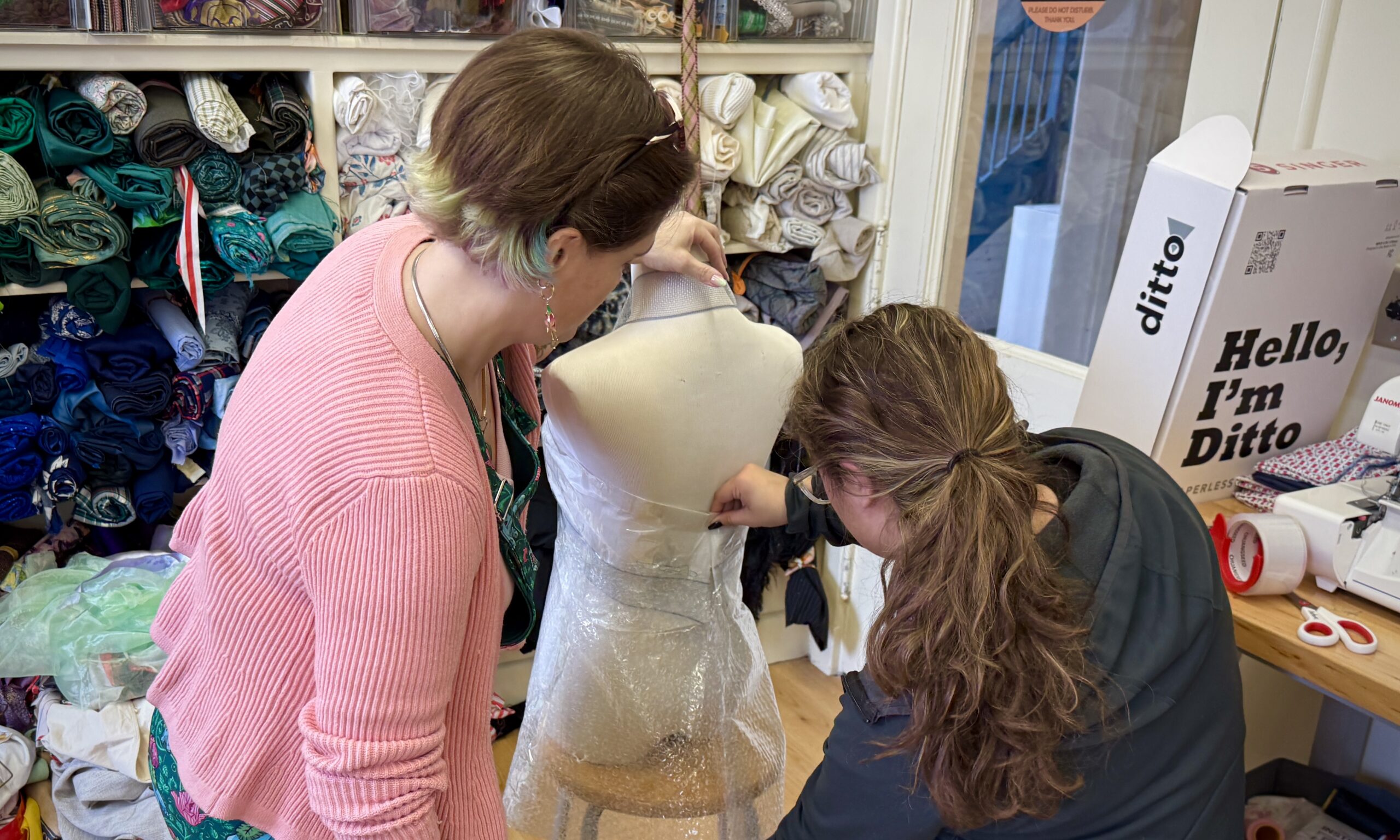
Tucked away two floors beneath the stage of Bradley Hall, Bethany Eddy’s costume studio is one of many hidden gems on Beaver’s campus. You can hear the space before you see it—the hum of sewing machines, the snip of scissors, and endless conversation. But the true magic is what happens inside the studio. At any given moment, one can look in and see students working on a variety of projects all at once: adding the finishing touches to a costume for an upcoming musical, sewing a dress to wear to graduation, or researching fashion history for an SDP.
“Most students will opt to work with each other, even if they are working on separate projects,” Bethany says. “I find that students really enjoy being down here somewhat because it feels like a separate space.”
There is no greater example of the costume studio in action than Costume & Fashion Design Studio, a course that meets in the space every day each term to explore the world of design. Through student-driven, project-based work, the course empowers students to develop fundamental skills such as pattern making and sketching while becoming comfortable with the research, planning, and iteration essential to the design process. In addition to exploring their own fashion interests, students also gain experience working for clients when designing for various performing arts productions.
I first took Costume & Fashion Design when I was a freshman and I’ve kept taking it because I love the creative freedom. I’ve always been into art and fashion, so being able to explore that in an academic setting is fun.
Anisa Singh '26
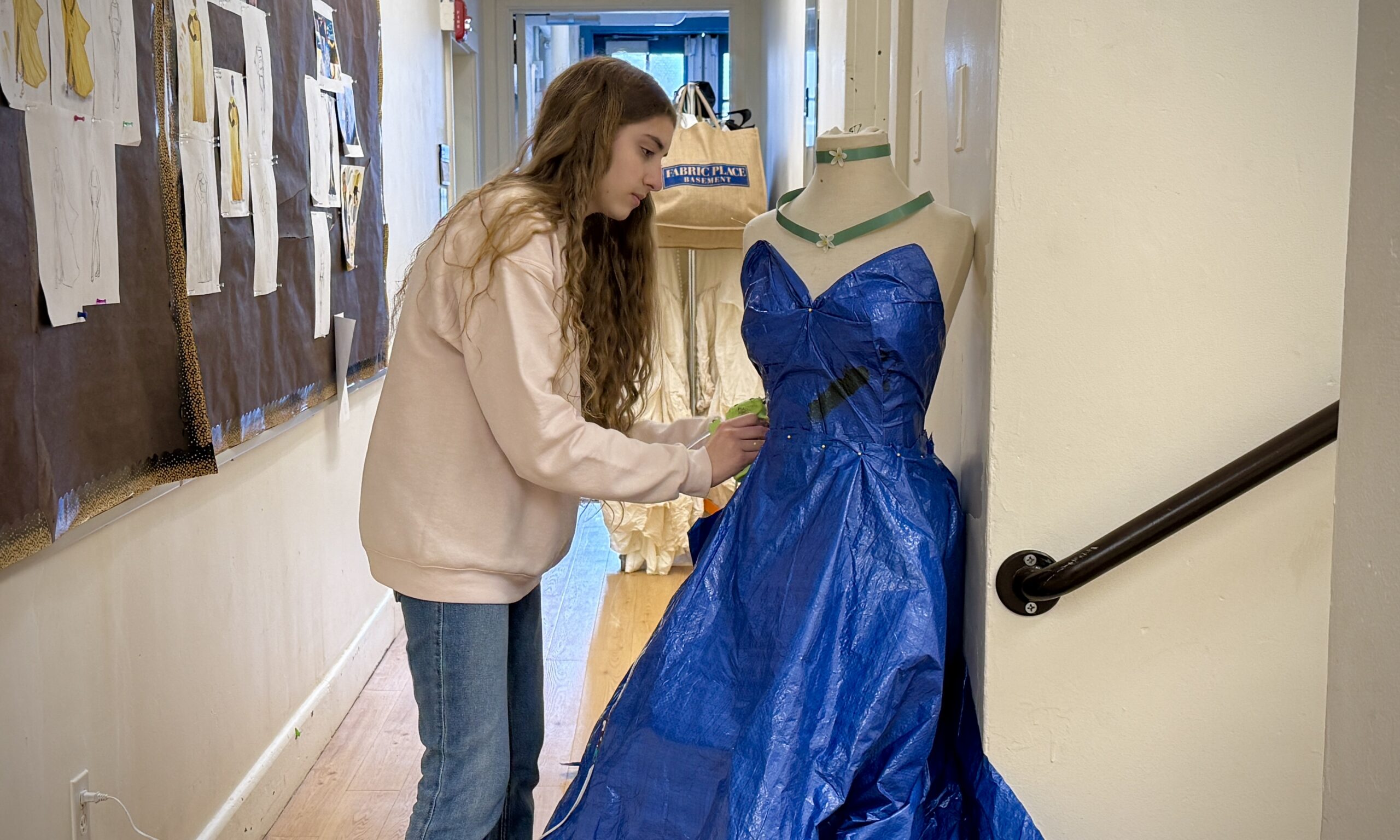
In their first assignment of the spring term, students were tasked with constructing a garment entirely out of recycled materials. After searching through the materials library on the Design Level, students quickly got to work strategizing how best to turn materials such as bubble wrap, trash bags, and tarps into ready-to-wear pieces. The assignment also prohibited sewing, encouraging students to invent alternative methods of construction.
Removing traditional techniques and materials requires a certain amount of flexibility and adaptability from the designer. This project engages students from an engineering perspective, knowing that they have to make something that is structurally sound through a creative method. In this way, it also shows students how interdisciplinary costume and fashion design that can be.
Bethany Eddy, Costume Designer and Teacher
The class leveraged creative solutions to address the countless challenges they faced. In one instance, a student created a makeshift belt out of rubber tubing and a bolt. In another, transparent tape was made opaque through a process of layering. As Anisa Singh ’26 states, the assignment was all about “problem solving and figuring out that there are a lot of materials to use.”
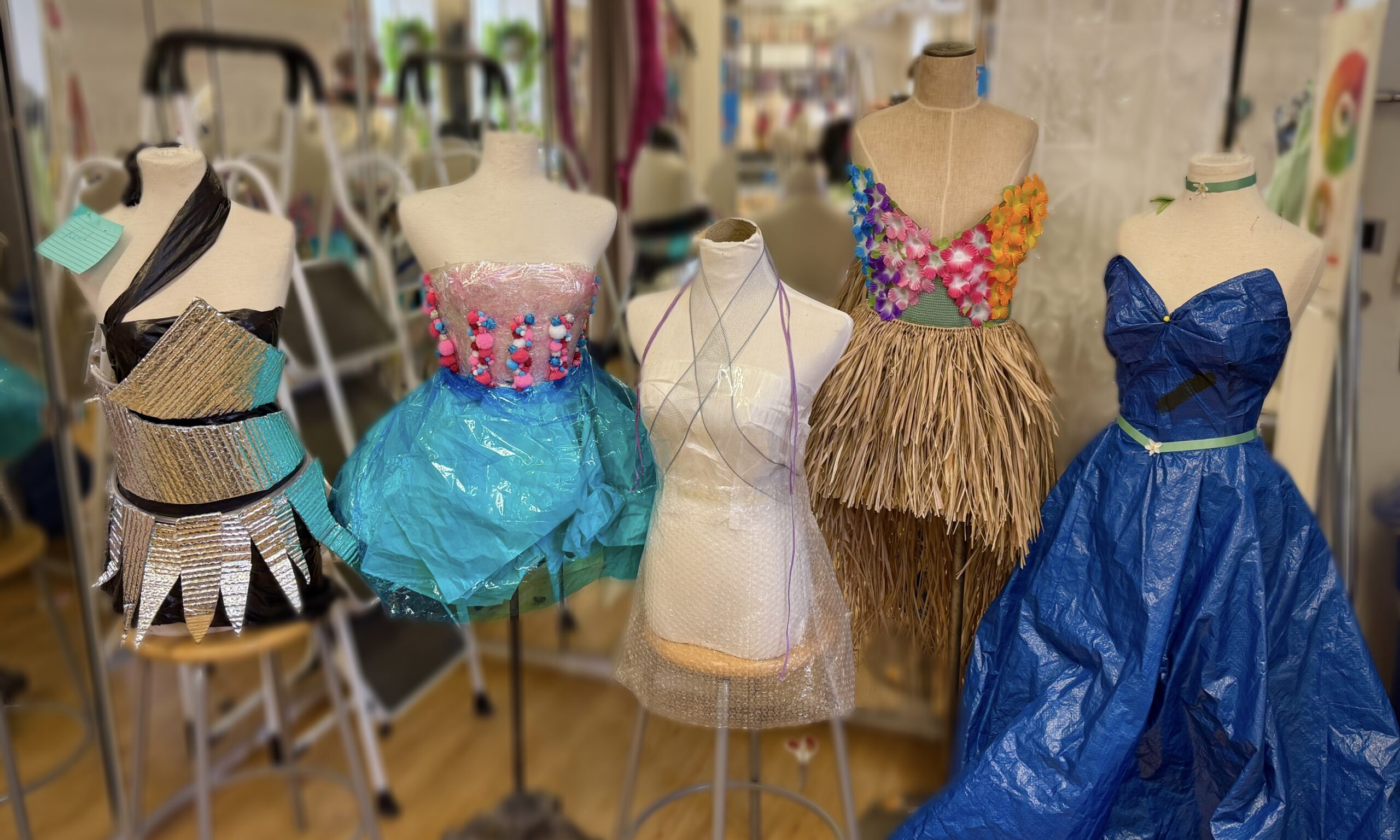
Each student found opportunities to communicate their perspective through the work. Reflective insulation material reminded one student of David Bowie, leading her to adopt a spiky, performance-inspired silhouette. Another leaned into his nature-based materials by creating a tropical look. As Margarita Zalcman ’28 shares, “I wanted to stray away from classic designs. This project is all about trying something new.”
Students will continue to use the skills developed during this assignment—and across multiple terms of the course—throughout the spring term.
The design and construction of clothing are very different skill sets that live in a close space together. It is one thing to have an idea, but it is a very different thing to then bring that idea to reality. Throughout this project, students get to experience the full range of design and construction.
Bethany Eddy, Costume Designer and Teacher