The following blog post was written by Ava Restuccia ‘27, BeaverAUV’s Head of Business and Operations, following the team’s trip to the RoboBoat competition in Florida.
Beaver’s robotics team took a step in a new direction this year. After years of competing in RoboNation’s RoboSub competition, we took on a new challenge by transitioning to RoboBoat.
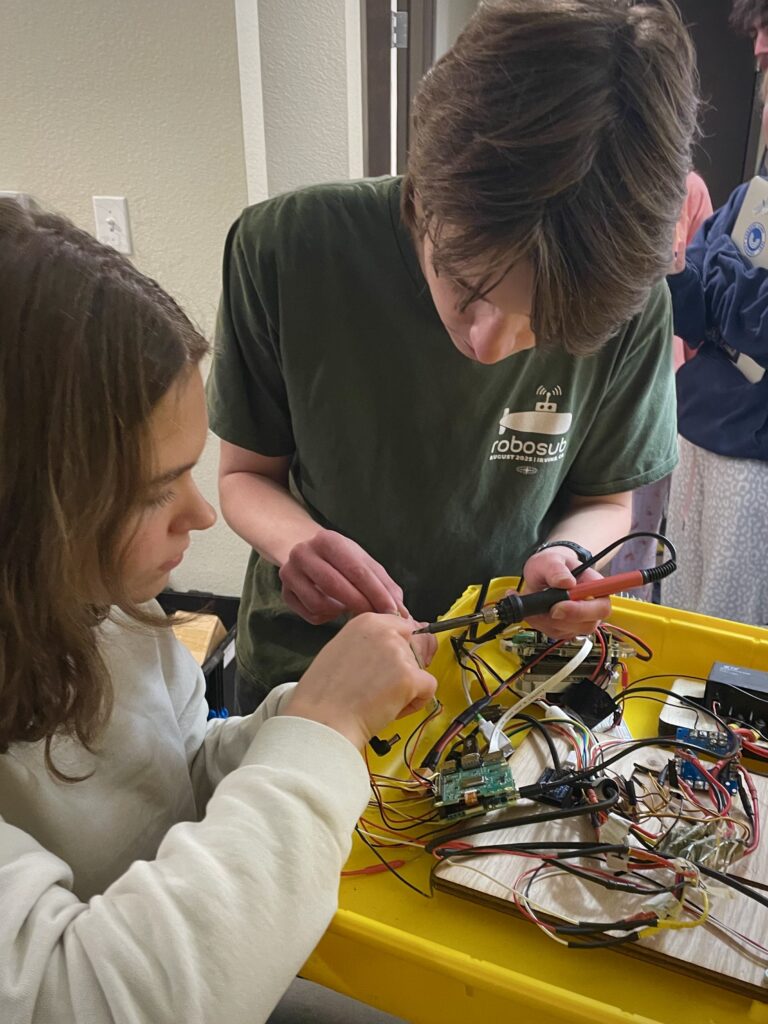
At first, the change was not easy. As Matthew McAdam ’27 explained, “when I first learned that we were going to stop participating in RoboSub and were going to move to RoboBoat, I was a bit upset; I wanted to improve on the robot that we had and not build a new one.” As we began to plan and construct a new robot, the perspective started to shift. Matthew reflected that he “began to realize that I would learn a lot more about robotics, electronics, software, and engineering from the experience of building a new robot from scratch.” That process pushed all of us to understand robotics on a deeper level. Instead of focusing on just one part, we had to see the full system, making the experience more challenging but also more rewarding. It has also allowed us to gradually build a program that can be passed down through future generations of Beaver students.
“I’ve been extremely impressed and excited by the growing student interest and involvement in Beaver AUV. It’s wonderful for our robotics program to expand across the school and attract such a diverse and talented pool of students.
Blake St. Louis, BeaverAUV Advisor
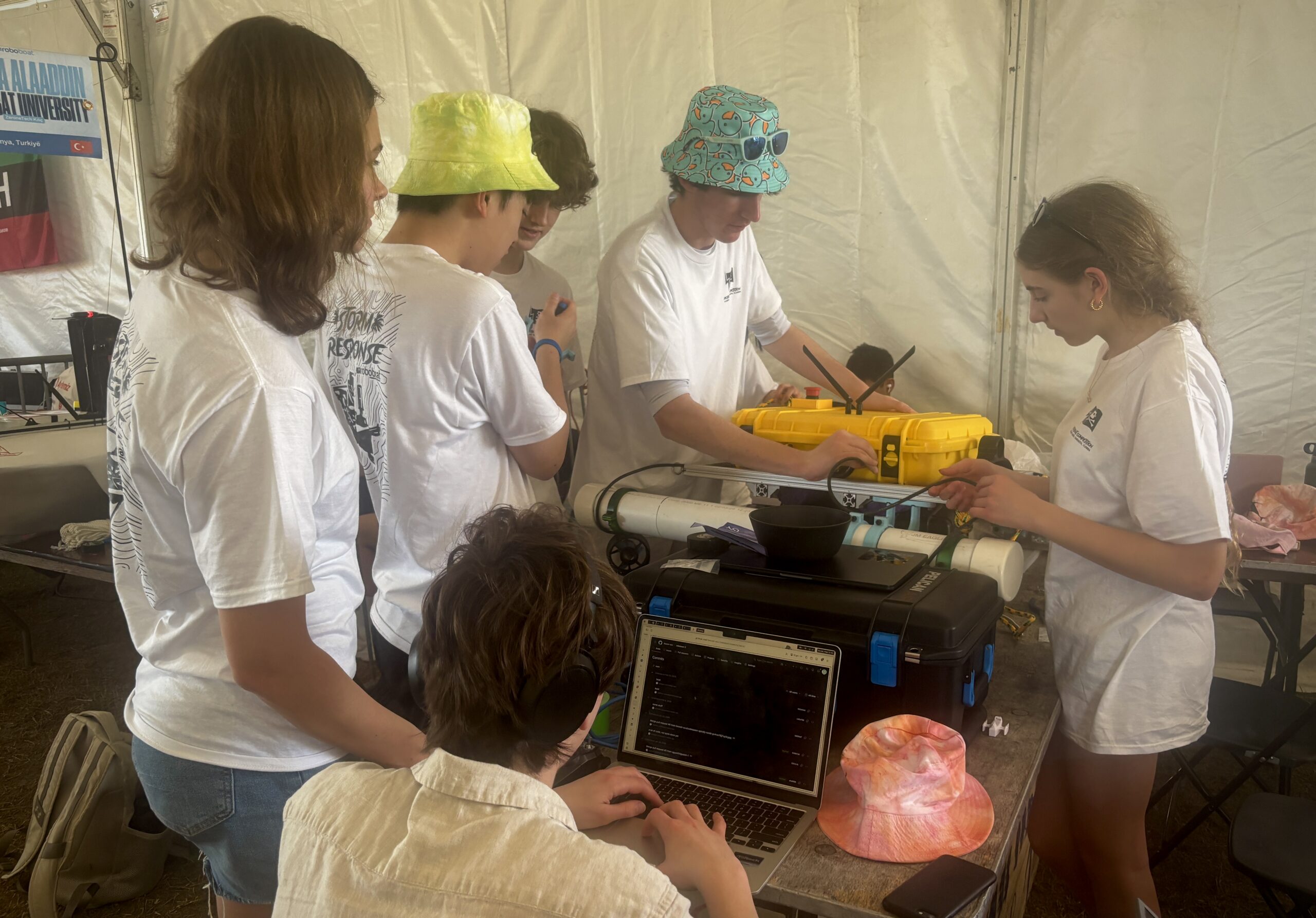
 The competition in Sarasota, Florida brought our learning into a real-world setting. Held at Nathan Benderson Park, the event brought together dozens of teams from around the world with different designs, strategies, and levels of experience. Each day was a mix of long hours, constant adjustments, and quick problem solving. Despite RoboBoat being a competition, the environment was very collaborative, with teams helping each other troubleshoot, sharing ideas, and supporting one another throughout the week.
The competition was built around a series of challenges such as navigating through obstacles, docking, and identifying objects, all without human control. That meant that even small issues—like a sensor misreading or a delay in communication—could completely change how the boat performed. Outside of the runs themselves, there were also presentations and technical evaluations where we had to explain our design, decisions, and overall approach. These moments were just as important as the time on the water, pushing us to clearly communicate our ideas and think critically about the system we had built.
Competing in RoboBoat involved constant problem-solving and adapting. Matthew shared one moment where he was having trouble getting two of our computers to communicate over the network that we used for our robot. His solution was to create a new network just for the computers on the boat, simplifying communication and making the system more efficient. Experiences like this made it clear just how much the new, competitive environment of RoboBoat pushed us out of our comfort zones, bringing out the best in us.
RoboBoat wasn’t only about engineering; for many of us, it was also about stepping into new roles and trying new things. Margarita Zalcman ‘28—a member of the Business and Operations team—shared that before joining, she barely knew anything about robotics or the business aspect of the competition. Through the team, she learned “what it means to help manage a team, organize community events, [and develop] presentation skills.” She also emphasized how joining the team encouraged her to keep trying new things, which led her to attend the competition in Florida.
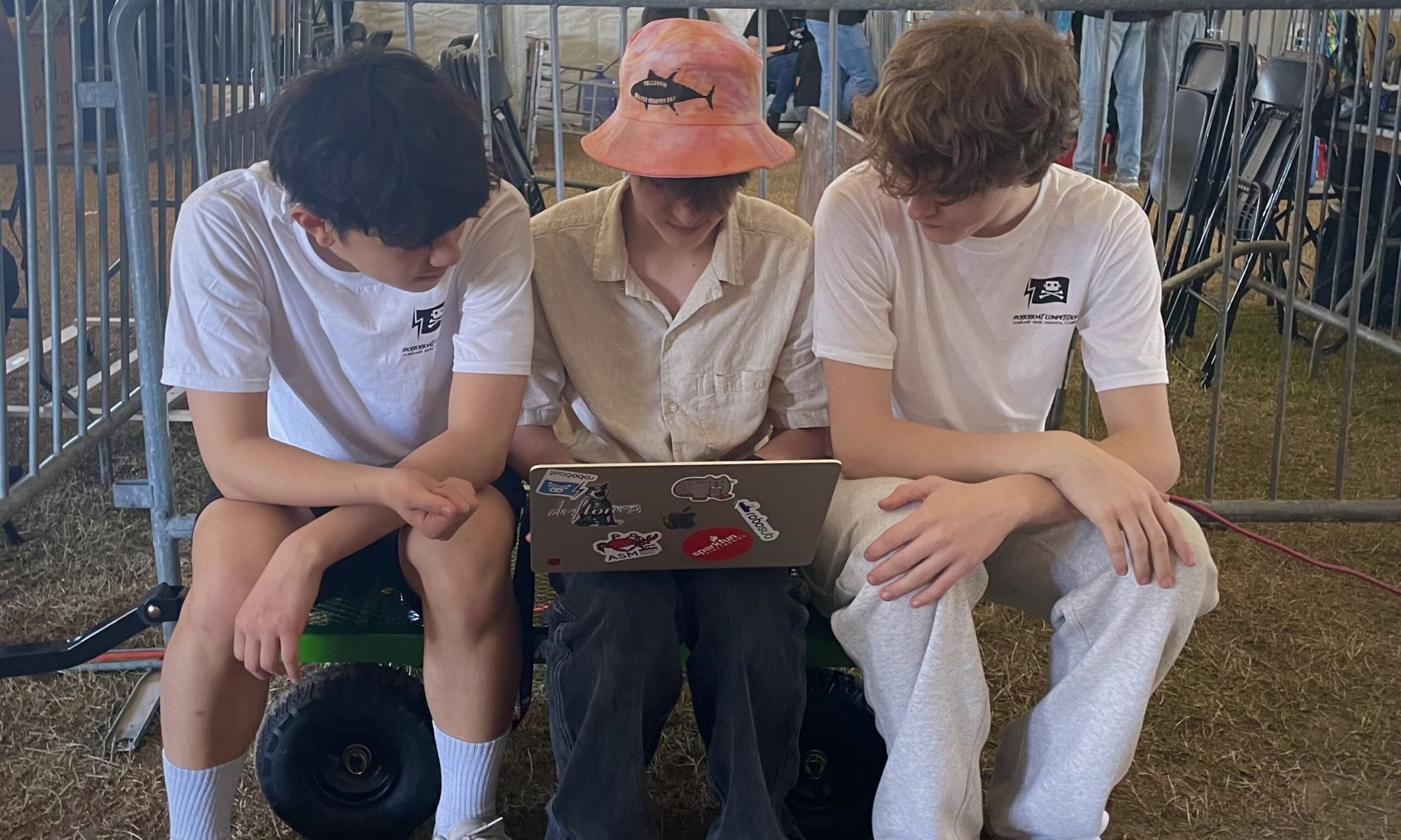
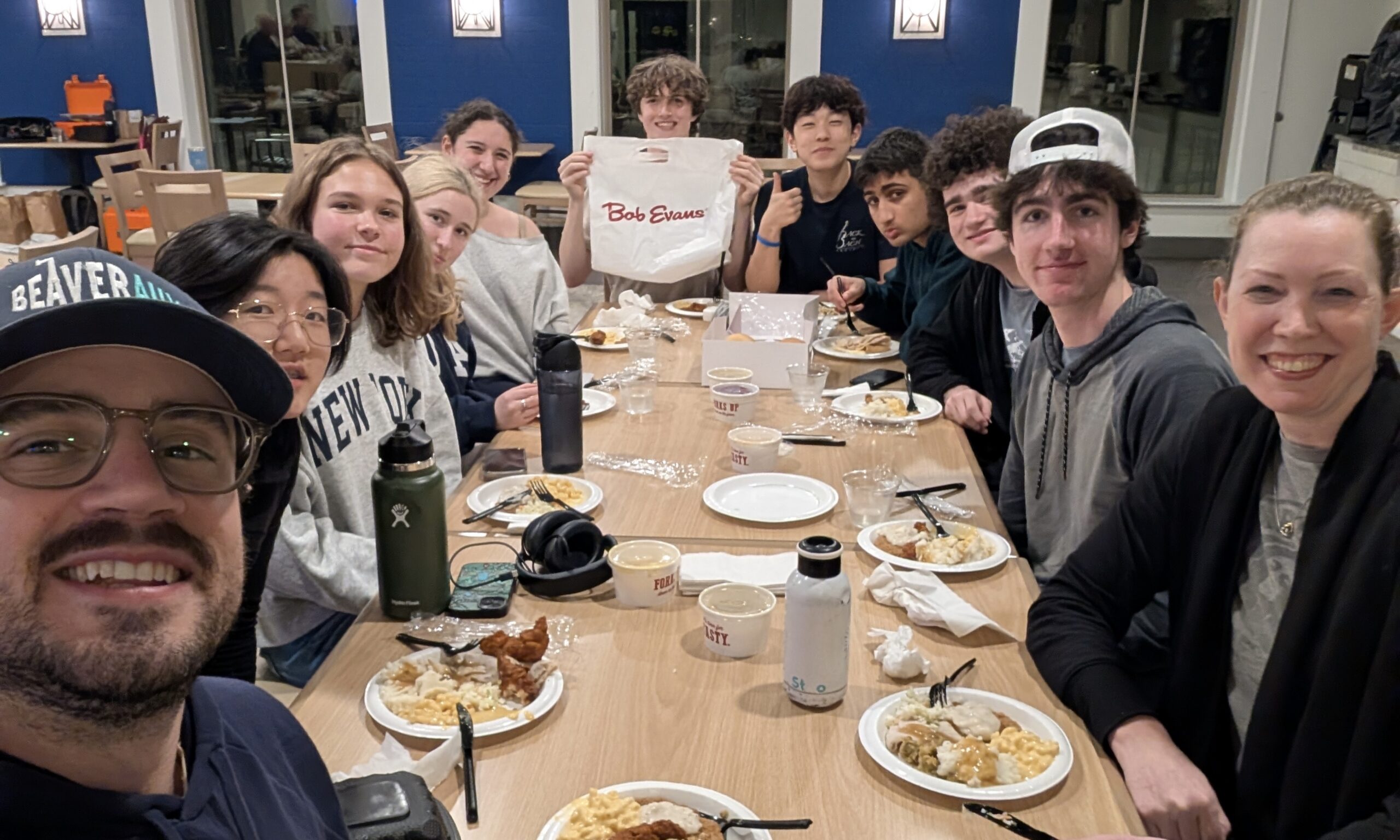
Beyond the technical work, the competition was also about connection, meeting other teams, strengthening communication skills, and feeling part of something bigger. Some of the most memorable moments came from long-standing team traditions—like hosting big family-style meals—as well as newer traditions, like screen-printing matching bucket hats.
One of my favorite parts of this trip is not only seeing the team collaborate on the robot, but also how everyone comes together in the downtime as well, over shared meals and shared stories. This greater sense of camaraderie inevitably translates to a more cohesive group willing to help and celebrate each other through the ups and downs of the competition.
Morgan Muschamp, BeaverAUV Advisor
The RoboBoat program has been one of the most rewarding experiences I have had in my time at Beaver. It gave all of us the opportunity to build real-world skills that we will use long after high school, whether in the field of robotics and engineering or in leadership positions. During our week in Florida, the eleven of us worked closely together, collaborating with industry professionals and students from top universities while fine-tuning our boat through mechanical assessments and late-night autonomy testing. At the same time, simple moments—like a few intense games of Uno—helped us truly come together as a team. Looking back, the transition from RoboSub to RoboBoat challenged us in ways we didn’t expect. But it also helped us grow in ways we couldn’t have otherwise.
What started as uncertainty became an opportunity to learn more, work harder, and connect as a team. And, since this was only our first year, it’s clear that we’re just getting started.