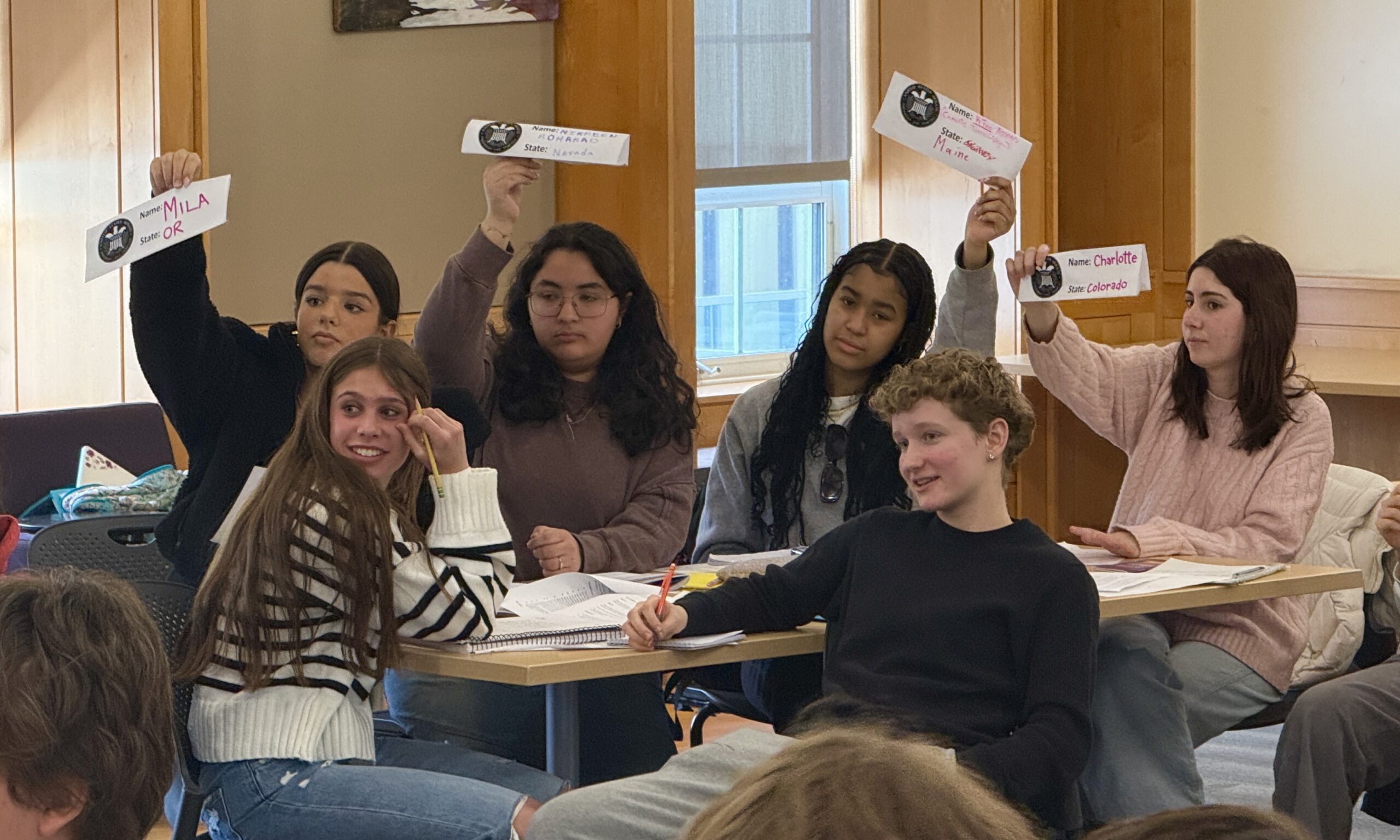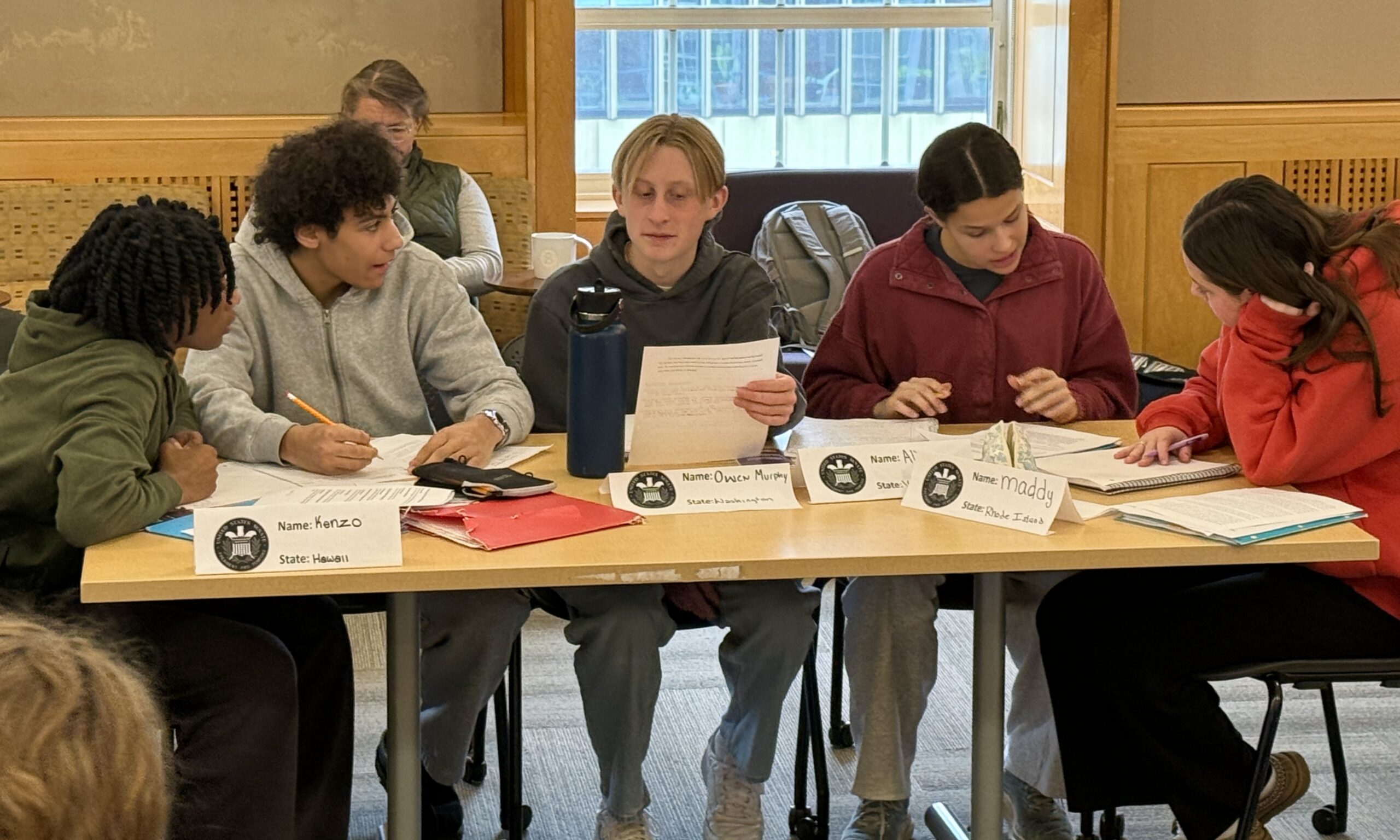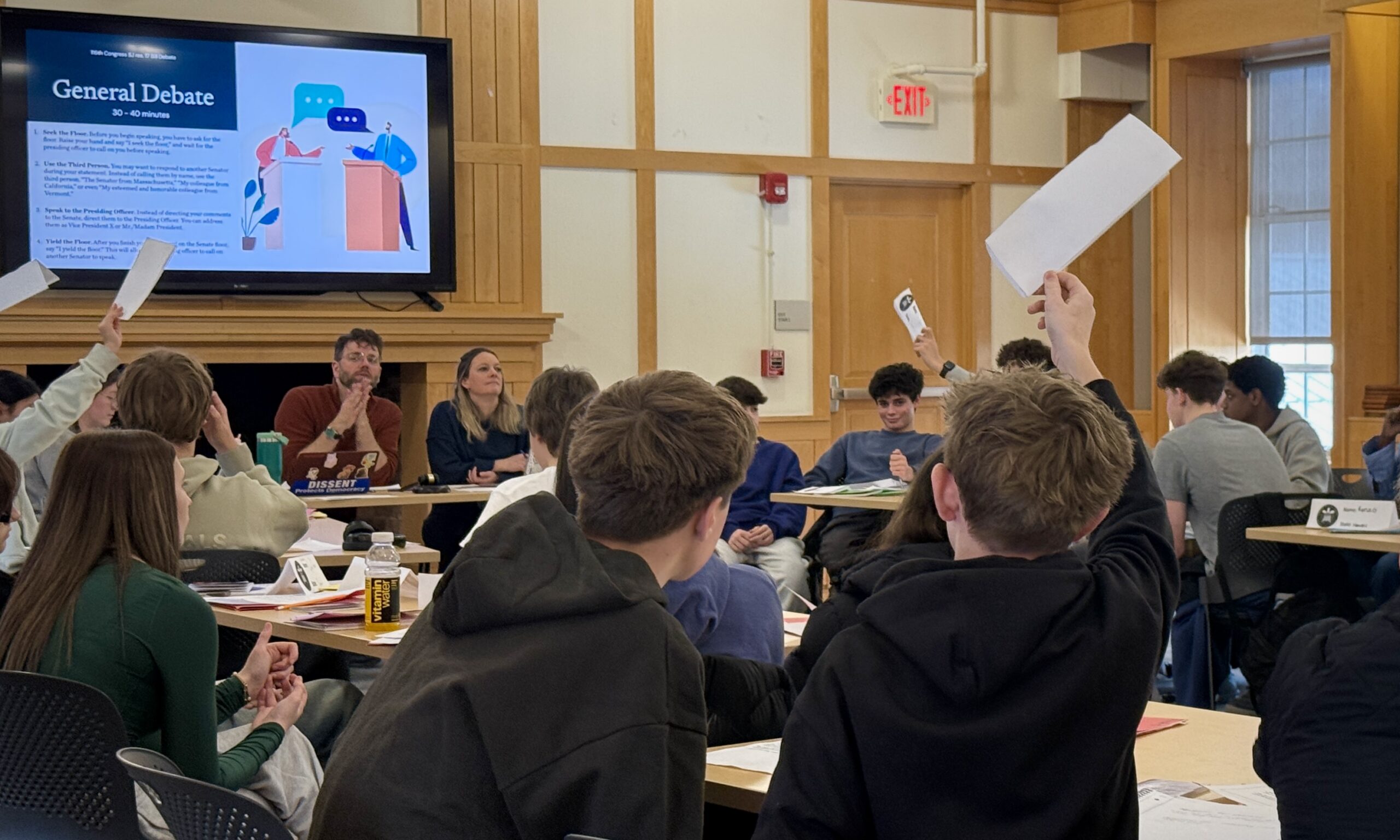
The Rogers Room became the setting for a mock Senate debate as Nation and Nationalism students wrapped up their unit on the Electoral College. Arguing for the stances of their assigned states, students debated Electoral College reform and experienced how legislators form arguments, advocate for the interests of their states, and cast votes in official proceedings.
Before this project, I mostly thought about whether the Electoral College was “fair” or “unfair,” but being in the role of a Senator made me realize how many different factors influence the debate, including state interests, party priorities, and historical context.
Student reflection
Prior to the mock Senate debate, students used their research skills to gain a deeper understanding of the Electoral College. An emphasis was placed on connecting the system’s history and intended function to its presence in contemporary politics. “We used this site called NoodleTools to research,” says Lyra Yassa ’29. “I think that was a really helpful way to track information and keep all of the sources and notes organized.”
Students continued their research when choosing states to represent in the debate. By researching the major industries, legislation, and voting data of their assigned states, students began to formulate arguments about Electoral College reform that reflect the unique interests of their constituents. “We made the purposeful decision to assign only states and not political parties,” mentions Global History teacher Edward Henry. “We wanted students to delve beyond party platforms and into the social and historical arguments around our voting system.”
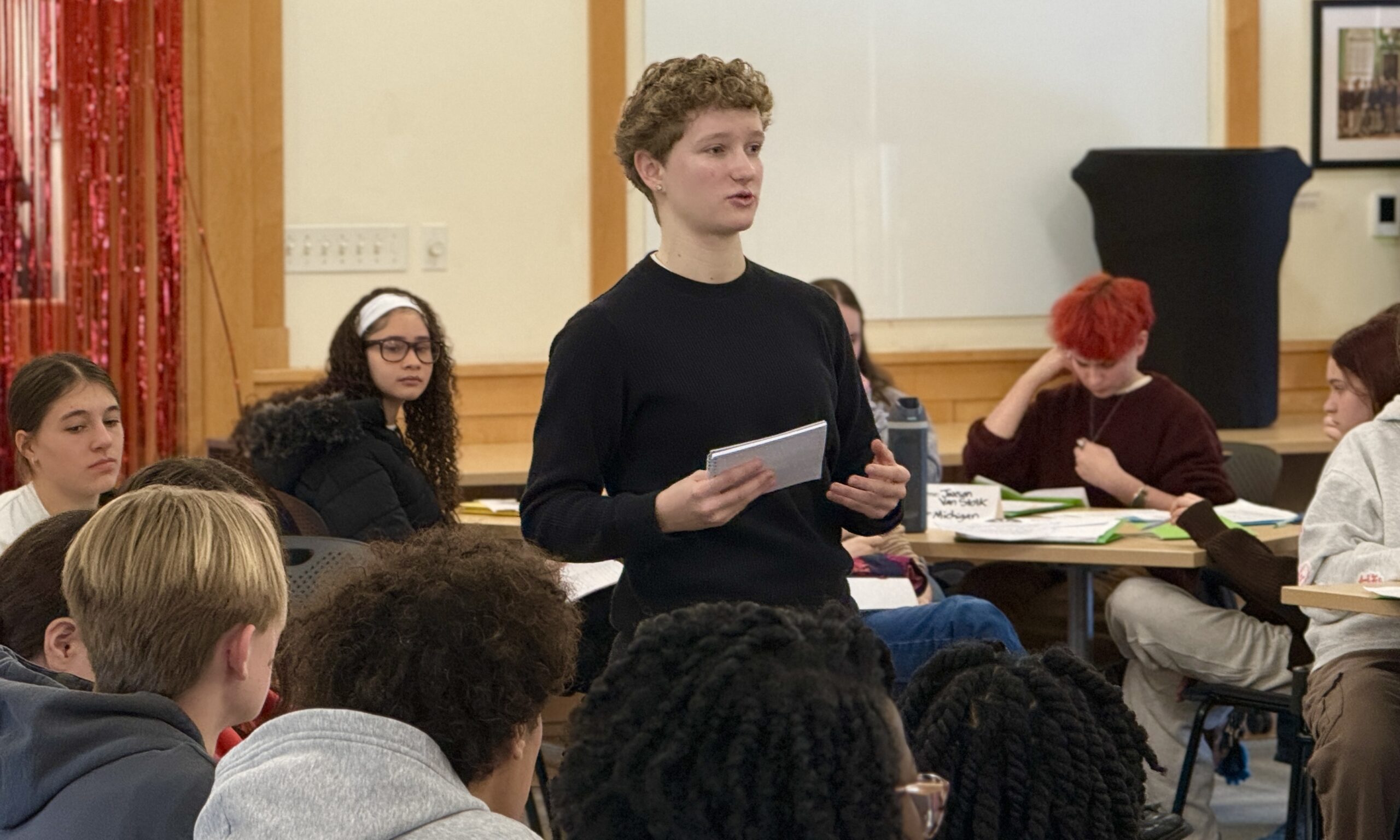
The class arrived to the mock debate eager to apply their research. In order to accurately simulate a Senate proceeding, students adhered to the formal conventions of the Senate such as timed debate, floor recognition, and official voting procedures. Each student had the opportunity to engage in the debate, often collaborating with their caucuses to revise arguments, formulate new ones, and execute strategies to advance their states’ interests. The debate ended with an official vote in which the proposed Electoral College reform did not pass.
I learned that it’s extremely important to speak up when you have an opinion rather than just writing it down in your notes. The ideas I had written in my notebook were never going to be heard if I didn’t take the opportunity to share them. Participating wasn’t as scary as I thought it would be, and it actually allowed a new perspective to be added to the conversation that could influence others.
Student reflection
By exploring the Electoral College through a mock Senate debate, students were empowered to take ownership of their learning and think critically about how legislators formulate arguments to advocate for their constituents. The experience also reinforced the value of in-depth research, public speaking, and collaboration, tools students will continue to use in their next history Global History I course, Age of Reforms.