Science at Beaver: An Interview with Sam Coughlin, Science Department Head

Posted on December 5, 2025

For Sam Coughlin, science education is defined by relationships: the relationship between student and teacher, the relationship between scientific principles and real-world applications, and the relationship students develop with making mistakes and iteration. As an Upper School Science Teacher and Science Department Head, Coughlin works to strengthen these relationships in her own classroom and across the department.

Coughlin collaborates across disciplines and grade levels to ensure students see science in all contexts. From Organic Chemistry to Engineering to Astronomy, students can expect the same approach regardless of the topic, with an emphasis on developing foundational skills and applying them to hands-on experiences.

In the interview below, Sam Coughlin discusses Beaver’s approach to science.


What informs your approach as an educator?

It’s my job to build a relationship with each one of my students and provide them with opportunities to become informed, ethical, and compassionate citizens of the world. Every decision I make in my classroom recognizes each student as a person who deserves individual respect. Science is hard work, and it’s my hope all of my students are engaged in that work each day as they come into my classroom.

We learn best through risk-taking and mistake-making, and it’s my job to cultivate a classroom that encourages these practices.

Sam Coughlin, Science Department Head, Upper School Science

Science class is a medium in which to teach lifelong abilities. In order to fulfill my mission to educate the whole student, I need to give my students skills that will translate to whatever path they take after my class. My work as a science teacher is to demand excellence in science reasoning and problem-solving. Much of my practice is informed by a constructivist lens, and my students participate in hands-on, project-based learning.

How would you describe Beaver’s approach to teaching science?

The science department designs its classroom experiences with three cornerstones in mind:

  • Diversify to meet the needs and interests of our students. We are consistently asking ourselves, “what does this student need to succeed?”
  • Focus on challenge through deeper learning. Deeper learning requires much more knowledge and agile thinking. Compare the complexity of the task to more traditional ones, and you see how deeper learning is more engaging and complex and promotes adaptability.
  • Connect to the broader community. We want students to think “where do I see this show up in other classes? What about outside of the classroom?”
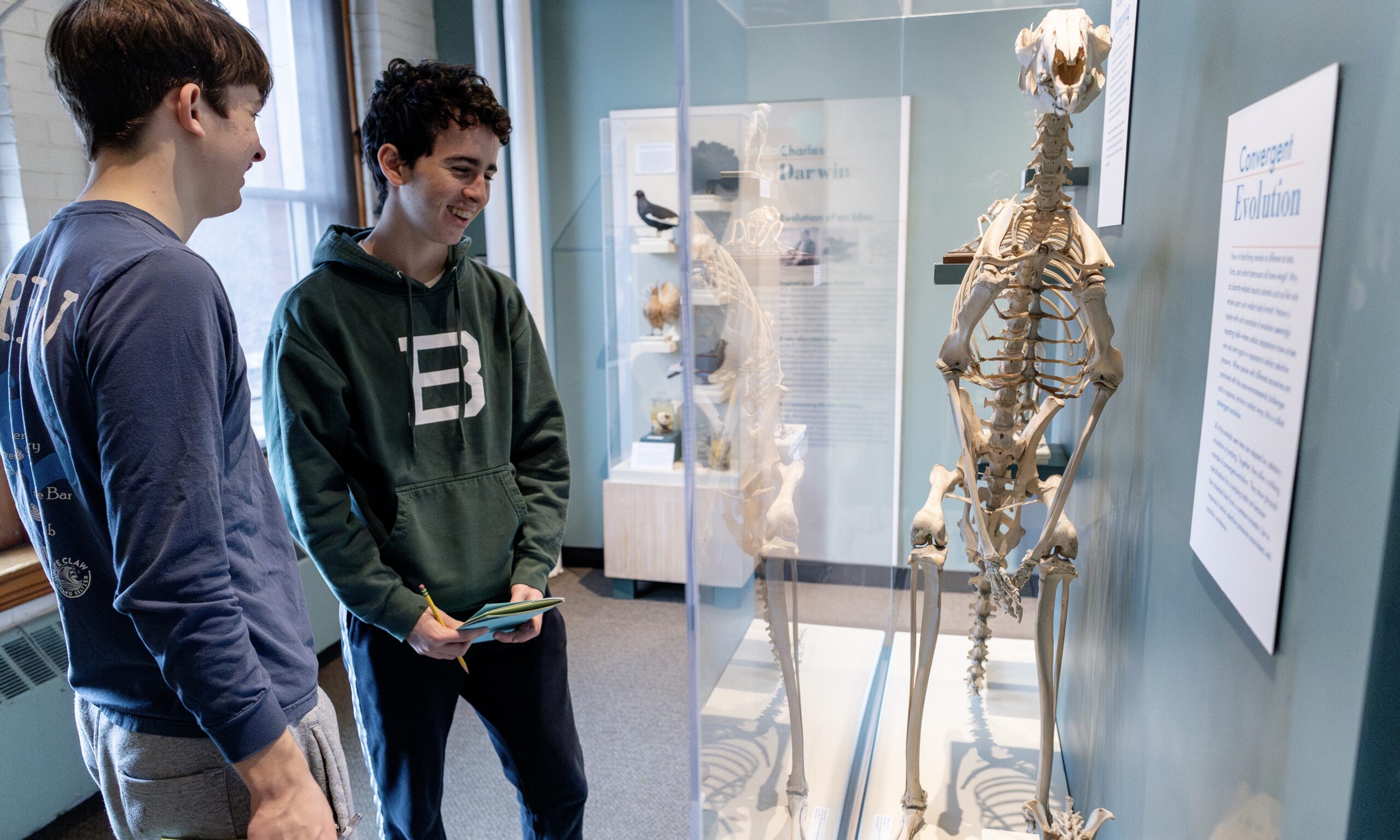
Beaver science teachers intentionally design our curriculum informed by the larger community. Every science class at Beaver asks students to see themselves in science as well as make connections to larger community topics and issues.

Sam Coughlin, Science Department Head, Upper School Science

How do Beaver science teachers expand learning outside of the classroom, helping to show students how science can be applied elsewhere?

All of our Middle School classes are based around a theme; 6th grade is Science of Place, where students learn about how we can use scientific processes to understand the world around us. A great example of this is their Fall Foliage experiment, which tasks students with designing an experiment and then use the trees on campus to test their hypotheses. 7th grade is Science of Self, which allows students to learn about the science of different body systems and see themselves in the curriculum. 8th grade is Current Global Issues in Science, and the name says it all. Students learn about topics ranging from plastic pollution to space exploration, and they learn how to research and understand current science issues affecting our world.

In the Upper School, most classes will start by learning the scientific concepts and principles that relate to their unit of study. Then, students are asked to apply these scientific ideas to a specific issue or to accomplish a project-based task. An example of this is in Chemistry Foundations, where students apply their knowledge of molecules and chemical reactions to research an environmental chemistry justice topic. Students learn about issues ranging from the Flint Water Crisis and water contamination in Woburn to bus idling in Boston to uranium mining on Native lands.

We also have a variety of community partnerships as a curricular component to our advanced science courses. Anatomy and Physiology participates in weekly medical simulations at Harvard MedScience. Molecular Research partners with BioBuilder to learn the skills and tools of molecular research by designing and executing CRISPR experiments in yeast cells. Students in Engineering are partnered with a resident at Hebrew SeniorLife to design with and for the resident, with the goal of creating an artifact that is meant to improve the resident’s quality of life.

What assignments or projects highlight your approach to teaching?

In 9th grade, all students take Physics Applications: Engineering. In that class, students learn about circuits. They do all of the traditional stuff you’d picture in a physics class: notes, practice problems, and a test. Then, we ask students to create a project called “Put Yourself in Lights.” In that project, students are asked to design and build an artifact that represents some aspect of their identity. After they build their artifact, students wire LEDs to light up their work and use Arduinos to code the lights to blink in different ways. This is a quintessential example of the type of teaching that we promote at Beaver. Students learn the surface ideas about circuits, but then they are asked to apply their knowledge to a novel situation—forcing them to engage more deeply with the science ideas and transfer their knowledge to create something new.

Explore science courses

Physics Applications – Engineering

9th
Science
Interests: Design, Engineering, Required Course

This course is the second term of 9th-grade science following the Physics Foundations course. It offers students an opportunity to further their understanding of physics principles through engineering. Throughout this course, students delve into the practical application of physics, specifically focusing on engineering principles such as design, fabrication, and iteration. Students engage in hands-on exploration and experimentation, applying data analysis and feedback to inform their engineering designs. Topics covered include forces, electricity, and circuitry, providing a foundation for understanding how these concepts drive engineering innovation.

Prerequisites: Physics Foundations. Honors level offered only with departmental permission.

[read more]
[read more]

Advanced Biology – Molecular Research Techniques (Honors)

11th, 12th
Science
Interests: Health, Research

This course provides students with an opportunity to learn advanced techniques in molecular biology and their applications in biotechnology. Students delve deeply into advanced topics such as genetic engineering and synthetic biology, with a specific focus on the use of CRISPR technology and the ways in which they can leverage it to explore real-world problems in medicine, agriculture, and more. Students travel each week to the BioBuilder learning lab at Ginkgo Bioworks for an immersive experience in which students learn the skills and tools of molecular research through an ongoing research project. 

Prerequisites: any Chemistry or Biology Applications course at the Honors level and with departmental permission (Biology Applications: DNA & Genetics highly recommended).  Offered at the Honors level only. 

[read more]
[read more]

Student Directed Project – SDP

9th, 10th, 11th, 12th
BVR-X, English, Global History & Social Sciences, Mathematics, Modern Languages, Performing Arts, Science, Student-Directed Projects, Visual Arts
Interests: Architecture, Business, Design, Engineering, Film, Hands On, Health, Law, Literature, Politics, Psychology, Research, Social Justice, Social Sciences, Sports

A Student-Directed Project empowers students to do an in-depth exploration of a topic of interest throughout the term.

The student designs, plans, and leads their research project in collaboration and with the guidance and support of a coach (faculty advisor). It allows students to delve deeper into their passion and to be the designer of their own learning. There is a wide range of Student-Directed Projects; they are multi-disciplinary, non-linear, and most importantly, student-created and led.

That’s what makes them so interesting.

Here are some examples of past projects:

  • Creating an architectural model using 3D architectural software
  • Through their eyes: Photo and interview series of veterans
  • Robosub electromagnetic linear accelerator
  • Acoustic pinger for Robosub
  • Virtual Reality game for visually-impaired persons
  • Creating a concept album
  • Dispute: Landlord-tenant board game
  • Multimedia journalism: Producing a podcast series
  • Perplex: English and Theater Study
  • Sensors and fiber optics: Building a fiber optic dress
  • Haptic technologies: Force-Feedback Virtual Reality
  • Applications of integrals to analytical continuation of functions
Want to learn more about SDPs at Beaver?

[read more]
[read more]

Chemistry Applications – Physical Chemistry

11th, 12th
Science
Interests: Health

This interdisciplinary course explores the physical and chemical properties of matter.  Students learn about the challenging fields of thermodynamics, thermal and chemical equilibrium, acids and bases, and buffers.  In this course, students gain a thorough understanding of how chemical systems behave and respond to external stress through hands-on laboratory experiences and problem sets. Throughout the course, lab skills and writing are emphasized in order to practice effective scientific communication and inquiry-based design challenges.

Prerequisites: Chemistry Foundations and Biology Foundations.

[read more]
[read more]

Chemistry Applications – Biochemistry

11th, 12th
Science
Interests: Health

Biochemistry explores the fascinating intersections of chemistry and biology This course delves into the molecular processes and reactions necessary for life. Students first review the foundations of chemistry while focusing on the importance of carbon as an element on Earth and its role in living things. In this course, students explore a selection of topics ranging from carbon dating, electrolytes and human health, the structure and function of carbohydrates and proteins, and food science, nutrition, and metabolism. Students get the chance to do an independent research project to learn about a personal interest. Honors has an expectation to do deeper level content, more autonomous work and self-learning, and application of mathematics to solve problem sets. 

Prerequisites: Chemistry Foundations and Biology Foundations.

[read more]
[read more]

Biology Applications – Neuroscience

11th, 12th
Science
Interests: Health, Psychology

The most basic function of the brain is to keep you alive. Your 100 billion neurons regulate breathing, heart rate, hunger and sleep cycle. But perhaps what fascinates us the most about the human brain is how it goes beyond these basic functions and generates emotions, perceptions, and thoughts that guide behavior. In this course, we take a deep dive into brain science, exploring everything from the biochemistry of a neuron, to the latest research on psychological disorders such as depression and addiction. Topics in this course include neural anatomy and physiology, synaptic transmission and action potential, neurochemistry, and the impact of substances on the brain. Students have the opportunity to attend the Harvard MEDscience program to participate in the Nervous System patient simulation as part of this course.

Prerequisites: Chemistry Foundations and Biology Foundations. 

[read more]
[read more]

Engineering Applications – Robotics

10th, 11th, 12th
Science
Interests: Design, Engineering

Robots are all around us, in the deepest oceans, tallest volcanoes, and beyond into outer space. This dynamic course delves into the practical and transformative applications of robotics, and is designed to provide students with hands-on experience, technical skills, and a comprehensive understanding of how robotics integrates different engineering fields. Students explore the intersection of engineering and robotics, uncovering the innovative ways in which robotic technologies are applied across different industries. Through a combination of theoretical insights, practical demonstrations, and project-based learning, participants gain the expertise necessary to leverage robotics in solving complex engineering challenges.

Do not take this course if you plan to attend NuVu.

Prerequisites: Physics Applications: Engineering or departmental permission.

[read more]
[read more]

Biology Applications – DNA and Genetics

11th, 12th
Science
Interests: Health

DNA is often referred to as the “code of life.” This course seeks to explore what we know about how our bodies interpret and utilize our genetic code and how our understanding has changed in recent years. Included in this course are discussions of the evolving concept of what a gene is, DNA structure, function, and replication, and how DNA is used to shed light on evolutionary relationships among organisms. In addition, students are introduced to the laboratory techniques that have driven our understanding of these topics, including DNA extraction, gel electrophoresis, PCR, and bacterial transformation. Emphasis on effective communication of experimental design and findings through primary source research, formal reports, and presentations are an integral part of this course.

Prerequisites: Chemistry Foundations and Biology Foundations.

[read more]
[read more]

Biology Applications – Marine Ecology

11th, 12th
Science
Interests: Environment, Social Justice

Ecology studies relationships and interconnections. In this course, students focus on the interdependence of living marine organisms (biotic factors) and their ocean environment (abiotic factors) and how energy flows through Earth’s systems and connects us to all living things. Topics interwoven throughout the course include: biodiversity, food webs, population biology, predation, competition, symbiosis, climate change, and human impacts while closely analyzing coral reefs, kelp forests, sharks, and whales. We use collaborative modeling, experimental design, current research, and field experiences to deepen our understanding of ecological concepts. Field trip experiences to places such as New England Aquarium and/or a Whale Watch help support our learning by exposing students to real-world marine research.

Prerequisites: Chemistry Foundations and Biology Foundations. 

[read more]
[read more]

Biology Foundations – The Structure & Function of Human Life

10th, 11th, 12th
Science
Interests: Health, Required Course

From the use of antibiotics to the evolution of skin color, this survey course applies the concepts of biology to the real and changing world around us. This course gives students the opportunity to learn about the fundamentals of life, from the evolution of homo sapiens down to the microscopic viruses that invade us. This course focuses on a deeper understanding of the biological concepts of biochemistry, cellular biology, genetics, and evolution while further developing lab skills, data analysis, inferences and reasoning, scientific writing, and presentation skills. Collaborative and independent research projects have students incorporate strategies to process and more deeply understand complex biological concepts and how they play out over time.

Prerequisites: Chemistry Foundations. Honors section with departmental permission.

[read more]
[read more]

Chemistry Applications – Quantitative Analysis

11th, 12th
Science
Interests: Health, Research

In Quantitative Analysis, students build on the basic chemical concepts and skills learned in the foundations course. The concept of a mole is explored and students learn to predict the products of chemical reactions. In this lab-based course, students conduct a variety of experiments and use stoichiometry to quantitatively analyze their findings and the efficiency of their experimentation. Finally, students explore molarity and solution chemistry, including acids and bases, through both conceptual and quantitative lenses.

Prerequisites: Chemistry Foundations and Biology Foundations.

[read more]
[read more]

Chemistry Foundations – Atoms and Reactions

10th, 11th, 12th
Science
Interests: Environment, Hands On, Health, Required Course

Chemistry Foundations covers essential core content while providing hands-on opportunities for students to learn how to think like a chemist. Students learn to use the language of chemistry to describe physical and chemical changes in matter. They explore atomic structure and theory, ionic and covalent bonding, and the structure and organization of the Periodic Table in order to understand how atoms function both individually and when bonded together. In addition, students will examine  the nature of chemical reactions in theory and in practice. Students investigate environmental chemistry and pollution while applying it to issues of injustice in the US through an independent research project. Students further develop skills around conducting labs, scientific research, synthesis in scientific writing, and creating formal scientific posters.

Prerequisites: Physics Foundations and Physics Applications -Engineering (previously Conceptual Physics) or departmental permission. Honors section with departmental permission.

[read more]
[read more]

Advanced Engineering Design – Project Studio (Honors)

11th, 12th
Science
Interests: Architecture, Design, Engineering, Research

This course is intended to give students a more challenging and demanding environment to apply the skills they learned in either Engineering Applications: Robotics (formerly Engineering Design Foundations) or at NuVu and allow them to continue to wrestle and build on solutions to real problems. This course is largely project-based, and students areexpected to use class time to research and design solutions to engineering design challenges. All projects are teacher guided but student led, with the goal of learning and using the tools and approaches of the engineering mindset.

Prerequisites: Engineering Applications: Robotics or NuVu. Departmental permission required. Offered at the Honors level only.

[read more]
[read more]

Advanced Biology – Anatomy and Physiology (Honors)

11th, 12th
Science
Interests: Health, Research

In this lab-based course, we explore the integrated systems that make up the incredible human body and learn about how the structures of the body perform the functions necessary to maintain the balance of life (homeostasis). Students investigate the relationship between structure and function through dissections, projects, and discussions. We look into the pathophysiology of diseases and disorders that compromise the functioning of our body systems and visit Harvard  MEDscience program once a week to apply this content to hands-on medical simulations. Students should note that this class deals with medical content and skills which includes simulated blood, use of needles and scalpels, and animal dissections. Students should be prepared for patient simulations which, while fun, are also realistic and intense in nature.

Prerequisites: any Chemistry or Biology Applications course at the Honors level and with departmental permission. Offered at the Honors level only. ***Open ONLY to students who have NOT attended the Harvard MEDscience Clinical summer program.

[read more]
[read more]

Forensic Science – CSI BVR

11th, 12th
Science
Interests: Health, Law, Politics, Psychology

Forensics is the application of science to solve crimes using evidence that is admissible in a court of law. A multidisciplinary approach that encourages analytical thinking and problem solving in biology, chemistry, and physics is  used. Students may cover the following topics: deductive reasoning, fingerprinting, qualitative analysis of substances such as fingerprints, blood, DNA, document analysis, and ballistics. Along with lab work, students may do research projects, look at the legal aspects of forensic science, take field trips, and solve mock crimes. This class typically culminates in a whole-group project where students apply what they learn to create a crime scene for middle school students to solve. Note: this class touches upon sensitive matters of crimes and violence and deals with medical content and skills which includes simulated blood, needles and sharp objects.

Prerequisites: Biology Foundations

[read more]
[read more]

Physics Applications – Astronomy

10th, 11th, 12th
Science
Interests: Design

In this class, you will explore the Universe from where we are today back to the beginning. As a part of our work, we will grow our knowledge of astronomy done throughout history and from multiple civilizations, use mathematics to calculate the expansion of the universe and the search for extrasolar planets, learn about the biology needed for life on other worlds, and grapple with societal issues from funding to privatization of space exploration. We start by looking at and exploring the heavens as people have done for thousands of years. This will help us discover why we think things like, “The Earth is spinning at 1000 mph” or “The Earth goes around the Sun” are true. Afterward, we will examine each planetary system in our solar system extensively, including its composition, its moons, and its relationship with the rest of the solar system. Finally, we will discuss and explore outside the Solar System: our star the Sun, other stars, galaxies, black holes, the Big Bang, and the fate of our Universe.

[read more]
[read more]

Advanced Physics – Electricity & Magnetism (Honors)

11th, 12th
Science
Interests: Design, Engineering, Research

Advanced Electricity and Magnetism is an extension of the skills and concepts learned in Conceptual Physics. These concepts are more rigorously explored and use more sophisticated mathematical tools than were used in conceptual physics (geometry, trigonometry, functions, pre-calculus, and some calculus). The goal is to develop tools and intuition capable of describing the physical world at a very general level. The topics studied during this term include electricity, electrostatics and electric fields, magnetic fields, and the interplay between electric and magnetic fields. This course is extensively laboratory based while developing the theoretical ideas of an introductory college physics course. Students are required to draw conclusions based on evidence gathered with such devices as batteries, bulbs, capacitors, wires, hand generators, and motors. If time allows, the course may also include electromagnetic radiation (light, x-rays, microwaves, etc.) as an extension.

Prerequisites: Physics Foundations and Physics Applications: Engineering (previously Conceptual Physics) or equivalent AND departmental permission. Offered at the Honors level only.

[read more]
[read more]

Advanced Physics – Mechanics (Honors)

11th, 12th
Science
Interests: Engineering, Research

Advanced Mechanics is an extension of the skills and concepts learned in Conceptual Physics. These concepts are more rigorously explored and use much more sophisticated mathematical tools than were used in conceptual physics(geometry, trigonometry, functions, pre-calculus, and some calculus). The goal is to develop tools and intuition capable of describing the physical world at a very general level. The topics studied during this term can be tailored to student interest but will likely draw from a list of topics including accelerated motion, vectors and projectile motion, Newton’s Laws, 2-D statics and dynamics, rotational motion, torque, and special relativity. This course includes at least one large research project in which students are required to explore a topic of interest and use their mechanics knowledge to analyze and make calculation-supported predictions for a physical situation.

Prerequisites: Physics Foundations and Physics Applications: Engineering (previously Conceptual Physics) or equivalent AND departmental permission. Offered at the Honors level only.

[read more]
[read more]

Advanced Chemistry – Organic Chemistry (Honors)

11th, 12th
Science
Interests: Health, Research

Organic molecules are the building blocks of all life on Earth, and the carbon atom is central to the formation of this class of molecules. The importance of chemistry in biological systems is the focus of the course. Students investigate the chemistry of key functional groups including alcohols, carboxylic acids, amines and ethers and their role in the behavior of three primary macromolecules: carbohydrates, fats, and proteins. There is be a strong emphasis on laboratory work and students engage in experiments including the oxidation of Vitamin C, organic extraction of caffeine from tea, and the hydrogenation of unsaturated fatty acids.

Prerequisites: Any Chemistry or Biology Applications course at the Honors level. Departmental permission required. Offered at the Honors level only.

[read more]
[read more]

Physics Foundations – Motion

9th
Science
Interests: Engineering, Required Course

The Physics Foundations course serves as a student’s first introduction to science in the upper school. This initial term of 9th-grade physics familiarizes students with essential scientific skills and concepts through collaborative investigations and design tasks. Emphasizing problem-solving, teamwork, experimental methods, data analysis, and clear communication, students engage in hands-on activities to understand core principles of kinematics and energy.

[read more]
[read more]

Science 8 – Current Global Issues in Science

8th
Science

Artificial intelligence. Climate Science. Environmental conservation. Space Exploration. Plastic Pollution. Science topics regularly grace today’s headlines. In Science 8, we take a transdisciplinary approach to these and other current issues to develop science literacy skills in real world contexts. As we study the science behind current global issues, we explore how to support scientific claims with evidence, how to communicate scientific understanding, and how we as critical thinkers can engage with current issues through informed action and advocacy.

[read more]
[read more]

Science 7 – The Science of Self

7th
Science

Science 7 is an exploration of human body systems. Through hands-on labs and engineering design challenges, we study the human musculoskeletal, respiratory, cardiovascular, digestive, and nervous systems. This course focuses on hands-on science lab skills, including dissection, lab safety, and experimental design as well as design skills like sketching, physical prototyping, precision fabrication, and product testing by utilizing the tools in the R+D Center. Field trips, guest speakers, and design sprints will introduce us to the medical and biotech professions. Ultimately, we aim to gain a deeper understanding of our bodies and minds and test our limitations through physical activity and analysis of the “quantified self.”

[read more]
[read more]

Science 6 – The Science of Place

6th
Science

What is home? How do I understand my place and impact in a larger system? In Science 6, we get outside and explore our sense of place through several lenses, including Earth science, ecosystems, and engineering. We challenge ourselves to examine systems big and small through field study by strengthening our observation, data collection, and data analysis skills.

[read more]
[read more]