
After completing a term-long research project centered around gene editing techniques, students in Advanced Biology: Molecular Research Techniques took to the Research Level to present their work. Students discussed their methodology, results, and reflections on the experience, pointing to how their time at BioBuilder—a local education nonprofit specializing in synthetic biology—facilitated much of their research.
Getting hands-on experience in a lab is a really unique opportunity. It was exactly what I was looking for to pick up skills related to biochemistry.
Henry Stanton '26
Advanced Biology: Molecular Research Techniques offers students the opportunity to experience science as practicing researchers do. Developed by Upper School Science Teacher Dr. Alison Livingston in partnership with Dr. Hiroko Kaczmarek, Director of Curriculum at BioBuilder, the course leverages BioBuilder’s professional lab space to enable students to conduct publication-quality scientific experiments. Students split their time in class between Beaver and BioBuilder, learning foundational techniques on campus and then putting experimental protocols to the test in the lab.
Over the course of the fall term, students learned and applied lab techniques used to study diseases such as cancer, carefully designing and iterating systems that enable precise gene modification while minimizing the risk of off-target effects—an essential consideration in real-world medical applications. This inquiry into gene editing placed a specific focus on CRISPR technology, which students utilized in their research projects. “We utilized time in the classroom to learn about how the techniques work and how they apply to our research goal, then tested our experimental protocols in the lab at BioBuilder,” Dr. Livingston says. “Once the data from those experiments were ready, we analyzed the results, troubleshot any issues that arose, and planned for the following week’s experiment.”
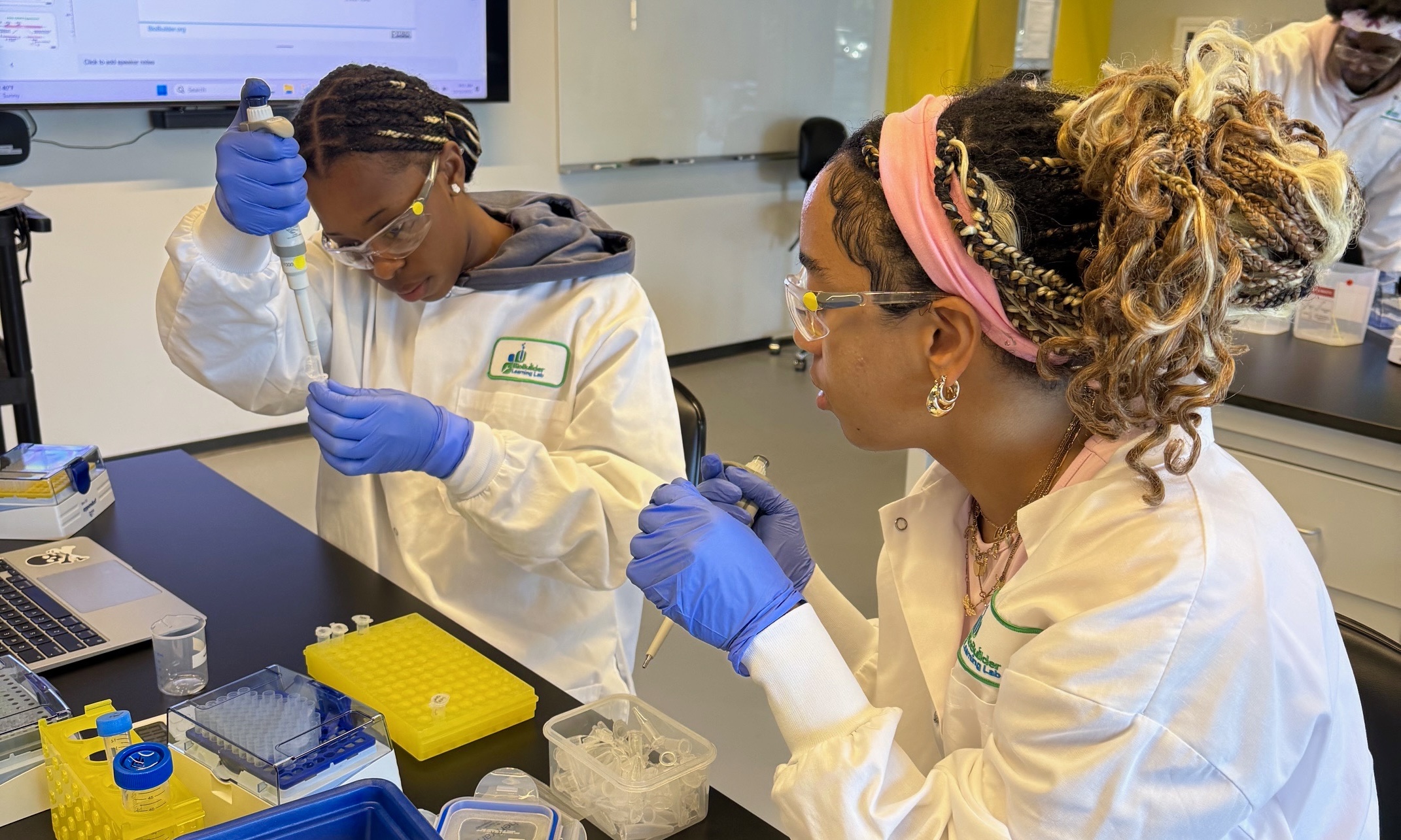
For some students, Advanced Biology: Molecular Research Techniques is a clear step toward a future in STEM. “I intend to major in a science field, so it’s nice to see what my future classes could be like,” says Nathan Rosario ’26. “It’s really cool to work with Dr. Hiroko, it was fun to hear from her and learn other methods.” For other students, it’s an opportunity to explore research methodology in a setting that mirrors the real world. As Dany Sidman ’26 states, “this is a very independent course. It feels like what I’ll experience in college.”
This course requires students to be thoughtful and creative—as well as resilient—as they analyze, test, and revise. Scientific discovery requires patience, but is also exciting and meaningful.
Dr. Alison Livingston, Upper School Science