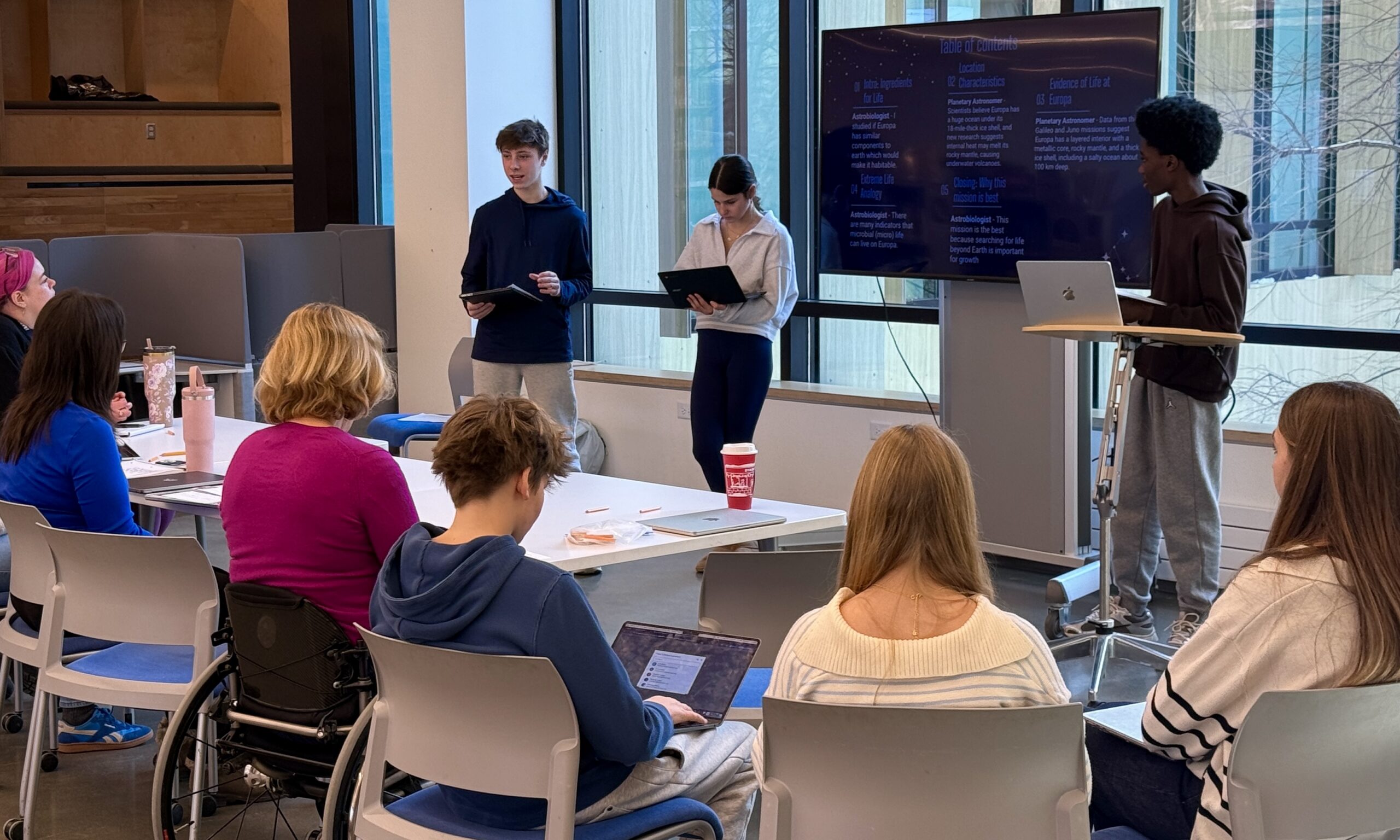
When students in Science 8 stepped up to present their research around the solar system, they did so with a specific goal in mind: to convince a panel of mock investors to finance their proposed mission to space. Each group detailed their destination, broke down the logistics of the trip, and explained why their chosen location is most likely to house extraterrestrial life.
The project challenged students to use their foundational understanding of space concepts—such as why we have moons and seasons and what causes eclipses—to explore the essential question, “Is there life beyond Earth?” Students began their work by selecting a planet or moon they believed could support life. Working in groups, students took on specific roles to guide their research; astrobiologists, for example, investigated the conditions necessary for life, compared their chosen environment to similar places on Earth, and evaluated what kinds of organisms might survive there.
I was the engineer of my group. That means I was essentially responsible for creating the idea of what we want the robot to be and where we want it to go, and what sensors it needs to search for life.
Sophie Herbstman '30
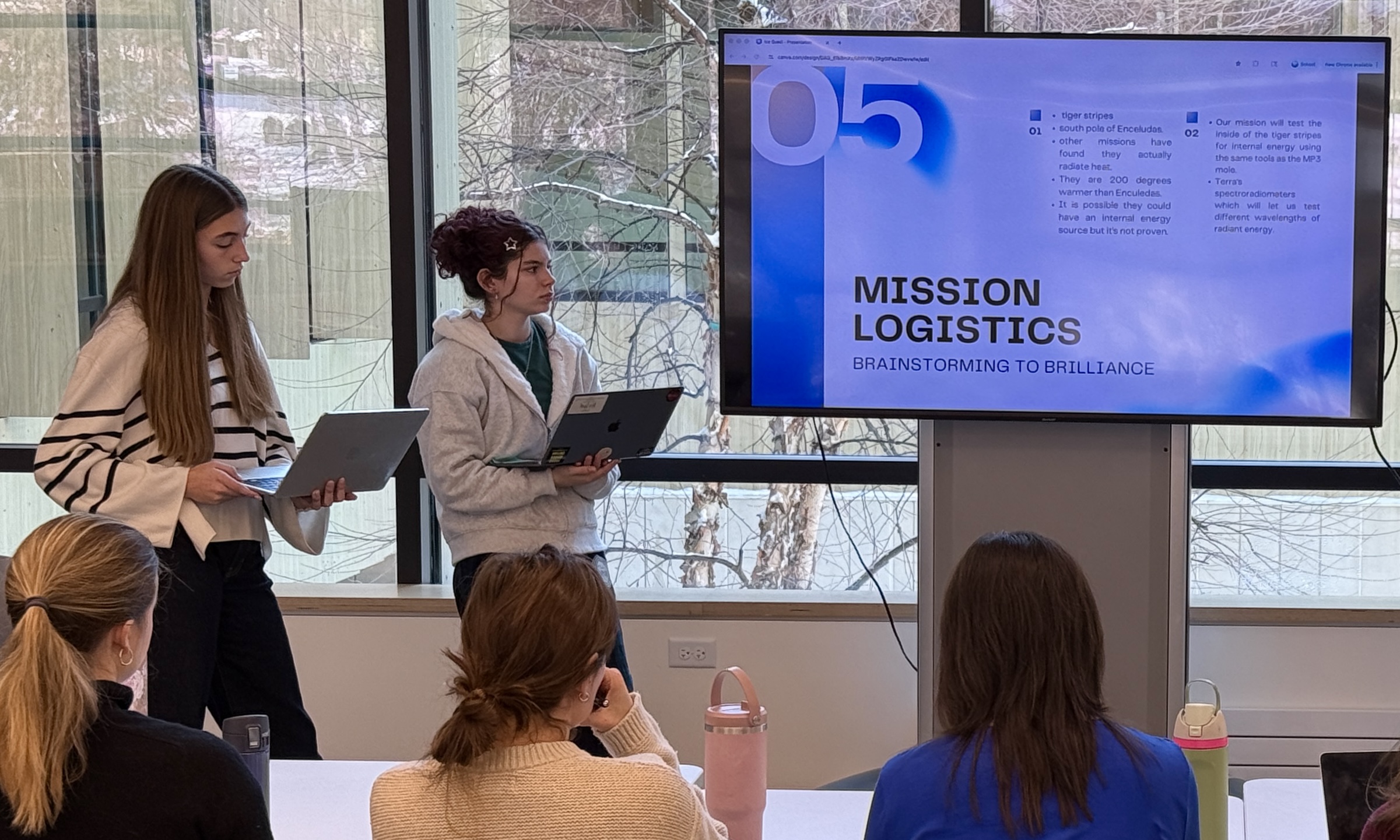
To build a compelling case to convince potential investors to fund their mission, students leaned on their research and presentation skills. Students gathered information from credible sources and databases, learned to cite their work in APA format using NoodleTools, and organized their findings into clear, persuasive presentations. “It was a challenge to find a variety of sources,” says Esmeralda Wright ’30. “There haven’t been that many missions to the moon we were researching.”
Rehearsal was a crucial component of the work, with each research group leveraging speaker notes to ensure their ideas were communicated clearly and within the required time. Students were also tasked with considering how an audience of investors would respond to their research in a different manner than their classmates. “The most challenging part of this assignment was doing the presentation,” Charlotte Dolan ’30 mentions. “We really had to narrow down all of our research and our findings to make it short enough to catch the attention of investors. My presentation skills definitely got better.”
By researching, analyzing evidence, and presenting their ideas to investors, students experienced what it’s like to think and work like scientists, gaining confidence in both their knowledge and ability to communicate it. Students will continue this work by building and coding LEGO robots to complete the mission tasks outlined in their pitches.
We want students to see that anyone can become a scientist by deeply investigating a topic and developing expertise. Even though the content is advanced, students rose to the challenge—delivering impressive presentations on lesser-known places like Enceladus and Titan and confidently teaching the adults in the room.
Kristina Klammer, Middle School Science