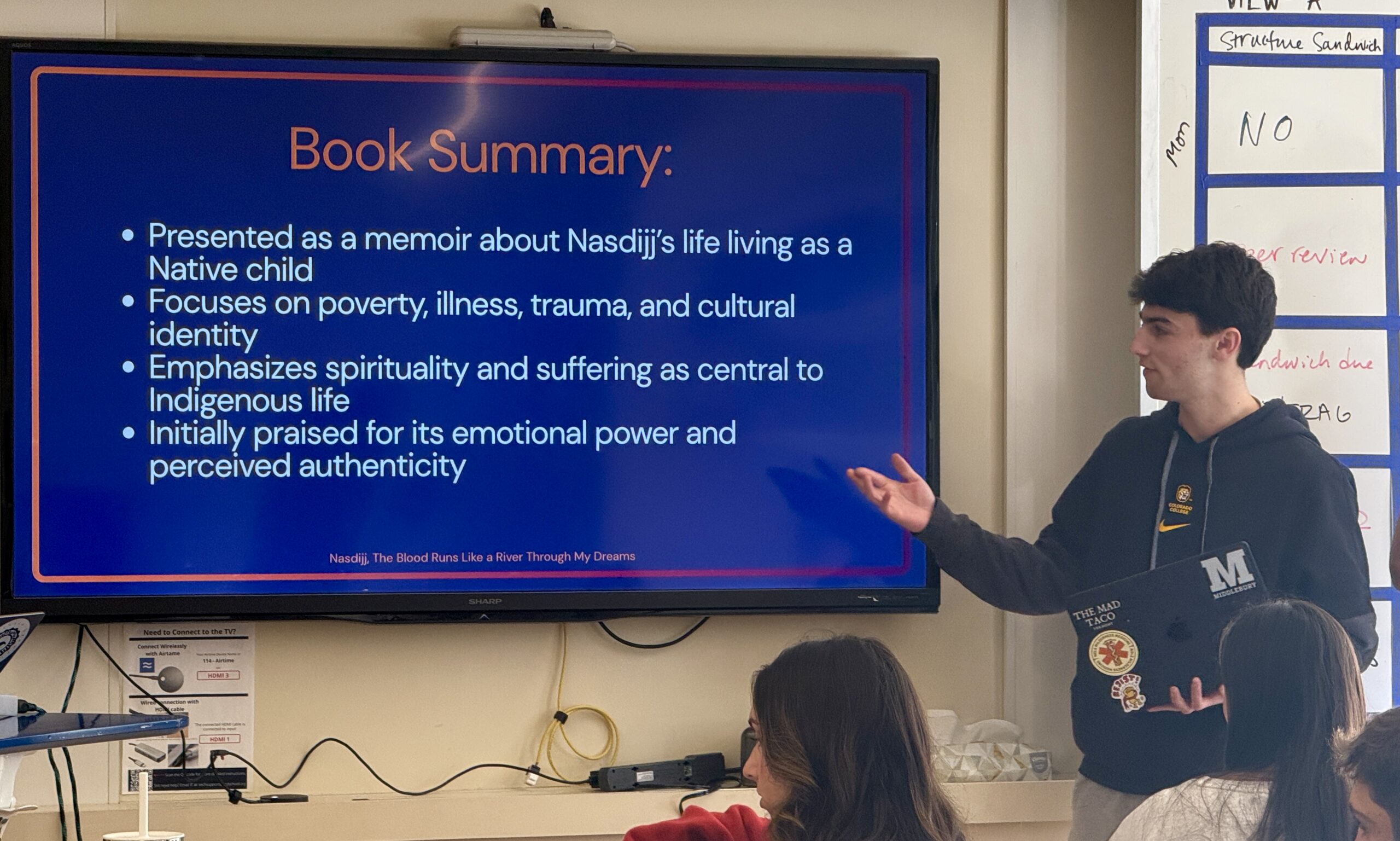
When the first group in Dr. Lydia Fash’s class steps to the front of the room, their presentation sounds familiar enough. They introduce their chosen text—Blood Runs Like a River Through My Dreams—as it was once marketed: the true story of a Native American man raising his adopted son with fetal alcohol syndrome. They discuss the memoir’s themes, read excerpts from the text, and consider its portrayal of Navajo life. But the presentation hinges on a detail that defines the group’s analysis: despite being published as nonfiction, the memoir is entirely false.
In Literature of Lies, students explore what it means to trust a text and how that trust can be exploited. The course places fake memoirs within a larger study of dishonesty in literature that includes censorship, satire, and unreliable narration. Students are challenged to reconsider how they engage with texts of all kinds, developing a deeper understanding of publishing, media literacy, and disinformation.
In Literature of Lies, students are able to practice the skills of literary criticism and argument construction while they consider bigger questions of how readers are encouraged to believe and what sort of betrayal it is to fool them.
Dr. Lydia Fash, Upper School English
In an assignment focused on falsified memoirs, students worked in small groups to select a text, research the scandal surrounding its publication, and examine how the memoir cultivated a sense of authenticity. The collaborative structure of the assignment created space for debate and reflection, with each student finding their own sources and integrating them into the group’s work. With each group focusing on a different text, the final presentations offered an opportunity for students to hone their skills by teaching and learning from their peers.
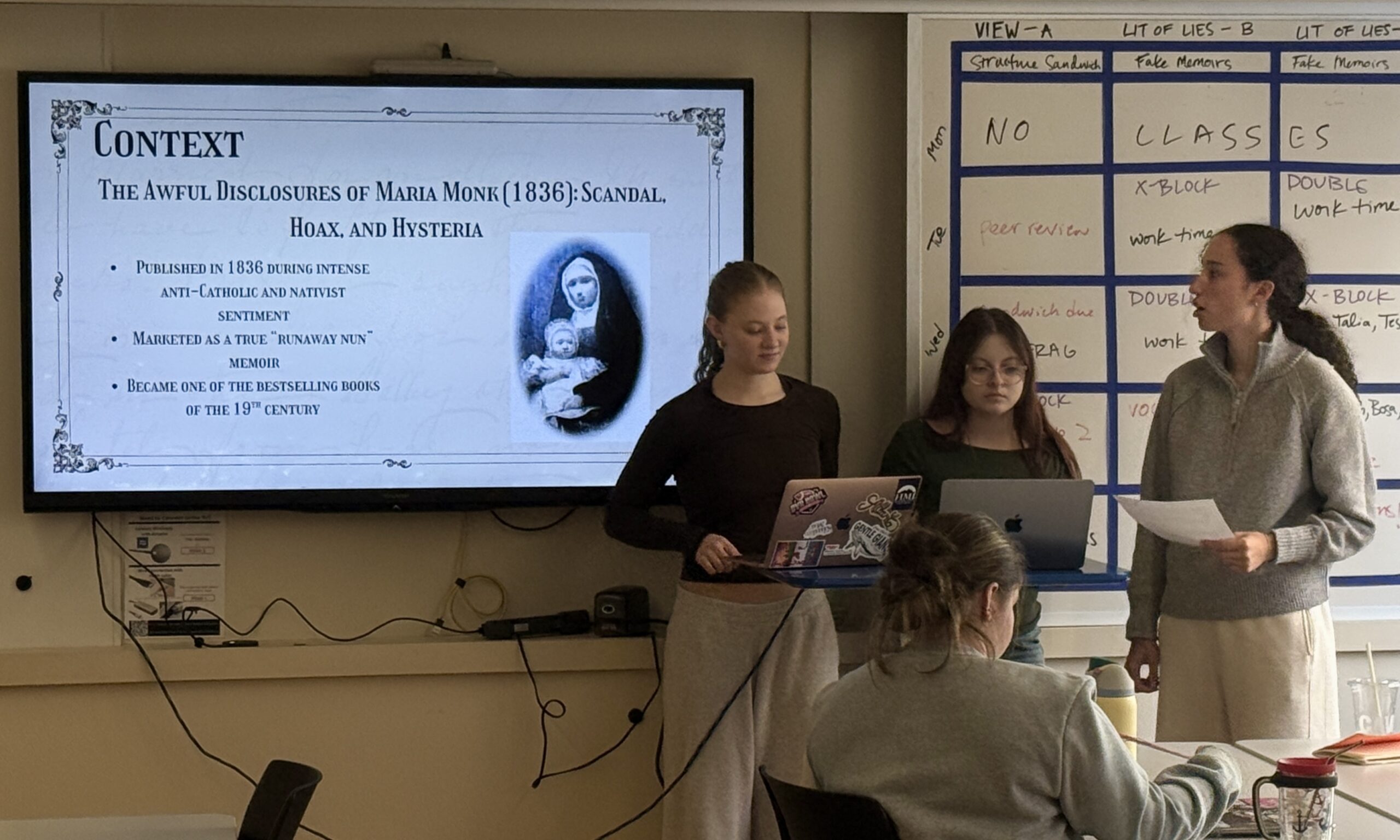
Sustaining a critical perspective throughout the reading process often proved challenging. Students studying The Cradle of the Deep—the fabricated story of a woman growing up at sea—discussed how engaging prose often distracted from the central deception of the text. “I thought I was going to have a critical eye the entire time, but I found myself getting sucked into the book,” Orli Azoulay ’26 shares. “I found it hard to pull myself out of that. I think that definitely shows how dangerous books like this can be.”
The assignment also served as an inquiry into the publishing industry. Students discussed how the publication of falsified texts—often involving authors co-opting identities unrelated to their own—curates public perceptions of marginalized groups “This assignment shows how publishers act only on public pressure and how marginalized writers are often required to prove authenticity more rigorously,” says Neal Mahidhar ’26, who researched Blood Runs Like a River Through My Dreams. “This case shows how false memoirs harm both readers and the communities they claim to represent.”
I want students to think about the violation of trust that a fake memoir creates and thus the implied contract between reader and writer. It’s a moment where we’re increasingly distrustful of our stories, and I hope to make us more discerning readers so we can trust that which is worthy of our belief.
Dr. Lydia Fash, Upper School English