On any given day at Beaver, students are finding new ways to express themselves and build technical skills through art. Whether it’s sculpting at a pottery wheel, experimenting with graphic design in the Photography Studio, or collaborating in the McElwain Art Studio, visual arts happen all across campus in a variety of ways.
Below, you can read about three recent projects from across campus!
Students create functional tableware
Students in Ceramics and Advanced Ceramics explored the intersection of functionality and aesthetics when designing tableware. After taking a trip to Praise Shadows Art Gallery to view artist and social activist Roberto Lugo’s work, students began to consider how they could represent themselves through art. “Our assignment was to make something that we could eat or drink out of that represents something meaningful about us,” Isa Weir ’27 mentions. “I love matcha and making it at home, so I wanted to make a bowl with a functional pouring spout.”
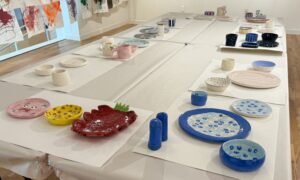
By analyzing the form and function of everyday objects, students gained a deeper understanding of how habits can be reflected through physical items. “I want students to think about how functional objects are made and how we think about the experience of using things,” Ceramics teacher Amelia Walske says. “Function isn’t just the fact something can hold water, it’s also about how we hold it and who it was made for.”
To display their work, students took to the Griffin Gallery for a lunch hosted on the tableware they created. From a The Very Hungry Caterpillar themed plate to a pink ribbon mug, each piece reflected the unique interests and habits of students. The celebratory lunch also served as a proof of concept, allowing students to experience how their work functioned in an everyday setting.

“Is It Cake?” Beaver edition
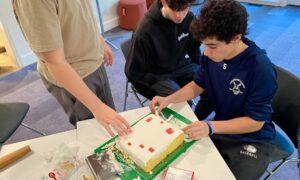
Intro to 3D students put their skills to the test during an assignment tasking them with creating realistic-looking objects made entirely out of cake. Inspired by the Netflix series Is It Cake?, the assignment challenged students to leverage technical skills such as building to scale, proportion, replication, and realism. From a toilet paper roll to a Minecraft cake, each group took a unique approach in bringing their ideas to life. “It was such a fun assignment that the class came up with,” says Lila Faye Mandelman ’28. “There was a lot of trial and error.”

The goal of this assignment was to help students with objectivity, saying what you see based on fact. Being objective helps students see the things they can improve on in their work and challenge themselves.
David Ingenthron, Visual Arts Department Head, Upper School Visual Arts
The assignment comes as the class has been honing their objectivity as artists. During an exercise earlier in the term, students assembled cardboard cubes and took turns pointing out ways they could be improved. By developing these observational skills, students are empowered to fix what they see and iterate their work.
Looking ahead, students will apply these same skills to new materials such as wood and ceramics.
The Art of the Ugly
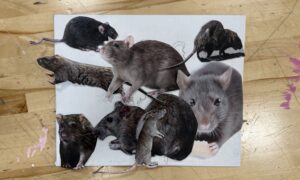
Visual Arts 8 students came together to explore an unexpected topic: ugliness. In “Art of the Ugly,” students created work that either depicted ugly subject matter or used ugly materials in an effort to define what the word means. Partially inspired by the work of artists such as Kathleen Ryan–known for using precious stones to depict mold–the assignment expanded students’ perspectives on what art is and what can be communicated with it. “Ugly is one of those words where my definition could be different than yours,” Visual Arts teacher Amy Winston explains. “This assignment is about defining what ugly means and–in turn–what beauty is.”

The ambiguity of the word was on full display as students began choosing subject matter to depict. From collages of rats to jagged textures to illustrations of war, each piece directly reflected the worldview of the artist behind it. This creative freedom allowed students to not only define the word ugly, but also define how they use art to make sense of the world.
Pieces from this assignment–and from the entire Visual Arts 8 course–will be featured in a gallery showcase later this year.
With so many visuals available to students on social media, it can be hard to grapple with an original idea. They’re a little weary of this project at first, but it often leads to some really interesting work and helps students expand their range.
Amy Winston, Middle School Visual Arts