Some of the most meaningful experiences that happen in the classroom begin with a simple question: what if?
What if Romeo and Juliet took place during a civil war? What if the story was told through the eyes of Mercutio? What if the divide between two families was really a divide between those with magic and those without?
These are the questions students in English 8 asked—and answered—in a series of assignments centered around reimagining literature.
I really enjoy creative writing, so it was fun to make “Romeo and Juliet” my own and add what I enjoy as a reader onto the page.
Lesleigh Robin ’30
It all started with Romeo and Juliet. After reading and taking a test on the play, students were tasked with taking Shakespeare’s work and making it their own by reimagining the setting, conflict, and characters. Each student brought their vision to life by writing a sonnet and a chapter. “Bringing my own characters into the storyline was fun,” Rose Scott ’30 reflected. “It helped me understand Romeo and Juliet and the ideas of Shakespeare better.”
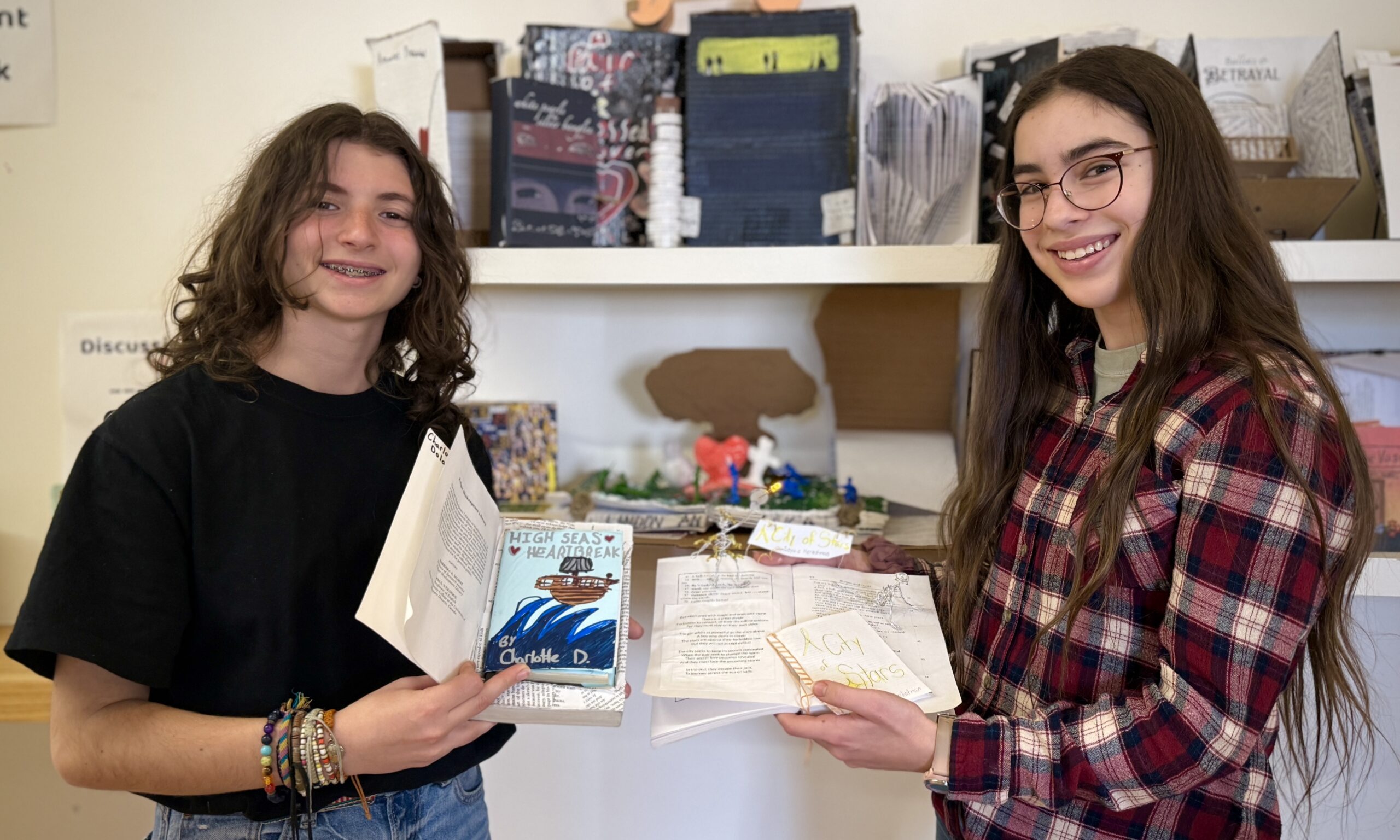
The creative freedom of the assignment provided students with an opportunity to use their own interests as a lens to explore Shakespeare. “The setting of my retelling was a futuristic dystopia where some people had magic and some didn’t,” shared Sophie Herbstman ’30. “I chose this because I love fantasy, it’s one of my favorite types of books to read.” Lesleigh Robin ’30 went in a different direction, leveraging her love of dystopian literature to create a setting ravaged by war. Caroline Mitchell ’30 decided to focus her retelling on Mercutio, a character she felt was underrepresented in the original text. As Caroline explained, “I chose Mercutio because I felt he didn’t get enough attention. I liked adding more depth to the character, it ended up expanding the story itself.”

Giving students the opportunity to set the bones of the original story in a setting of their choice gives them a chance to move beyond their rote appreciation of the plot and to demonstrate and develop their critical thinking.
Kathleen Kosberg, Middle School English
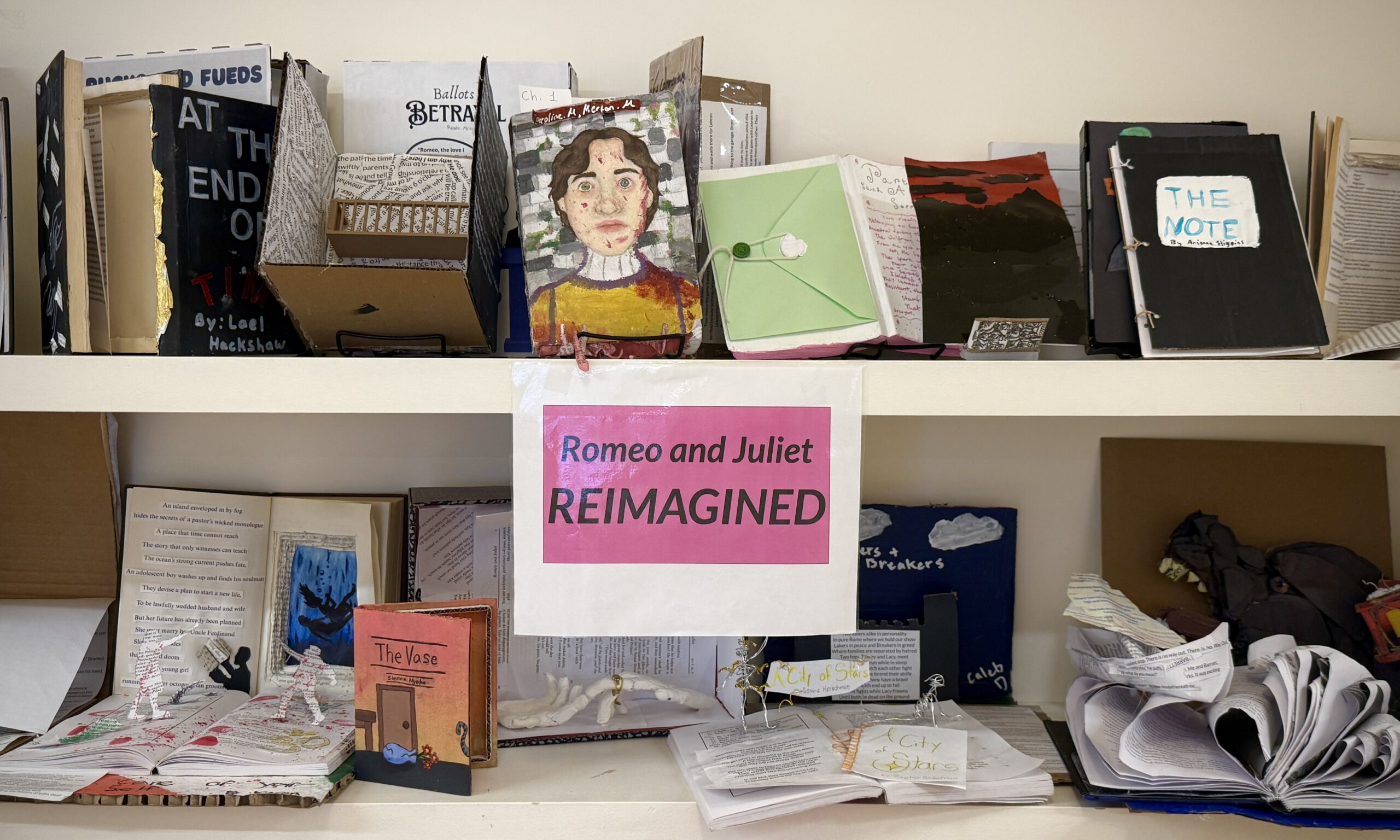
Students created three-dimensional book covers to accompany their writing. In addition to housing each student’s prologue and chapter, the covers also served as a visual representation of the themes, symbols, and settings students explored. Just as no two retellings were the same, no two covers were either, with pieces ranging from a miniature balcony to a wolf’s head to a lyre. “When you put your ideas on paper, you start to see it in new ways,” said Ayan Toussaint ’30. “Once you add the visual component, it all comes together and you can see the real story.”
The process of creating book covers on the Design Level extended conversations that began in the classroom. As students worked, they connected over their retellings and reflected on their creative decision-making. “Parents can appreciate that riding in the car is just about the best environment for honest conversations with your teens—it’s when they share the most with you,” Middle School English teacher Kathleen Kosberg reflected. “The same happens among students while they’re working on a visual arts component for class; inhibitions seem to diminish, and the conversations feel natural, spirited, and supportive.”
One of my favorite things about Beaver is how many projects we get to do and how we’re able to create things. I had a lot of fun doing that!
Ayan Toussaint '30
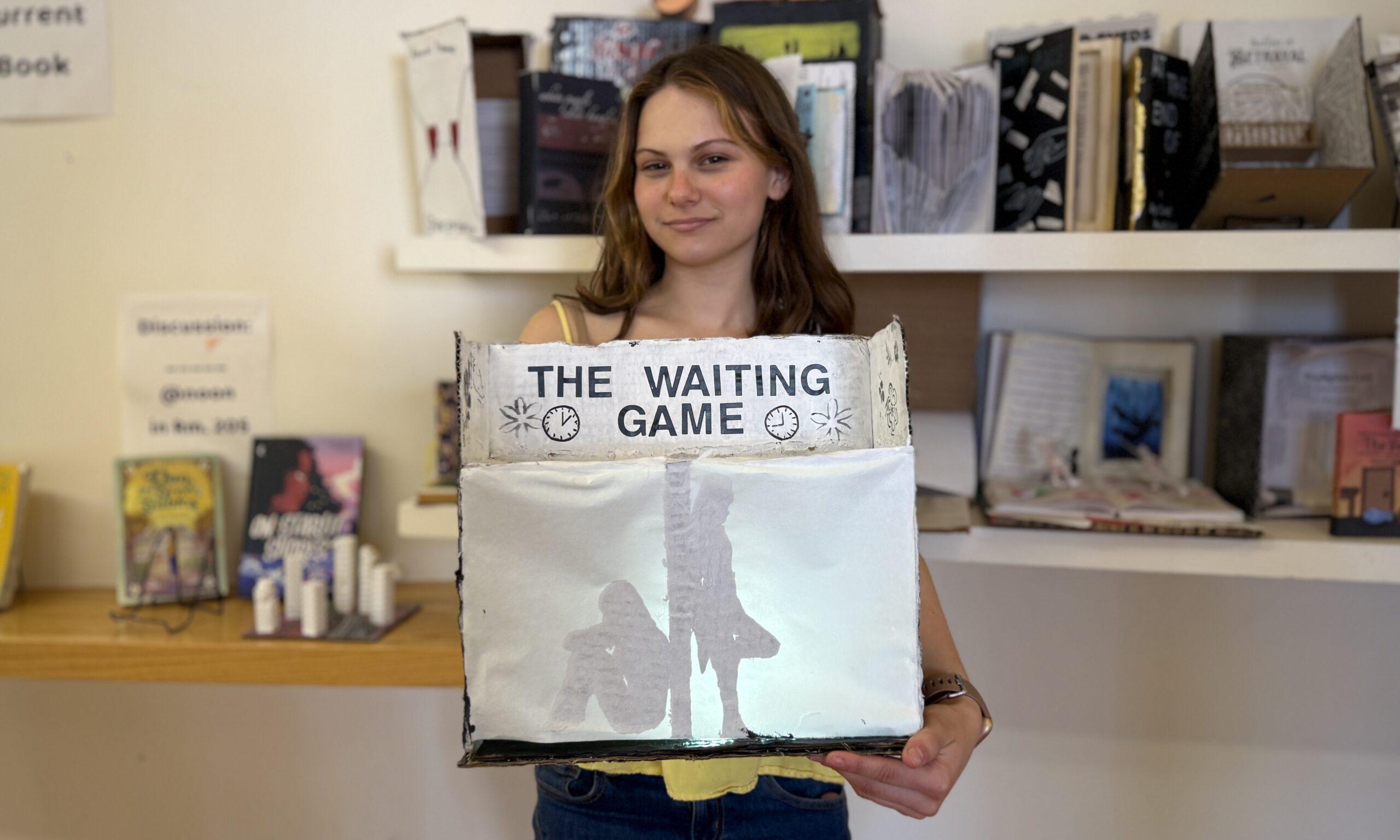
By the end of the assignment, students had created entire worlds based upon their understanding of Romeo and Juliet. What began as a study of Shakespeare became an opportunity for the class to explore their own voices and interests through writing, collaboration, and creative expression.
The reimagined book covers are currently on display on the second floor of the Middle School wing.