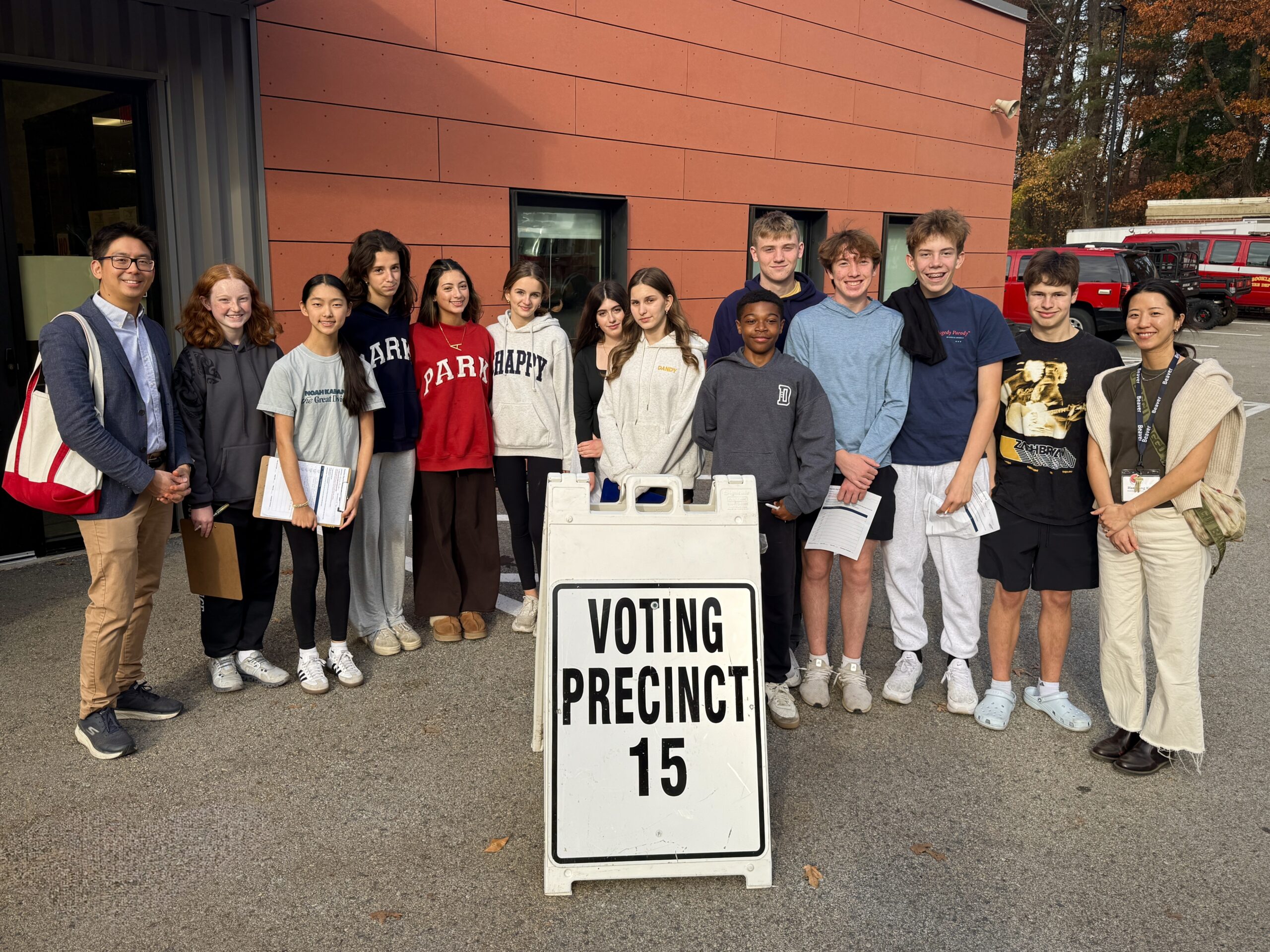
As local voters made their way out of the polls on election day, they were greeted by an unexpected audience: ninth grade U.S. History students, eager to hear what was on their minds. And, with an unusual amount of ballot questions on voters’ minds, there was a lot to talk about.
I liked interviewing voters! It made me realize how different perspectives shape the way people actually vote.
Eve Aronson ’27
Students in US History: Nationalism have spent the fall term refining their research skills and analyzing primary historical documents. Through this work, they’ve explored how decisions are made in the United States and the lasting impact those decisions can have.
“In class, we study the laws that the United States is built upon,” shared Landon Allen ’30. “We’ve learned a lot about the government and the system we use to vote and how each person’s vote is equal.”
With election day taking place during the term, students seized upon the opportunity to see democracy in action. Each student selected a ballot question to research, investigating its background, the issues at stake, and its potential impact. To expand upon this research, students sought out opinions from the people that mattered most: Massachusetts voters.
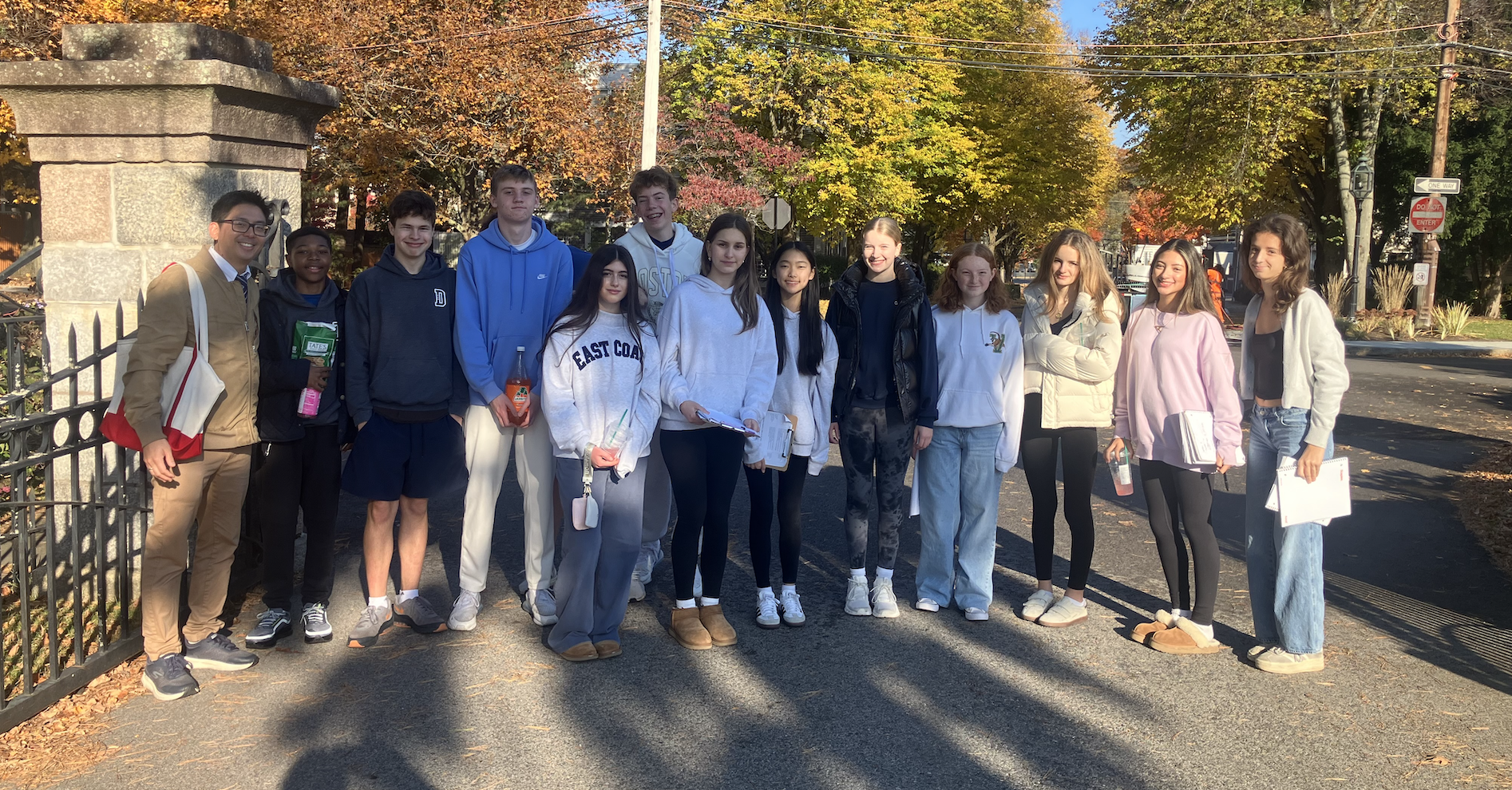
A week before election day, students visited a local shopping center to interview voters and gather their perspectives on the ballot questions. As students collected data, they began to notice the trends that influenced their findings.
“When we went and interviewed everyone, everyone said yes to our ballot question,” recalled Frida Urmston ’30, who was researching Question 9, which addressed firearms regulation. “But that’s just Brookline, so that was just a small part of Massachusetts. It wasn’t fully accurate for the whole state.”
Students also heard from Massachusetts State Representative Chynah Tyler P’30, who visited the class to discuss the relationship between lawmaking in the Massachusetts House of Representatives and the ballot questions put before voters.
My main takeaway was that not everyone looks at the same question the same way. A lot of people have different priorities that they want to achieve through their vote.
James Shanley ’30
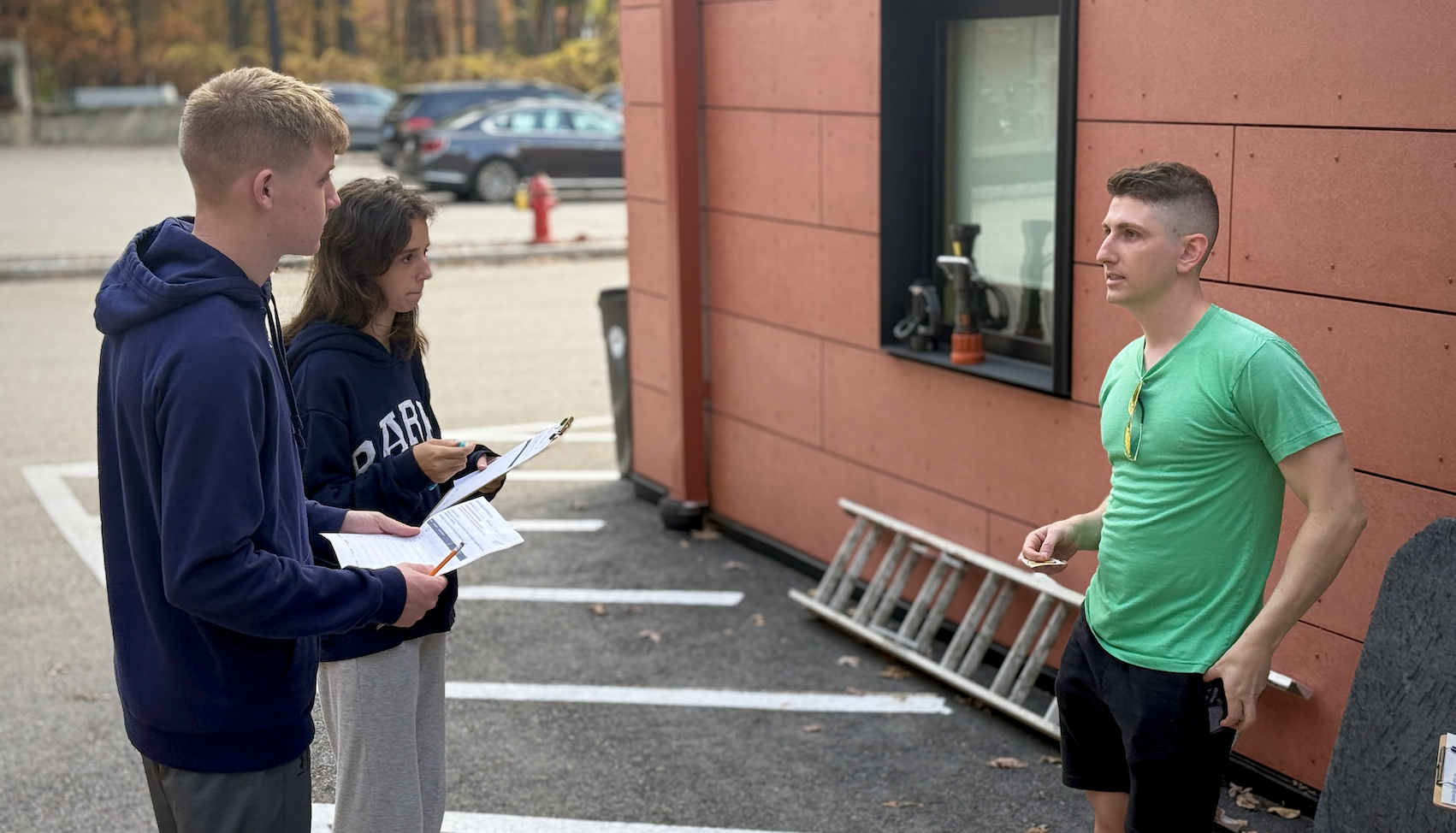
On election day, students returned to the community, this time stationed outside of a local polling place to speak with voters immediately after they cast their ballots. These conversations gave students a deeper understanding of not only how people voted, but also how each voter reached their decision.
Back at Beaver, students monitored the election results, comparing the statewide outcomes with the data they had collected. Landon Allen’s research centered around ballot Question 7, which aimed to reduce minimum lot sizes for single-family homes. He was surprised to see how close the results ended up being.
“The vote was very close,” said Landon. “It showed me how important each vote is and how much they matter.”
To bring their research together, students synthesized their findings and voter interviews into policy memos on their respective ballot questions. The assignment tasked students with leveraging skills developed throughout the course such as locating sources, analyzing evidence, and citing their research.
“I wanted students to learn from a writing experience that is common in many workplaces,” shared Upper School Global History Teacher Andrew Lee. “They refined skills that they’d previously practiced but did so in a more creative format.”
Each memo reflected the knowledge students had built around their respective ballot questions. In addition to analyzing the issue and explaining what each vote would mean, students drew on their conversations with voters to add real-world perspectives to their research.
I hope what students take away from this work are civic engagement skills—the ability to inform members of the public about the topics they are voting on and help them see direct democracy in action.
Andrew Lee, Upper School Global History