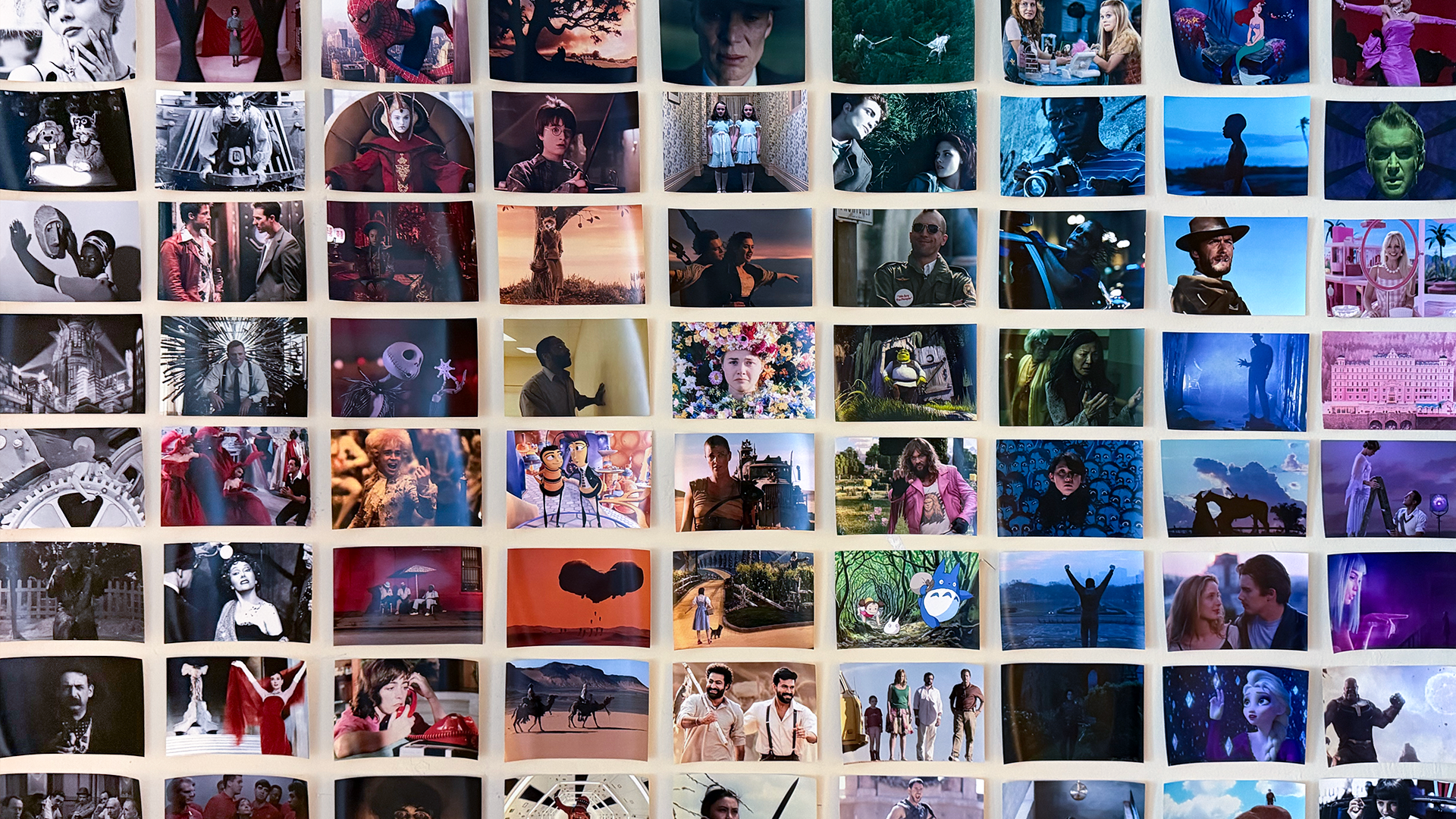
Watching movies was a regular part of the school day in Foundations of Film, a new Upper School BVR-X course created and taught by Luke James, Beaver’s Senior Manager, Content Strategy. Almost every week during the fall term, students watched a film together, then spent their next class discussing, debating, and dissecting what they’d seen.
But the course was about much more than watching movies.
What’s just as important as a student’s understanding of filmmaking techniques is their ability and willingness to share their ideas, respond to others, and make meaning out of what they see on screen.
Luke James, Foundations of Film teacher
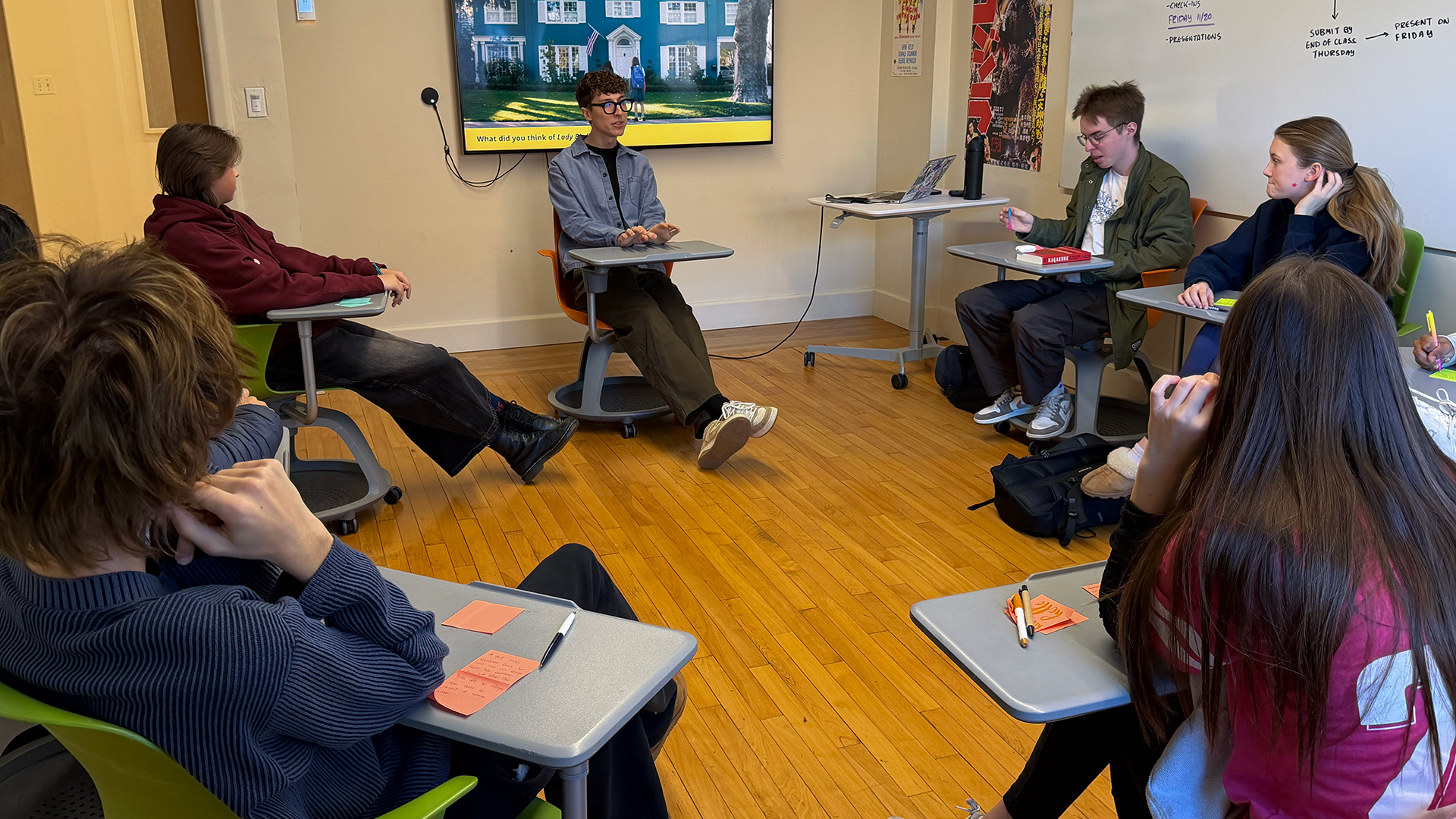
After each screening, students led discussions, debating their interpretations and connecting what they watched to course material.
“It is this open exchange of ideas that is at the heart of the course,” James said.
That emphasis on student-led inquiry is central to BVR-X courses, which embody the non-linear, trans-disciplinary nature of teaching and learning at Beaver.
“BVR-X courses draw from different disciplines to allow students to tackle real-world, complex questions and challenges,” said Kader Adjout, Director of Teaching, Learning, and Innovation. “Foundations of Film has been a wonderful new example of a BVR-X course that challenged students to think about the ‘what is’ and, more importantly, the ‘what it could be.’”
Bringing a passion for film into the classroom
The idea for Foundations of Film grew out of James’s experience working in Beaver’s marketing department, where he has had a front-row seat to the many ways students learn.
“I’ve seen students conduct genetic research in clinical environments, practice speaking Chinese on the streets of Beijing, and interview playwrights before performing their work on stage,” he said. “I began to wonder what that student-centered approach to learning would look like for the topic of film.”
Through advising the Upper School Film Club and helping plan the annual Beaver Film Festival, James—himself a longtime film aficionado and film studies expert—also recognized the enthusiasm for film that already existed on campus.
“Seizing upon that and giving students an opportunity to engage in a structured inquiry into their passion seemed logical—it seemed like Beaver,” he said.
Mabel Forkner ’27, who hopes to pursue film in the future, came into the course with a longtime interest in the subject.
I really love stories, and I’ve always found film so fascinating. It was really nice to have a space to debate things in film and things going on in the industry.
Mabel Forkner ’27
Juliet Svenson ’27 brought a different perspective to the class. After enjoying a screenwriting course during her junior year, she decided to try Foundations of Film, even though filmmaking wasn’t necessarily one of her interests.
“I was surprised how much I liked it,” she said. “It made me appreciate film more. There’s so much that goes into making an hour-long movie.”
Exploring film from every angle
Throughout the fall, students approached film as an art form, a global industry, and something deeply personal—reviewing headlines and box office numbers weekly to understand how film is being shaped today. They also analyzed what the success or failure of certain films might mean for the industry.
“We treat film as an ongoing conversation rather than something to look back upon,” James said.
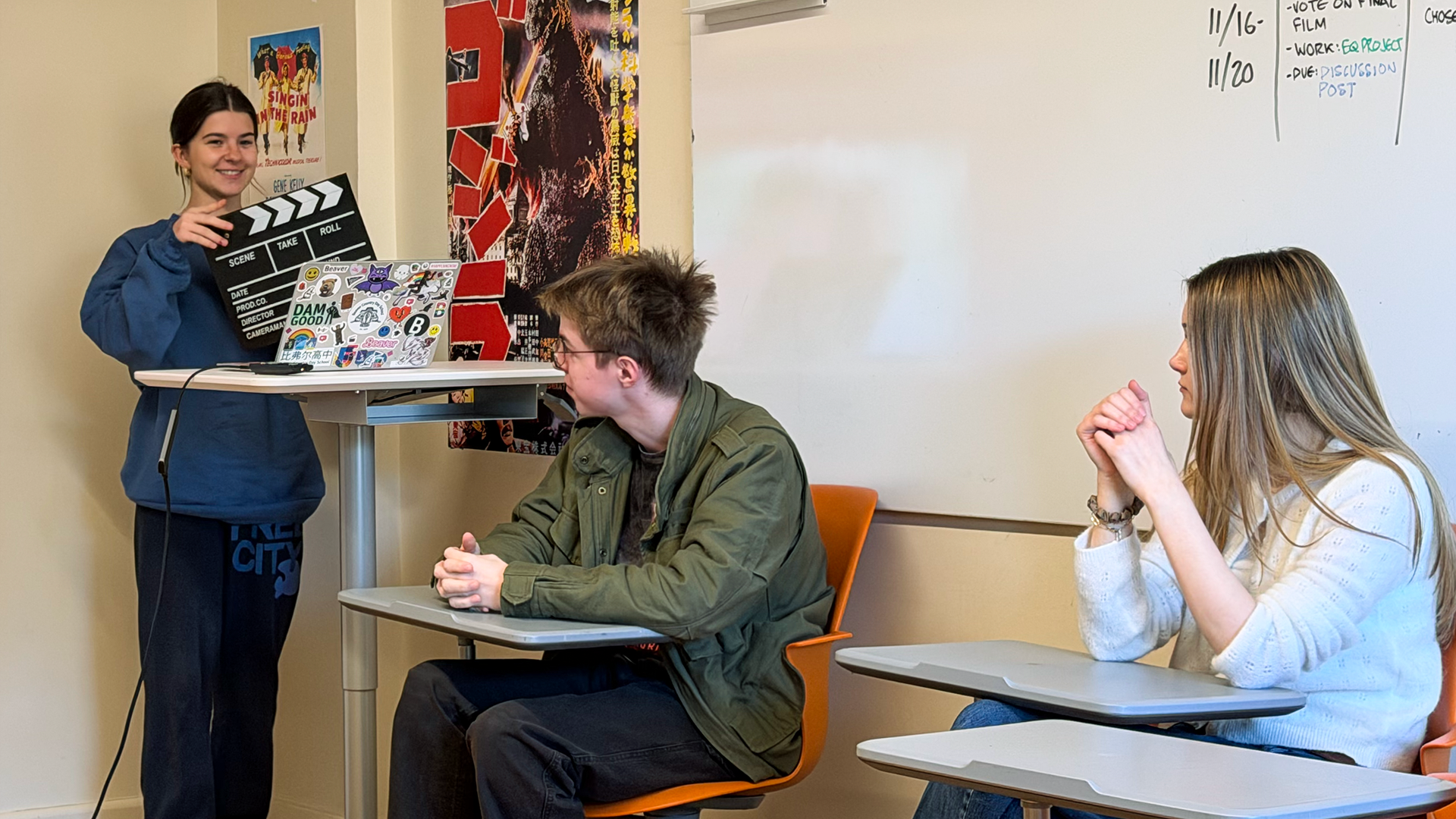
Hands-on projects ranged from creating silent films to pitching high-concept movies to a mock panel of investors.
Students acted as a censorship board judging films based on the Motion Picture Production Code. They took on the roles of directors and cinematographers, creating short films about beavers and addiction to technology. They even served as art historians debating what qualifies as the very first film.
For one assignment, students researched a film genre of their choosing in depth, creating timelines of its origins, evolution, and modern-day reception. They then translated their analysis into lessons for their peers, taking ownership of the material and sharing their expertise with others.
Students also pursued their own questions and interests. Forkner explored why hotels are such a common setting in horror films. For her project, she designed a three-dimensional cardboard floor plan inspired by the hotel in The Shining, examining how its impossible and disorienting layout affects viewers.
“For our final project, we got to choose our own topics. Everyone gets to explore what they’re interested in,” Forkner said. “It’s not about watching movies. It’s very much thinking outside of the box, from technical elements to philosophical meanings.”
Learning to look closer
While students developed a deeper understanding of filmmaking techniques, James hoped they would leave the course with something even more valuable: a more critical eye and a tendency to ask meaningful questions.
“One of the rules that has guided our inquiry into film is that nothing should be considered accidental—everything we see and hear should be treated as intentional, as something to question and analyze,” he said.
James also wanted students to apply those same analytical skills to the media they encountered outside the classroom.
This course aims to strengthen students’ media literacy. The same tools that are used to break down shot composition and explore thematic elements of film can be leveraged to better understand what we see on social media, on the news, and in our daily lives.
Luke James, Foundations of Film teacher
And he noted there’s value in the emotional experience of watching a film.
“Watching movies is an act of empathy. When else do we take time to pause, listen, and experience the world from an entirely different point of view?” James said. “Film allows us to engage with new perspectives and challenge our own worldviews. Film grants us an immediacy with people we will likely never encounter.”
Different perspectives make for better conversations
For James, one of the greatest surprises of the inaugural course was the diversity of thought students brought to the classroom.
“I have students who watch multiple movies a day and others who go to the theater once a year,” he said. “This difference in perspective has brought our conversations to life—no two students hold the same opinions, and they’re eager to sort through these differences together.”
While finding a film everyone loved could be rewarding, James found even more value in the moments when students disagreed.
“I’ve loved screening films that every student enjoyed, but what I’ve loved even more is screening films that have students disagreeing, debating, and assessing how their own tastes and experiences inform how they engage with film,” he said.
This collaborative environment made the class especially meaningful for students.
“I thought the class was amazing. Easily one of my favorite classes I’ve ever taken,” Forkner said, pointing to the combination of hands-on work, collaborative discussion, and opportunities to shape the course around students’ interests.
Svenson agreed, recommending the class even to students who don’t consider themselves film enthusiasts.
“Even if you’re not into film, it would still be really great,” she said. “Mr. James made it so much fun. It was such a good class, and I learned so much.”
As James looked ahead to future iterations of Foundations of Film, he knew that no two versions of the course would be exactly alike.
“As a BVR-X course, Foundations of Film is, in many ways, driven by students. Their interests take center stage and inform our inquiry on every level,” he said. “Every iteration of this class will be a different experience because students bring their own interests, tastes, and goals into the space.”