As the new Director of Upper School, I will occasionally share some thoughts about the world our students are navigating and the world we are navigating alongside them as parents and educators. Sometimes that may be inspired by a book, an article, a podcast, something happening in education, or, in this case, a movie.
Perhaps surprisingly, I am starting with a kids’ movie, something I went to see with my own children (ages 16 and 11) on a rainy day this summer: Toy Story 5. While perhaps no film should have so many sequels, I recommend this one as worth your time (and also suggest you bring a tissue if you watch it).
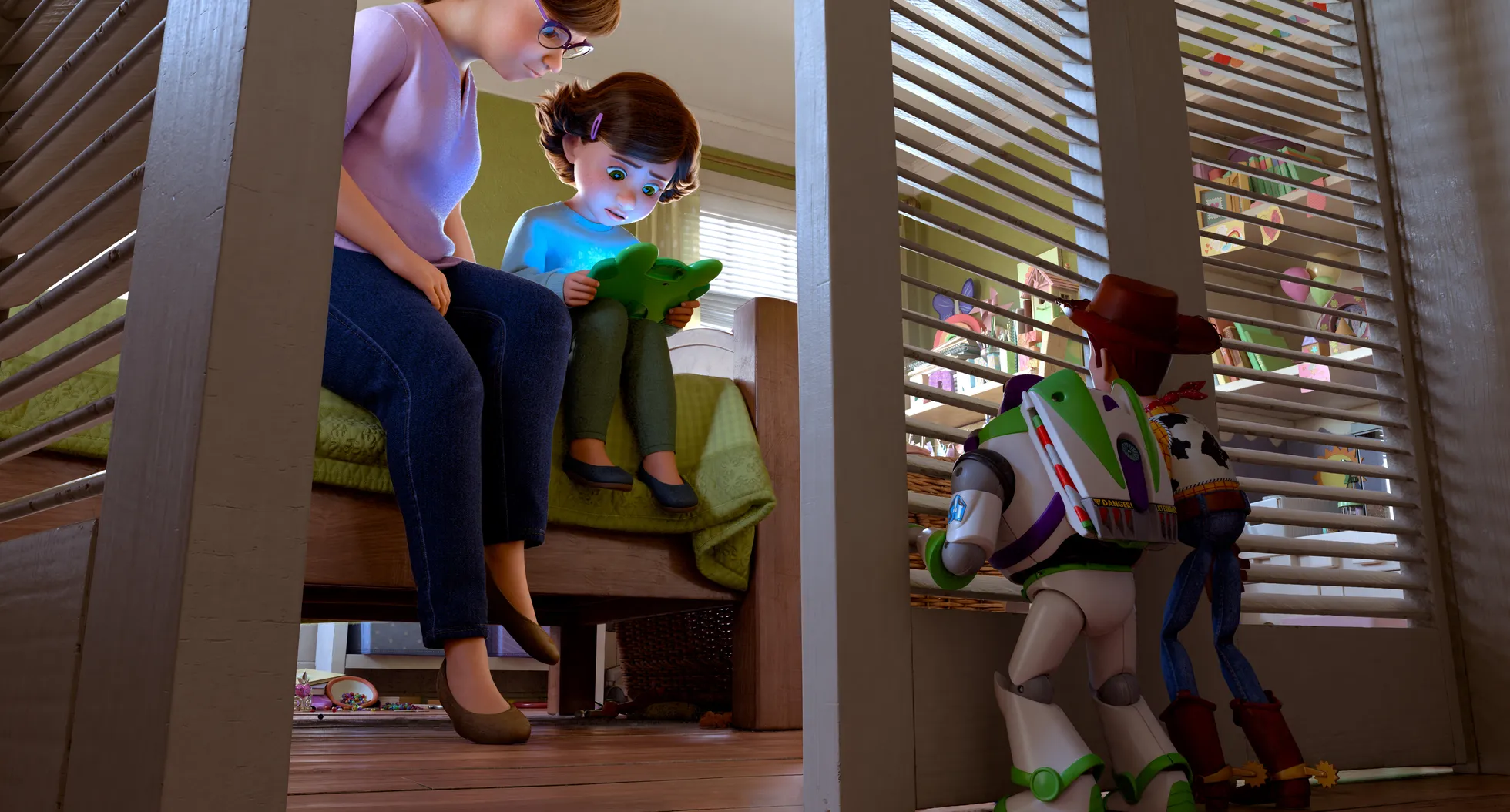
At the center of the movie is a tension that may feel familiar. Bonnie’s parents see their daughter as wonderfully imaginative and creative, but they worry about her socially. When Bonnie asks, “Why won’t anyone be my friend?” they give her a Lilypad tablet, hoping it might help her connect. Before long, they begin to wonder whether the thing they gave her to expand her world may actually be making parts of that world smaller.
I found myself thinking about that question long after the movie ended.
Part of the reason is personal, related to my own rising junior and sixth grader—both of whom, admittedly, spend more time on their devices than I am comfortable with. So I write this not as an educator who has somehow solved the technology question, but as a parent living it too. I know the experience of looking across the room and wondering how long a child has been staring at a screen, knowing I am not always good at putting my own phone away.
But I was also thinking about Beaver.
One of the things that drew me to progressive education is the belief that students should be active participants in their learning. We want them asking questions, making things, engaging with one another, taking intellectual risks, and developing ideas that are genuinely their own. At Beaver, technology can be an extraordinary part of that work. It allows students to create and collaborate in ways unimaginable even a generation ago. (The height of tech at my own school was inserting a floppy disk to play a green-and-black Oregon Trail on the original Macintosh!) Now, with AI and emergent technology developing rapidly, the possibilities keep expanding.
The answer is not to be afraid of that. Technology is not going away, nor should it. There are beautiful and powerful things that have come from it. But there is a tension here that educators, parents, and students should take seriously. Creativity requires something from us that technology can make too easy to avoid. It requires time. It requires conversation. It sometimes requires boredom. Sitting with a problem before finding an answer. Interacting with other people whose ideas may challenge our own.
Yet increasingly, we carry devices in our pockets that can make sure we almost never have to be bored, wonder for very long, or sit in uncomfortable silence. That doesn’t make technology the enemy… but it does make intentionality more important.

For our Upper School students, I think the question is less about whether they should use technology and more about the relationship they develop with it. When does a phone help us connect, and when does it keep us from talking to the person sitting beside us? When does AI help a student push an idea further, and when does it do the critical thinking that the student needed to wrestle with? When does a device enable creativity, and when does it quietly crowd out the empty space where creativity might have begun?
Those are questions for adults, too.
Our children notice when we check our phones during a conversation or when a notification immediately gets our attention. They also notice when we put the phone down, stay at the dinner table a little longer, read, make something, go somewhere together, or simply allow a quiet moment to remain quiet. Perhaps that is one of the most important things we can offer young people. We can set limits, certainly, and sometimes we need to. But we can also model what it looks like to use technology as a tool without allowing it to become where we spend all our time.
Of course, educators at Beaver had already started to think about the phone policy in the Upper School long before Toy Story 5 was released. But its lessons resonate with our desire to tamp down on phones during the school day. We want our students to get back to the magic of community and togetherness, engage with authenticity and individuality, and look each other in the eye rather than down at a screen while we do that.
Maybe that is what I appreciated most about this film. Its message isn’t that Bonnie needs a world without technology. She needs a bigger world than technology alone can provide. And I think our teenagers do too. We want to offer space for that, with intentionality, at Beaver.
As I begin my first year as Upper School Director, I want you to feel like we are all in this together. There are big questions – but I don’t expect these reflections to offer definitive answers. I hope instead that they give us another way to think together about what it means to educate and raise young people in a world that is changing remarkably quickly.
Apparently, Buzz, Woody, Jessie, and a frog-shaped tablet are as good a place as any to start.