When I was a student, I was always asking, “Why do I need to learn this?” I wanted to understand not only what I was learning, but why it mattered and how it connected to the world outside of school.
That question followed me into my work as an educator. As an inclusion special education teacher, I was always looking for ways to make learning relevant and accessible and to help students understand how their learning mattered beyond the classroom. My work as an education consultant with the Museum of Fine Arts pushed me to think even more broadly about where learning happens: how an artist’s work can spark public conversation, how culture shapes the way we understand ourselves and one another, and how learning can connect us to the wider world.
That is part of what drew me to Beaver and to my new role as Assistant Director of the Hiatt Center. I had been exploring these connections in my classroom and through community-based work. At Beaver, I saw what becomes possible when civic engagement and social justice are not treated as an add-on to students’ education but are supported as a core part of how a school thinks about learning.
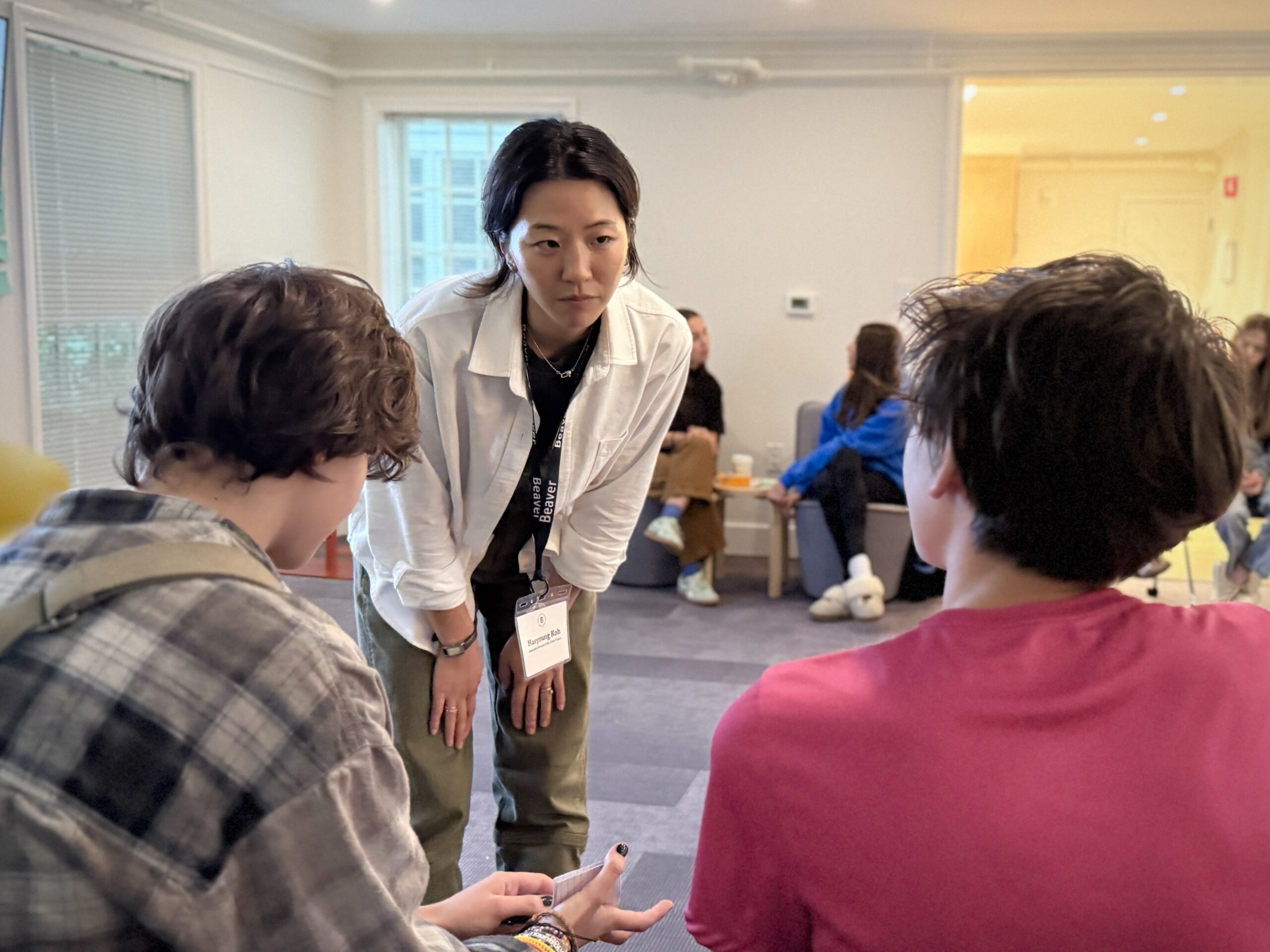
One place where that philosophy comes to life is the Middle School Hiatt Leadership Institute, a monthly series of interactive workshops for Middle School students. Each year, the workshops are organized around a central theme through which students explore leadership, civic engagement, and social justice. Last year, students looked to space and astronomy. This year, we’re turning our attention closer to home and beneath our feet with the theme “Roots.”
Throughout the year, we’ll think about roots in several ways. Drawing inspiration from Dr. Robin Wall Kimmerer’s “Braiding Sweetgrass,” we’ll look closely at the natural world through ecology and Indigenous knowledge and ask what we can learn from the ways living things grow, connect, and depend on one another.
We’ll also turn that lens toward ourselves. Students will consider their own roots: the people, communities, cultures, and experiences that have shaped them, as well as the roots of their values: what they care about, why they care about it, and how those values shape the way they show up in their communities.
I want students to experience these ideas, not simply talk about them. The workshops are designed to give students multiple ways into complex concepts through movement, games, collaboration, observation, discussion, and reflection.
Our first workshop on Monday, September 28, “The Hidden Network,” begins with fungi and mycelial networks. Students will physically build a web among themselves before discovering how their experience parallels the often-invisible networks of connection found within a forest. The workshop asks students to consider a simple idea: We are all connected, whether we realize it or not.
In another workshop, students will explore Dr. Kimmerer’s description of trees fruiting collectively and the idea that “all flourishing is mutual.” Students will become a grove of trees in a collaborative challenge where resources are unevenly distributed and can move only through a network they create together. The group doesn’t succeed when one tree has enough; it succeeds only when every tree has what it needs to fruit.
Underlying these experiences is something I hope students come to understand about leadership and civic engagement: they don’t belong to one particular kind of person. You don’t have to see yourself as an activist, or even as a “leader,” to have a role in shaping the communities you are part of.
Whatever their interests and whatever fields they eventually enter, our students will participate in communities and make decisions that affect other people. I want students to recognize that they can question the way things have always been done, lead by example, make room for others, and help create spaces where more people can thrive.
My hope is that the Hiatt Institute gives students a space to look closely, ask questions, make connections, and recognize that civic life isn’t something happening somewhere outside of them.
They’re already part of it.