Dolly Parton’s passing hit me hard, as it hit many of us. I imagine we thought she was someone who would never die. I texted with my college friends about how much we loved her then and now, despite our general disinterest in country music or her fashion style, and our incredulousness about her approach to plastic surgery. And yet, we all knew that separate from her excess–or because of it?–she was deeply, profoundly, movingly authentic. She was always herself through and through, and she loved what she loved deeply.
And then just this week, Author Annie Dillard also died. She was certainly not as famous or flamboyant, and she didn’t have such a life story or such stardom, but she was the writer who taught me that you can love passionately in print and in person, that you can learn deep truths from simply observing the world.
My very first teaching experience was 40 years ago, when I was newly graduated from college and teaching while I earned my MFA. I had one class of mostly female visual arts students and another class of mostly male engineers. My job was to teach them college-level writing. I had no idea what I was doing and very little guidance outside of a template for the five-paragraph essay and a book by Paolo Freire telling me to be attentive to the power dynamics and politics of the classroom. I was a few years older than my students, and thought my way in was to be as much like them as possible. I wore ripped sweatshirts and leggings, too much jewelry, and big hair. Think Madonna in Desperately Seeking Susan. I was going to win them over.
They were sullen, and uninterested in me. The artists wanted to paint and sculpt, and the engineers wanted to build things. No one wanted to write a five-paragraph essay about anything, not even art or engineering. And then, by sheer dumb luck, we made it to the week in which we were reading Annie Dillard’s essay, “Living Like Weasels” from her book Teaching a Stone to Talk. Dillard tells the story of a man who encounters a dead eagle with the skeleton of a weasel dangling from its throat. Somehow, perhaps as the eagle was trying to capture and kill the weasel, the weasel must have bitten the eagle’s throat–and then never let go. Dillard talks about looking a weasel in the eyes in her suburban neighborhood, and for one moment living in the brain of the weasel–an intense, immediate experience of living that she cannot forget. She wonders if she could live the way a weasel does, and she writes:
“We could, you know. We can live any way we want. People take vows of poverty, chastity, and obedience–even of silence–by choice. The thing is to stalk your calling in a certain skilled and supple way. To locate the most tender and live spot and plug into that pulse…I think it would be well, and proper, and obedient, to grasp your one necessity and not let it go…Seize it and let it seize you up aloft even,…lightly, thoughtless, from any height at all, from as high as eagles.”
Not one of my students had ever seen a weasel, but after this, they all wanted to. They were at that point of life where you want to know your purpose, but you likely don’t have the tools or the resources to discern it just yet. There are other more powerful essays in the book, but this one captured us all, for some reason, in that moment. We talked about nature, about fierce moments we’ve had in the natural world, about who lives that purposefully and intensely, and how they do it. It was not, to be clear, a Hollywood sudden-change-of-heart kind of moment. They still didn’t want to be there and I still didn’t know how to teach. But we found something authentic, an image worth remembering, a moment worth repeating, and authentic engagement as people together thinking about the world and our place in it.
A few summers ago, my husband and I climbed a mountain in the Adirondacks that takes 4 hours to get to the base of, and then involves knee-high mud and cliff faces–generally not something I am particularly good at. But it was on my list, and so we climbed it. As we sat at the top, taking out our sandwiches, a little marten snuck his way toward us, eagerly. He was not the intense weasel of Annie Dillard’s essay, but he was weasel enough, and I thought back to her essay, wondering whether and how my hiking experience was helping me “stalk [my] calling in a certain skilled and supple way.” Those moments when we see into the deepest heart of things–they are few and far between, that’s for sure. But sometimes we are gifted with authenticity, our own or someone else’s, and for a brief moment we are there.
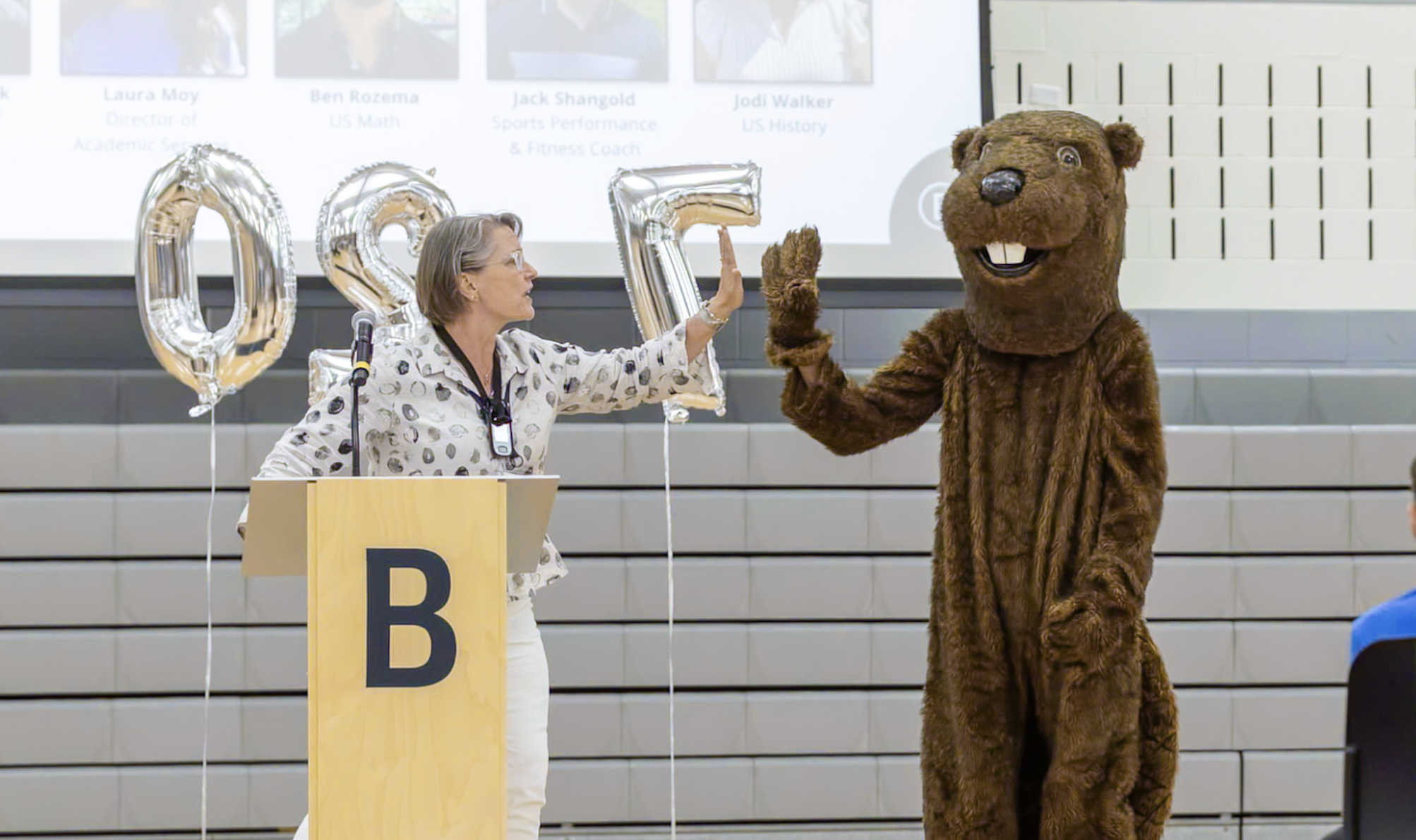
Many things happen in a single school day at Beaver, and every day there is a chance for these deeper moments to take place. In the end, what we want is to raise good humans–passionate, thoughtful, kind, and authentic people who will make a difference in this world. We want them to seize their chance, live fully and honestly, and thrive. Every day, I can see that they are well on their way here.
You might be wondering: the marten waited in anticipation, then took the bit of sandwich we threw to him, and headed back into the bushes.