Each year, The Alex Cohn Grant is awarded to Beaver students hoping to explore a particular interest in a way that will have a meaningful impact on their life journey. Inspired by a transformative semester Alex Cohn spent with a freestyle skiing team in Vermont, the grant emphasizes hands-on, experiential work that doesn’t fit into a normal school schedule.
Each application for the 2025 Cohn Grant was unique, showcasing students’ creativity, compassion, and desire to make a difference. With topics ranging from changing the narrative around women in sports to creating water filters for Nigerian communities, each student set out to explore vastly different interests.
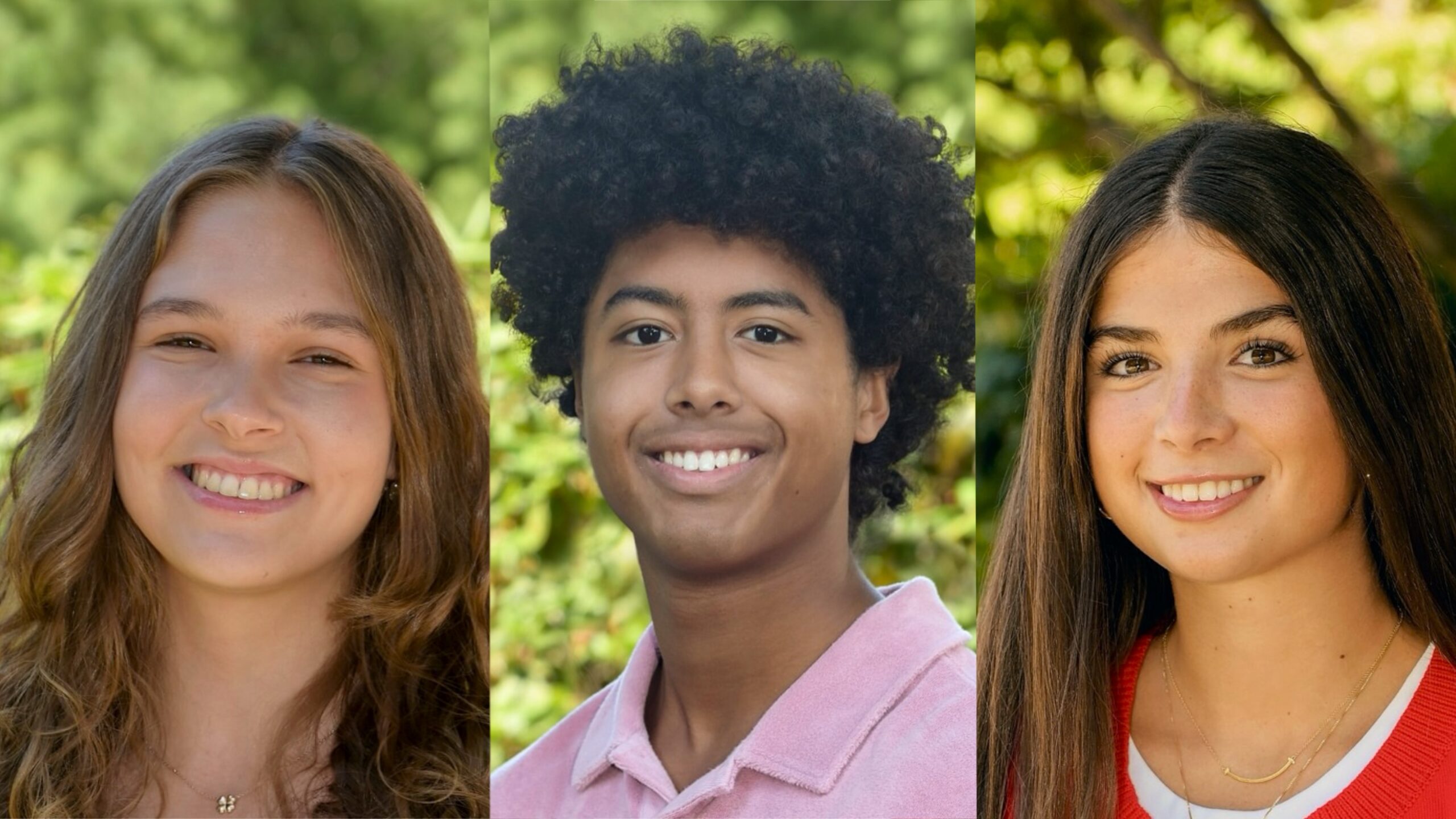
Two projects were funded by the grant this year, enabling three students to dive deep into their interests and develop new skills. Margo Kuznetsova ’27 used the grant to design “Eco-Sort,” a device that leverages AI image recognition to help users properly dispose of waste. Meanwhile, Brody VanDernoot ’26 and Koko VanDernoot ’27 teamed up to film and produce a documentary about Tommy’s Place, a nonprofit that offers families facing childhood cancer a free week-long vacation in Cape Cod.
In the interviews below, the 2025 Cohn Grant recipients detail what they’ve accomplished, what they’ve learned, and what’s next.
Eco-Sort
Margo Kuznetsova ’27

How would you describe your Cohn Grant project?
Eco-Sort is a device that helps users in public spaces correctly dispose of waste. It identifies items using an image recognition AI and indicates the appropriate disposal bin depending on location, alongside educational messaging about reasons why the item should be disposed that way. Eco-Sort is more noticeable than a poster and makes recycling easier for both the community and the space organizers.
Where did the idea for your Cohn Grant project come from?
It was a combination of different opportunities and interests that led to my idea. I’m interested in the psychology behind community behavior, which led me to discovering Dr. Sussman on YouTube. In a speech he gave at a conference, he was talking about different strategies to improve recycling, so I emailed him and set up an interview to talk about it. Through talking about that project, I was inspired to learn how to improve recycling but I wasn’t sure where to go with that idea until I did a Harvard MEDscience program on AI and data science. At that program, I learned how to code a self driving car and I was inspired by the AI aspect. I was brought back to my interest in psychology, recycling, and an idea was sparked to apply the same logic the car uses to be able to detect obstacles to recycling and how people detect items.
 What was your favorite part of the process?
Seeing an idea that I’ve had for such a long time actually come to life; it was just amazing. I’ve been building up this idea for so long and to see an actual physical outcome in the form of a device was really cool. Another thing was figuring out the logic of the device. It was very fun to tinker with the way the AI works, what it can detect, think of different designs for the actual device, and explore how everything connects.
What was one of the biggest challenges you had to overcome?
I think a big challenge of this project was to effectively direct myself. While there were meetings with the grant advisors and I had a plan, I was the one choosing which direction to go in and what to prioritize. It was sometimes a struggle to be concrete about figuring out what my next steps should be and how to organize myself.
What advice would you give to someone that is considering applying for the Cohn Grant?
You won’t believe the amount of people who are willing to help you if you just reach out with genuine interest. I randomly emailed Dr. Sussman and showed my interest and was able to get that support from an actual expert in psychology and recycling.
If you have an interest, just go for it. It was a big lesson for me to actually take my interests seriously and reach out to people. I’m going to be taking these skills forward with me throughout my future.
Margo Kuznetsova '27
Finding Hope
Brody VanDernoot ’26 and Koko VanDernoot ’27

How would you describe your Cohn Grant project?
Through the voices of the founder, devoted volunteers, and families whose lives have been forever touched, [our documentary] “Finding Hope” strives to reveal what makes Tommy’s Place truly extraordinary. These are stories of tears and laughter, heartbreak and joy—but above all, stories of families rediscovering hope when they need it most. Our goal as directors is not only to chronicle this journey, but to invite audiences to witness the ripple effect of compassion and, perhaps, to inspire similar acts of hope and generosity in their own communities.
Where did the idea for your Cohn Grant project come from?
Koko: From a young age, our mom has emphasized the importance of giving back to one another. It’s a norm in our family to get involved in any way, shape, or form to give back to our communities. When the grant applications came out, Brody and I were both talking about wanting to do something we’re both passionate about. We have experience making films and we wanted to continue that legacy of giving back and advocating for change. When we were talking to our mom and brainstorming ideas, we found Tommy’s Place, a nonprofit in Cape Cod very close to our house.
Where were the first steps you took to bring your idea to life?
Brody: When we first got the grant, we were obviously very excited, but we knew that there was no time to waste. The very first thing we did was go to Tommy’s Place and put in some volunteer hours. We talked to some other volunteers there and they shared some of their stories. It was a great experience. The second thing we did was set up an interview with Tim O’Connell, the founder of Tommy’s place. That helped us get an idea of his story and how we wanted to structure our film.
What was one of the biggest challenges you had to overcome?
Brody: After meeting with Tim for an online interview, we used that interview to develop the script that we would be using. Towards the end of the process, we realized that the script was containing us a bit, so we had to step outside of those lines that we created for ourselves. Getting to that point of realization was what led us to the to the final product, making it feel concise and wholehearted.
This experience was very rewarding. Throughout this process, I met so many great people, formed so many connections, and was able to use my talents to help others. I’m proud of myself for advocating for something I’m really passionate about and pushing myself.
Koko VanDernoot '27
What advice would you give to someone that is considering applying for the Cohn Grant?
Brody: If you have your idea formulated, start immediately. There’s no time to waste and you need to give yourself a brace that you can lean on. Even if you feel like you will have time–which I promise you, you won’t– getting a head start can give you extra time at the end of the process to go make sure you have a finished product that you’re proud of.
Koko: I would say to pick a topic that you’re very interested in and could see yourself expanding on; look for something that you can grow beyond just the grant experience. It’s such an amazing experience to take an idea and have it flourish even beyond Beaver.
What’s next for you?
Koko: We are working on a trailer for the film and we have submitted to a number of film festivals. We’re waiting to hear back. We’re also going to look at more film festivals to apply to as well, just to try and get the biggest outreach we possibly can.
The Cohn Grant experience is as simple or as complex as what you make of it. You go through an entire process of applying, you put in the work, and you finish with a product that not only makes you feel fulfilled, but also has the ability to empower others. That is what has made this experience so worthwhile.
Brody VanDernoot '26