Curricular Travel

Exploring major global issues requires a broader, interdisciplinary perspective. Ensuring our students have a global mindset is a priority for us; it’s crucial for developing deeper learning and promotes cultural awareness and competencies that will serve our students well beyond their educational careers.

By integrating travel into our academic courses, we are able to connect content to experience in real time. We are continuously looking for opportunities to open our classrooms to immersive experiences so that we can delve deeper and explore even further with our students.

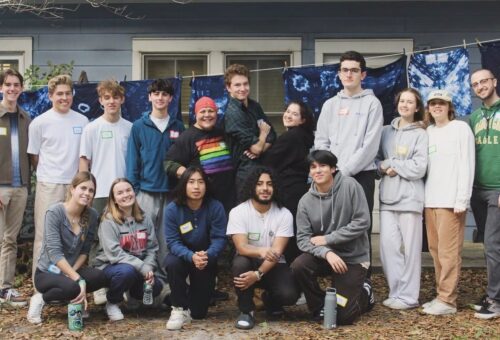
Our teachers are committed to partnering with outside experts and organizations to create these learning experiences for Beaver students. We offer a range of opportunities for our students, from course-connected (classes they are taking), to co-curricular (clubs or groups they are members of), to intersession opportunities (open to larger groups over spring and summer breaks), our students have many options to travel to a wide range of locations.

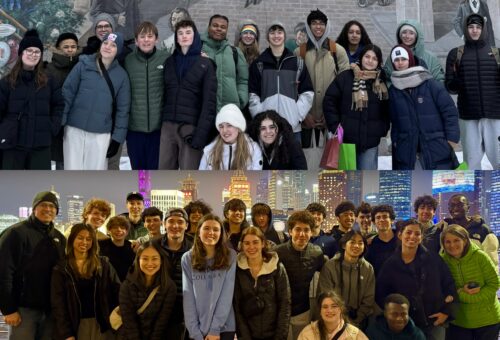
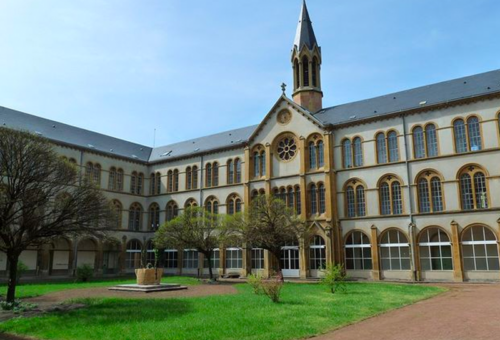
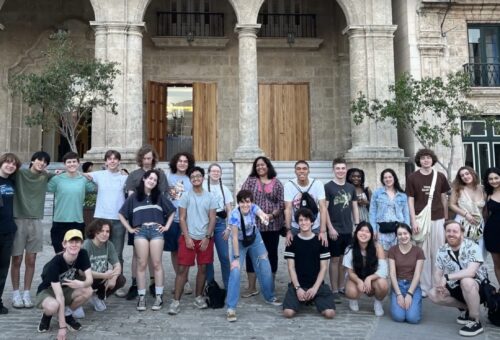
During the 24-25 school year, Beaver will go to Cuba and Spain; in 25-26, students will travel to Quebec and China. In addition to these course-connected trips, we are excited to continue to add co-curricular opportunities for our students to travel and explore together outside of their classroom work. From traveling with the Hiatt Center, to sending the RoboSub club to its annual competition, to representing themselves and our school at conferences like the NAIS Civil Leadership Summit, we invest in the work our students are doing in and out of the classroom. For travel not tied to a specific class or program, we are also excited to offer intersession travel opportunities during spring and summer breaks.

Our transdisciplinary approach fosters a deep dive in the classroom, partnerships with institutions and experts, and local and global travel opportunities to allow our students to transfer their knowledge into hands-on, authentic experiences. They don’t just explore the world, they can read it, too.

Kader Adjout, Director of Teaching, Learning, and Innovation

Courses with a travel component

Cuban Jazz Ensemble (BVR-X)

11th, 12th
Performing Arts
Interests: Hands On

In this course, students will specialize in and learn a variety of Afro-Cuban Jazz Standards. They will explore Cuban culture and history to gain a greater understanding of the evolution of Cuban music and its relationship and impact on North American jazz. An element of this course is a trip that will allow students to immerse themselves in another culture, and work with students and teachers at Escuela Nacional de Arte in Havana, Cuba to hone their music skills while making cross-cultural and historical connections. Auditions are open for the following instruments: Bass, Drums, Percussion, Guitar, Piano, Strings, Brass, and Woodwinds. This ensemble performs three formal concerts and at some additional school forums. Weekly individual instrumental lessons are not required but are available on campus to students for an additional fee. Students who are on financial aid at Beaver have the same percentage of aid applied to private lessons.

Please note that this course is connected to a BVR Accelerator and that the travel component of the course will take place during this time. Therefore participation in the corresponding BVR Accelerator is a requirement of this course.

Three Term Class
Prerequisite: Audition
Open to grade levels: 11, 12

[read more]

Advanced Spanish

10th, 11th, 12th
Modern Languages
Interests: Literature, Social Justice

Prerequisites: Demonstration of mastery of Intermediate Spanish skills and Departmental Recommendation Required.

Course topics are briefly outlined below.

Environments in Crisis: This course focuses on current environmental challenges. Students will be encouraged to analyze the connections between the social contexts and contemporary environmental crises. Through case studies, students will explore the interrelationships between human activity and environmental change. The topics to be studied will include the destruction of the rainforest, water pollution, exploitation of natural resources, habitat destruction, and endangered species. Students will examine how social media, community engagement, and advocacy initiatives have played key roles in the positive outcomes of environmental problems.

Social Justice in Latin America: In this course, students will investigate the key social justice issues facing the Spanish-speaking populations of the Americas. We will examine struggles for equity among various groups, including indigenous populations, political dissidents, and the poor and disenfranchised. Using a variety of authentic sources from the media, such as news articles, documentaries, music, literature and poetry, we will compare and contrast the multiple perspectives of people of Latin American descent. Students will be expected to demonstrate their understanding and express their opinions in discussions, essays and projects. One of the goals of this course is for students to understand the societal forces that shape the beliefs and attitudes of diverse groups of people.

Spanish Literature: In this course, students will explore literary works of The Latin American Boom, a modern literary period known for blending fantasy, magic, and journalistic stories with everyday life. This class will discuss the movement as a product of the political, historical, and social context in Latin America in the 20th century. Through fragments of novels, short stories, film, art, and history, students will explore the importance of the movement in the culture of the region and its global impact. Class activities will include discussions, written and oral reflections, presentations, debates, and creative writing. 

[read more]

Advanced French

10th, 11th, 12th
Modern Languages
Interests: Social Justice

Prerequisites: Demonstration of mastery of Intermediate French skills and Departmental Recommendation Required.

Course topics are briefly outlined below.

Environments in Crisis: This course focuses on current environmental challenges around the world. Students will be encouraged to analyze the connections between the social contexts and contemporary environmental crises. Students will examine how social media, community engagement, and advocacy initiatives have played key roles in the positive outcomes of environmental problems.

French Lit: Students in this class will have the chance to read two novels from the Francophone world. They will explore issues of family, culture, the effects of colonization, and identity. Students will develop their literary comprehension as well as their ability to make deep cultural comparisons. 

Québec of Today and Yesterday: In this class, students will explore Quebec’s rich history and culture. Students will use literature, current events, film, music and other resources to learn about the region of Quebec. This course will explore themes including  La Révolution Tranquille, Quebecois identity today, Quebec’s indigenous population, Quebec’s relation to France today and yesterday. The course will also look at Quebec today as well as explore Quebec’s future. Students will read excerpts by Quebecois writers including Michel Tremblay, Wajdi Mouawad. This class will be taught entirely in French. This course will include a travel experience.

[read more]

Advanced Chinese

10th, 11th, 12th
Modern Languages

In Advanced Chinese, students will continue to develop their reading, writing, speaking, and listening skills. At this level, students have greater autonomy with the language and are encouraged to use it creatively and authentically. Grammar is studied incrementally through storytelling as functional chunks for meaningful communication. Vocabulary is practiced in a thematic and communicative way, and the topics that are discussed include: dining, shopping, asking for and giving directions, and expressing opinions. Students will study the culture and diversity of the Chinese-speaking world in the form of culturally rich images, videos, music, and some authentic texts. Audio and video materials, computer software, games, projects, skits and presentations foster student interaction and participation.

Prerequisites: Demonstration of mastery of Intermediate Chinese skills. Departmental RecommendationRequired.

Course topics are briefly outlined below.

Cuisine and Culture: Students will learn vocabulary related to groceries, ingredients, dining out and the kitchen. They will learn different expressions as well as units of measurement used in Chinese-speaking countries. They will also learn about the typical dining etiquette. This course will include a travel experience.

Travel and Transportation: Students will learn practical topical vocabulary around travel, asking for and giving directions while developing their skills of reading authentic Chinese signs, understanding Mandarin of various accents and expanding their vocabulary. This course will include a travel experience.

[read more]