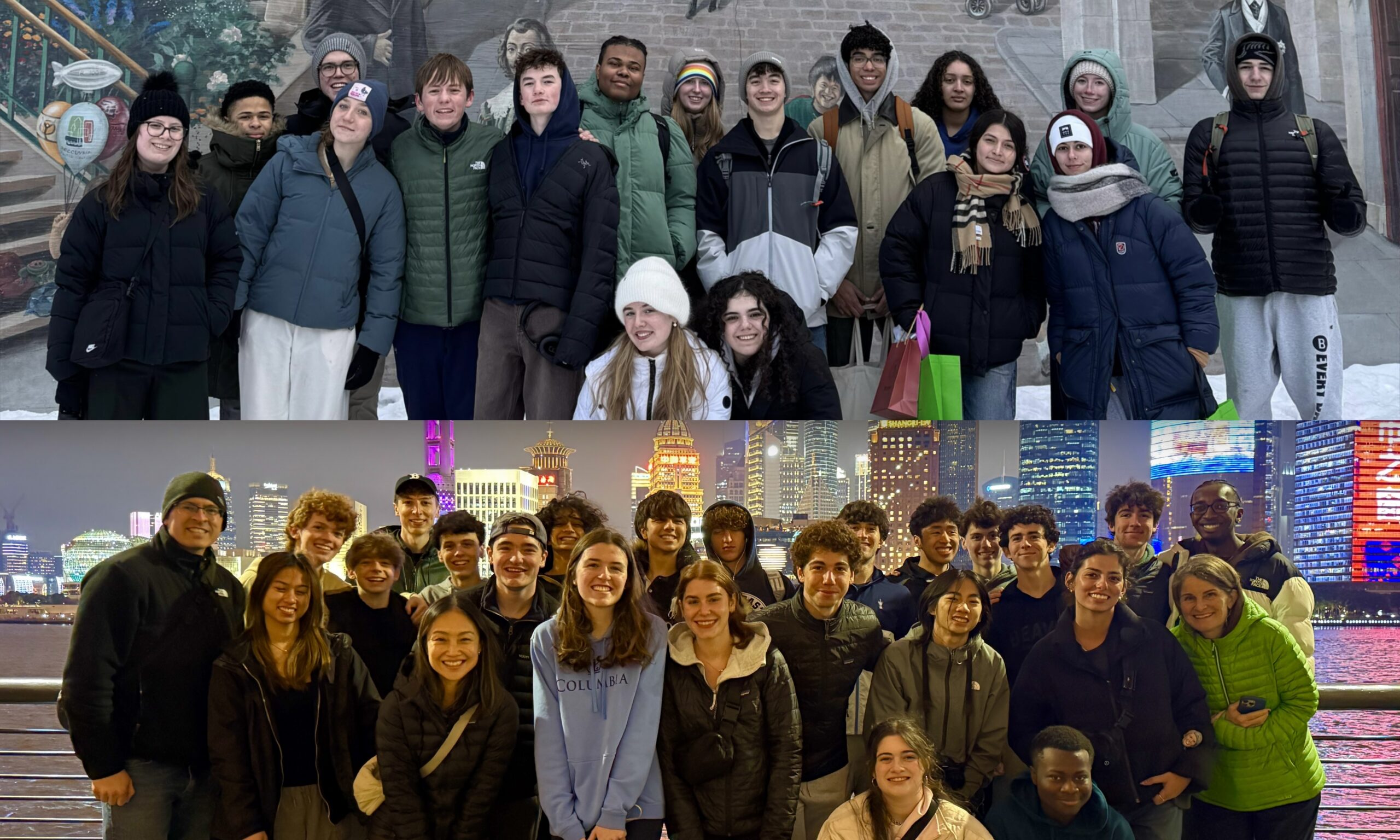
This winter, two groups of students traveled across the world—one north to Quebec, the other to China—for immersive experiences rooted in the languages and cultures they’ve been studying in class. In addition to seeing iconic landmarks, taking hands-on classes, and enjoying traditional cuisine, students participated in homestays with local families, giving them an authentic look at life outside of the United States.
At Beaver, travel-based experiences are intentional extensions of classroom learning, as they are opportunities to accelerate language acquisition and bring cultural understanding to life in ways that only immersive experiences can offer.
Shanshan Xu, Upper School Chinese
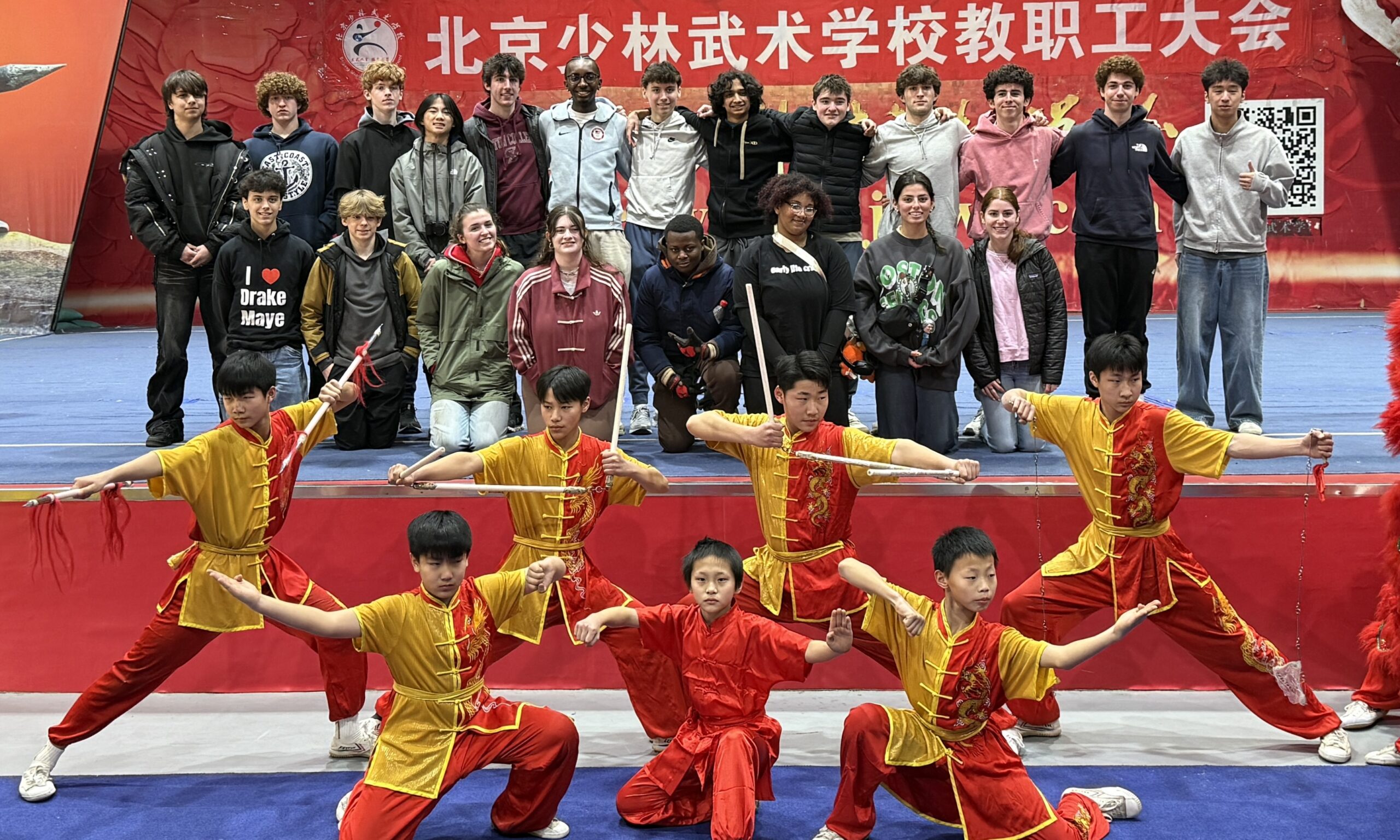
Students take a kung fu class at a martial arts school in Beijing.
In China, students found themselves adjusting to a new time zone, new cuisine, and a new approach to studying language. In Beijing, the group visited landmarks such as the Forbidden City and Tiananmen Square, practiced paper-cutting and dumpling-making, and hiked to the top of the Great Wall. A high-speed train brought them to their next stop—Shanghai—where a tour of the Oriental Pearl TV Tower and NYU Shanghai revealed an entirely different side of Chinese culture. Their journey ended in Chengdu, where students gained hands-on experience through activities such as volunteering at a panda base and planting crops at a local farm.
The overwhelming size of China’s landmarks left a lasting impression on students. “One thing I did not expect was just how big everything was,” mentioned Kyle Benton ’28. From sprawling residential districts to the grand scale of Tiananmen Square and the Great Wall, every sight reinforced the power of experiencing another country firsthand. As Sam Steere ’26 stated, “We saw so many incredible sites across all the cities … you can’t replicate that just from photos; it was special to actually be there in person.”
Going to China reinforced my [plan] to minor in Chinese. I’ve been working so hard to learn the language and wasn’t sure how much I’d actually be able to understand, and I’m really proud of how much I could. That made me want to keep growing my language skills.
Dany Sidman '26
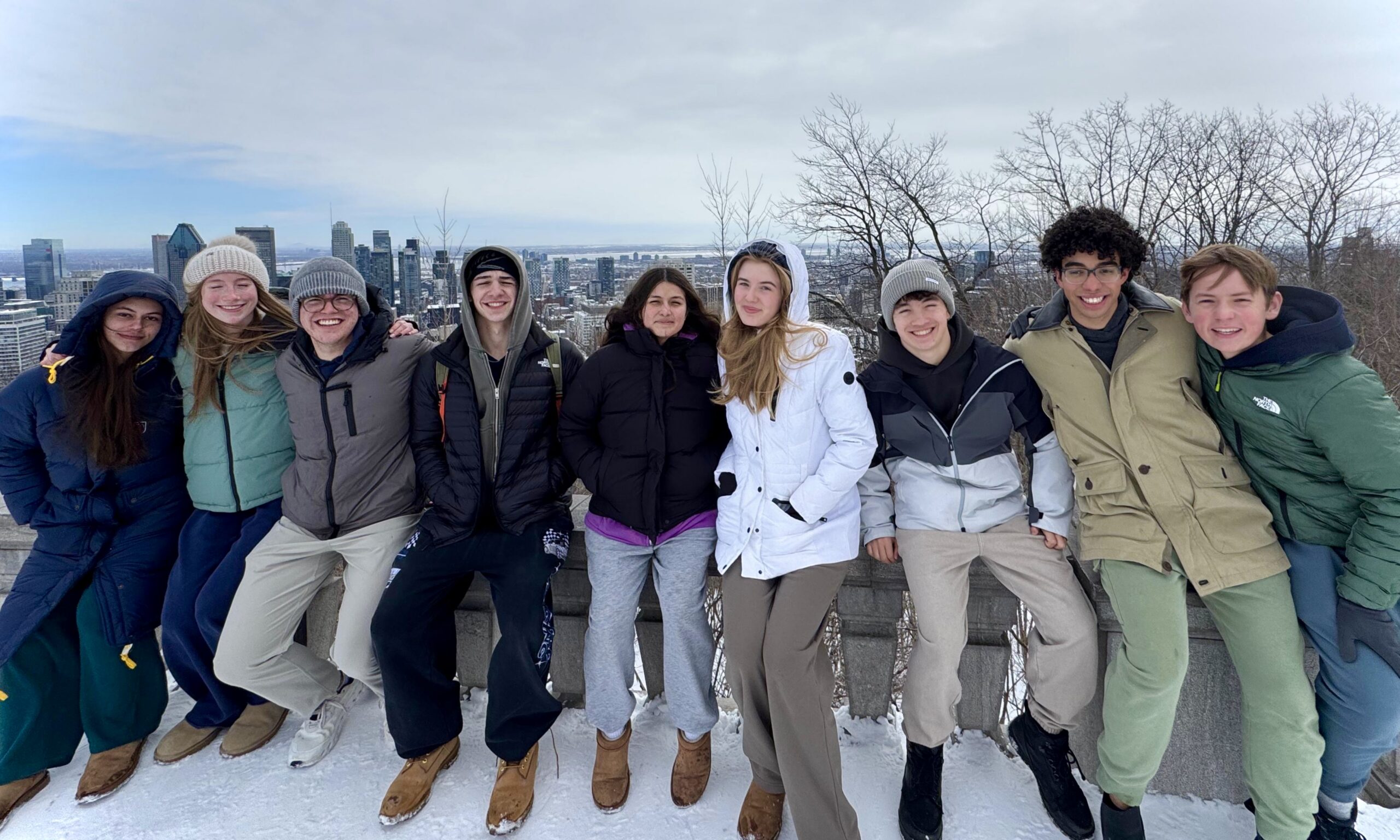
Students pose in front of the Montreal skyline.
In Montréal and Québec City, students found themselves surrounded by the sites and language they had been studying for months. “We spent the term leading up to the trip learning about the history, culture, and even language of Quebec,” said Upper School French teacher Soumaya Ibourk. Students used this knowledge to navigate experiences such as tours of Old Québec and the Plains of Abraham, a theatrical performance at the Morrin Centre, and a visit to Onhoüa Chetek8e, a reconstructed village where members of the Huron-Wendat Nation preserve their ancestral lifestyle, history, and traditions.
A particularly impactful experience was a traditional cooking class that served as an interactive look into Quebec’s culture. “Having the opportunity to participate in a cooking class based on traditional Quebec cuisine was so memorable for me,” Nate Howard ’28 reflected. “I believe that food is one of the best ways to connect with people from different cultures.”
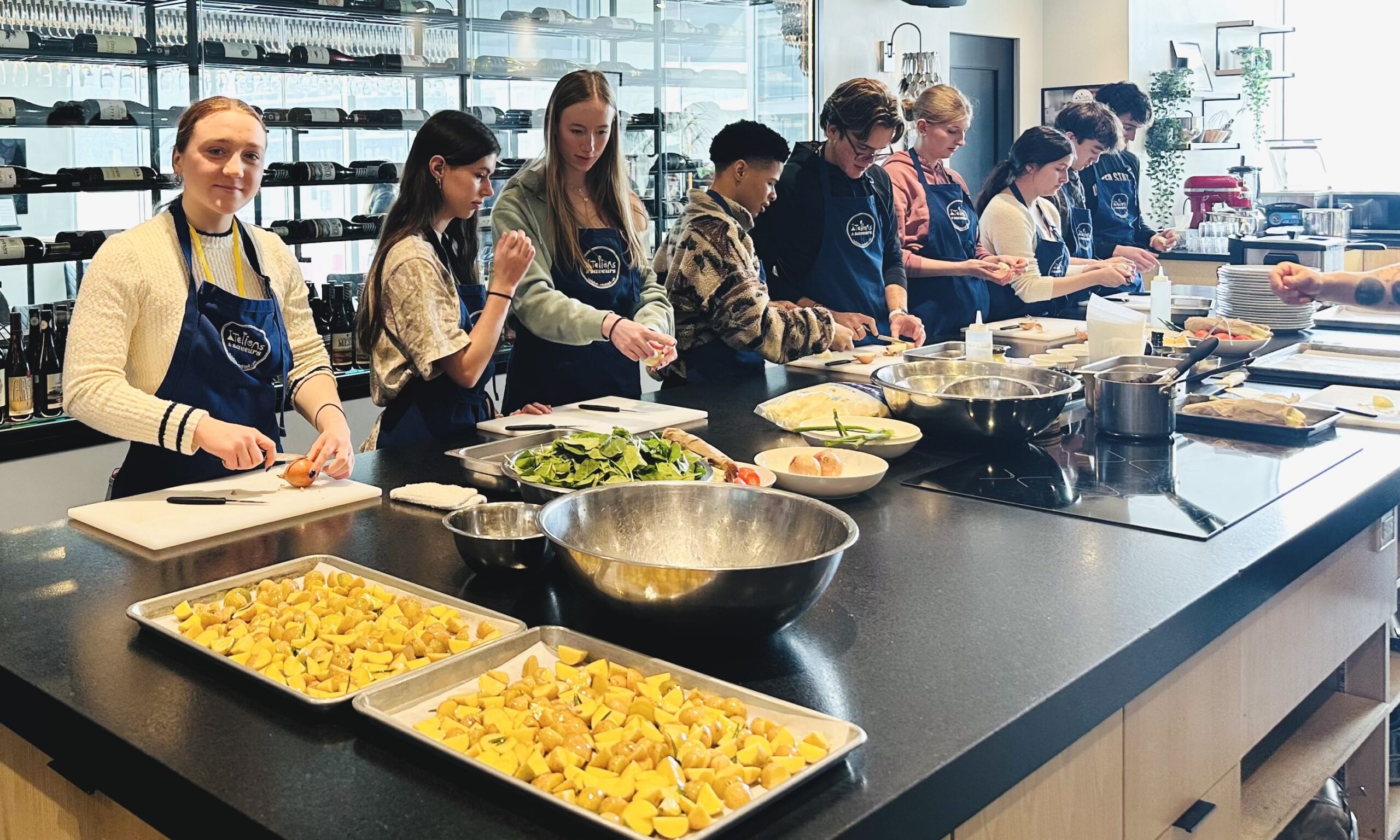
A cooking class in Quebec teaches students how to make local cuisine.
Students drew upon their years of language studies to navigate their experiences abroad. From reading signage to conversing with shop owners, each interaction required students to lean on listening and speaking skills. “Languages are hard, but once you start actually becoming conversational, it feels rewarding,” reflected Lauren Wagner ’26. Regional dialects posed an added challenge, pushing students to adapt both their language and cultural awareness on the fly. Consistent practice sharpened students’ ability to parse unfamiliar accents and expressions. “I got better at understanding spoken Chinese, even in Sichuan, where they have strong accents,” Sam Steere ’26 mentioned. “I found myself still being able to pick up words and piece together the meaning of sentences from what I could understand.”
The experience of speaking in a native environment empowered students to share their learning. On the streets of Shanghai, students assisted math teacher Joe Robinson as he learned to count in Chinese. In another instance, students stepped up as translators for history teacher Edward Henry. “I only know about five words in French, just enough to ask for a coffee,” Henry said. “Several students, without missing a beat, would step up to me and translate key information for me, saying, ‘Mr. Henry, you would find this interesting! Let me translate for you!’”
I am proud of the students and how much French they spoke. During their free time in Old Québec, I was happy to see students using French with the locals and with each other. They learned a lot of Québecois French from their host families as well!
Soumaya Ibourk, Upper School French and Arabic
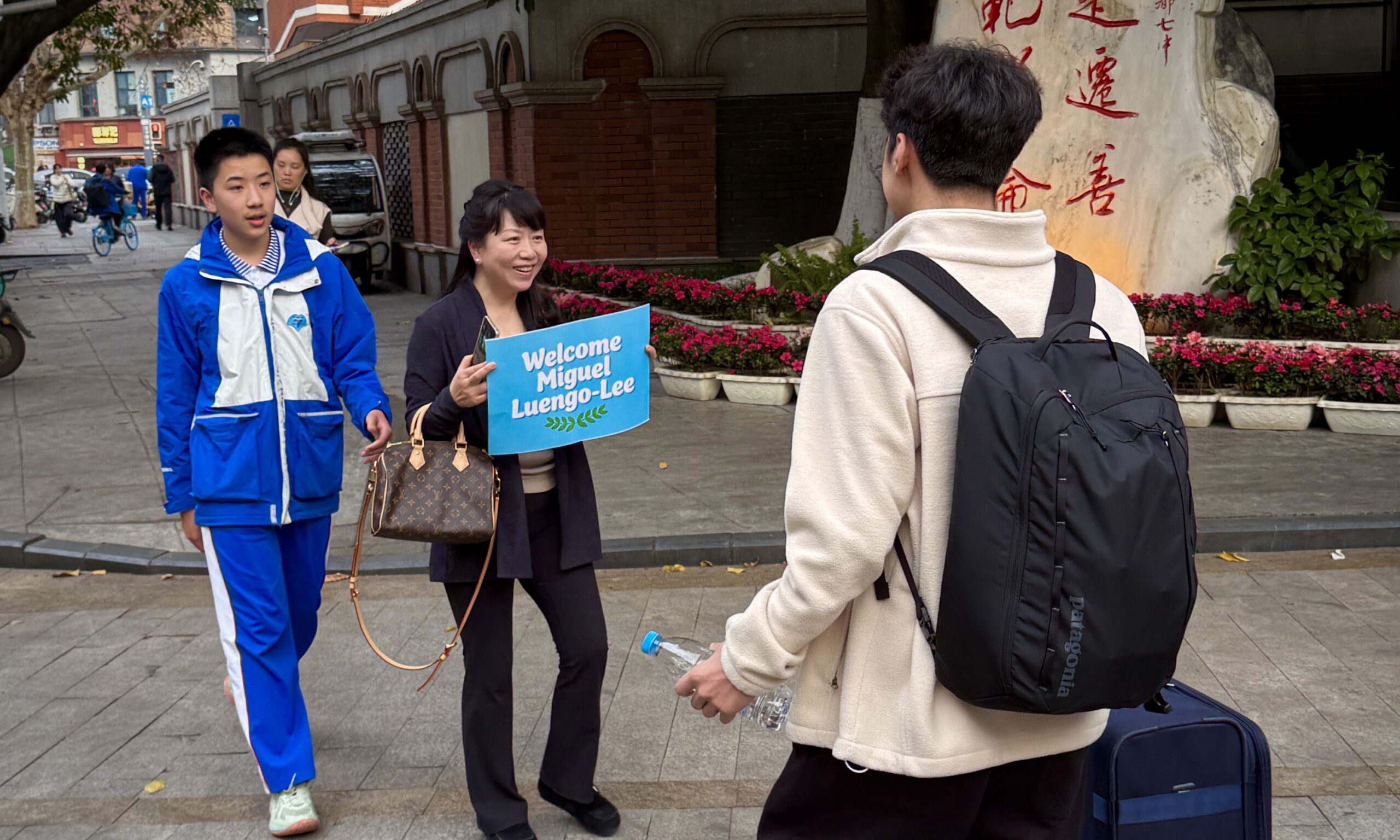
Host families greet Beaver students at Chengdu No.7 High School.
Few experiences impacted students more than their homestays in Quebec City and Chengdu. Students lived with local families for several days, gaining an unfiltered look at life abroad through shared meals and daily routines. “We got to experience what daily life in China is actually like—what people eat for breakfast, how school works, what life is like as a student there,” shared Charlie Scott ’27.
Stepping into a stranger’s home in a foreign country was no small task. However, any hesitation students had faded the moment host families arrived with flowers, signs, and gifts, welcoming students into their homes and families. “The homestay was honestly one of the main things I was nervous about before the trip,” mentioned Chris Anderson ’26. “But it ended up being one of the best things.” Students found common ground with their host families across cultural differences, connecting over hobbies such as basketball and music, going on outings to shopping malls and amusement parks, and always leading with curiosity. These bonds continued after returning to the U.S., with many students staying in touch with their host families.
One thing I’m going to take away from China is just being authentic and my true self, especially around new people. This trip allowed me to meet so many people and I think being my true self really enhanced the trip as a whole. I’m glad I stuck to that, and I’ll continue to do that.
Chris Anderson '26
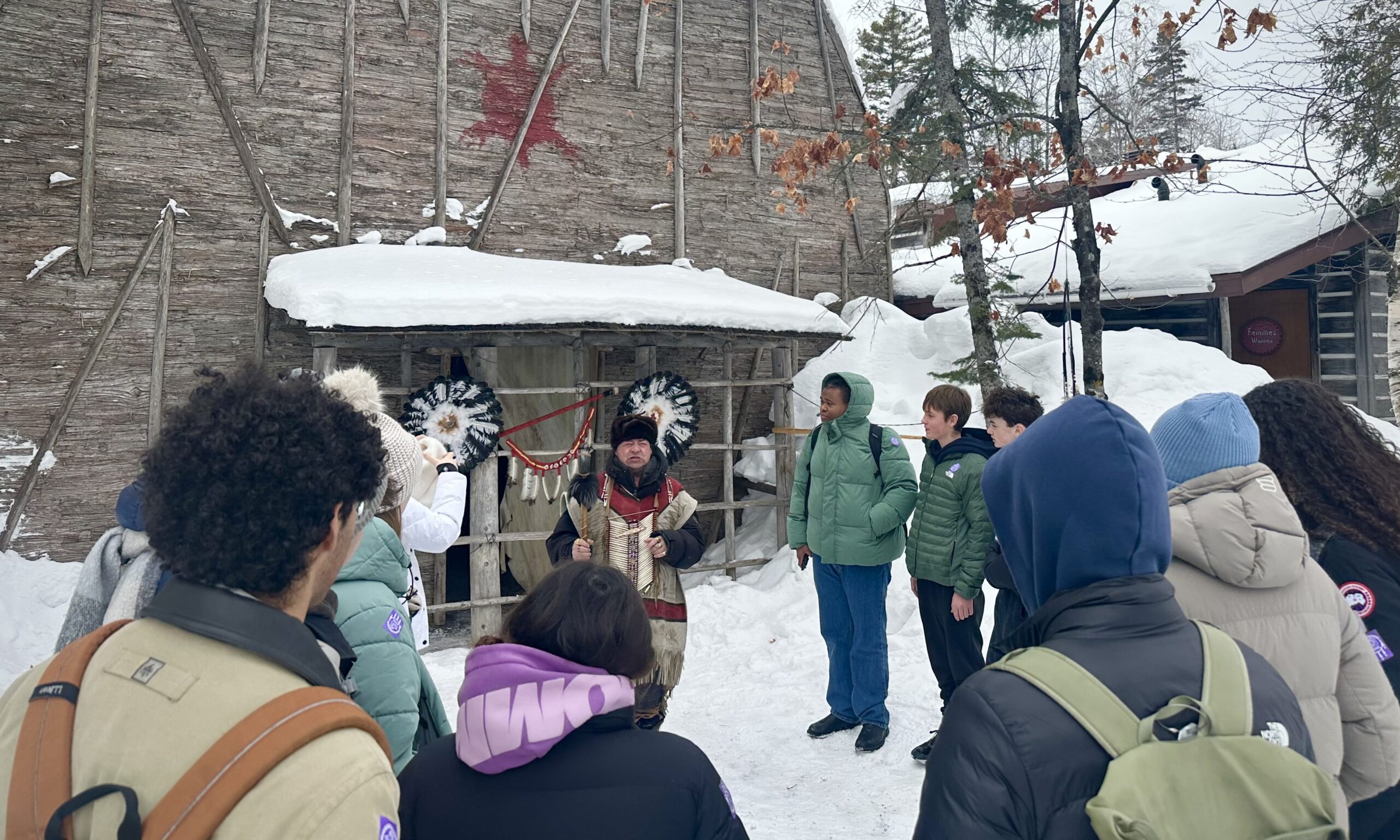
Students hear from a member of the Huron-Wendat Nation at Onhoüa Chetek8e.
By moving beyond the classroom and traveling abroad, students gained a deeper understanding of how language and culture exist in the real world. Whether on the streets of Old Québec or atop the Great Wall of China, students encountered authentic opportunities to put their language skills to the test, adapting in real time to navigate each encounter. This learning was enhanced by the homestay experiences central to both trips, as well as by the lasting connections students made with their host families.
For many students, the trips offered a glimpse into just how far their language skills can take them—and how much further they still want to go. As they return to the classroom, students bring with them a deeper curiosity, a sharper ear, and a personal connection to the cultures they continue to study.
Beaver places emphasis on travel because it prepares students for a globalized world. These trips expand and deepen what students learn in the classroom by adding multiple perspectives, personal voices, and firsthand experiences to their education, helping them become more empathetic and globally aware citizens in an interconnected world.
Shanshan Xu, Upper School Chinese
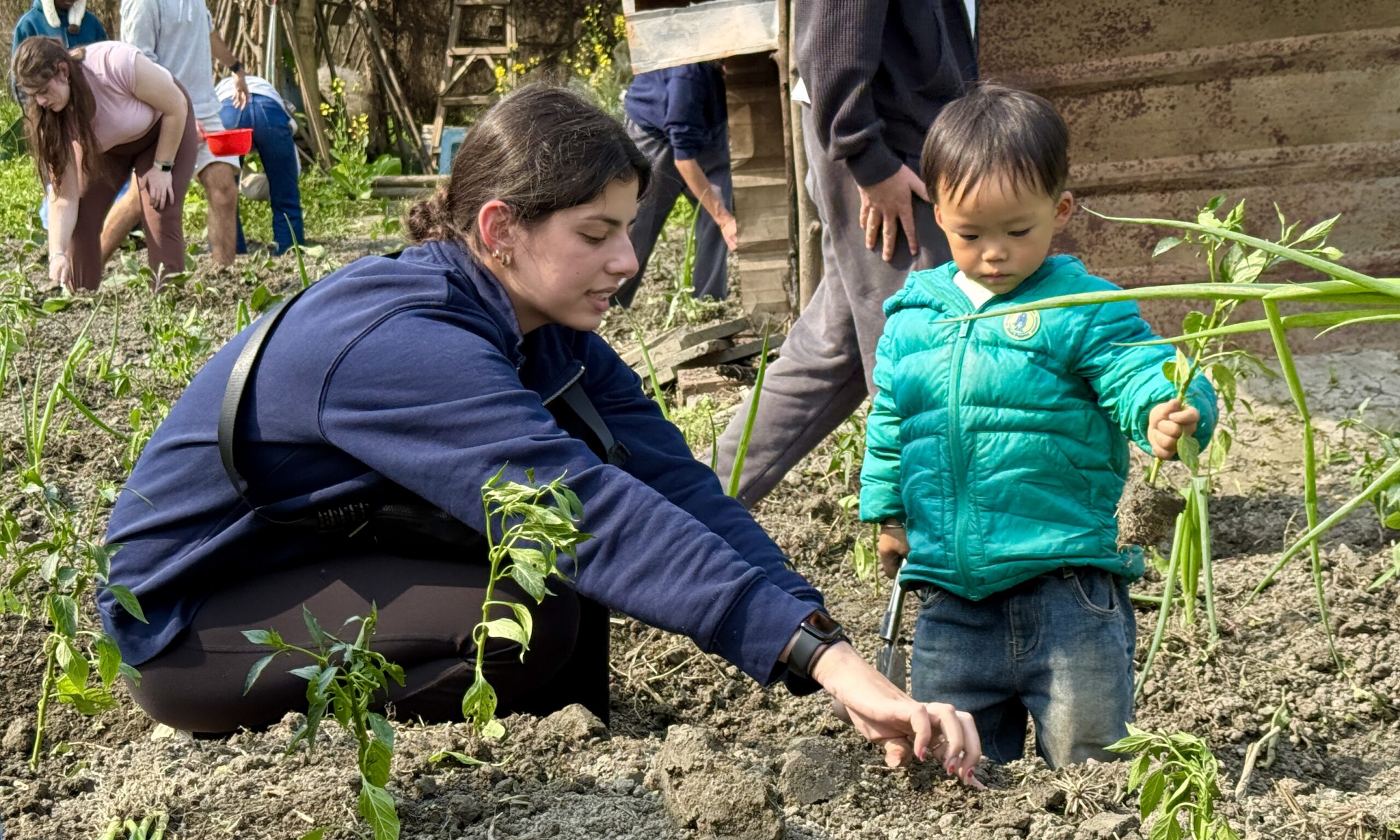
Dany Sidman ’26 demonstrates how to plant crops in Chengdu.