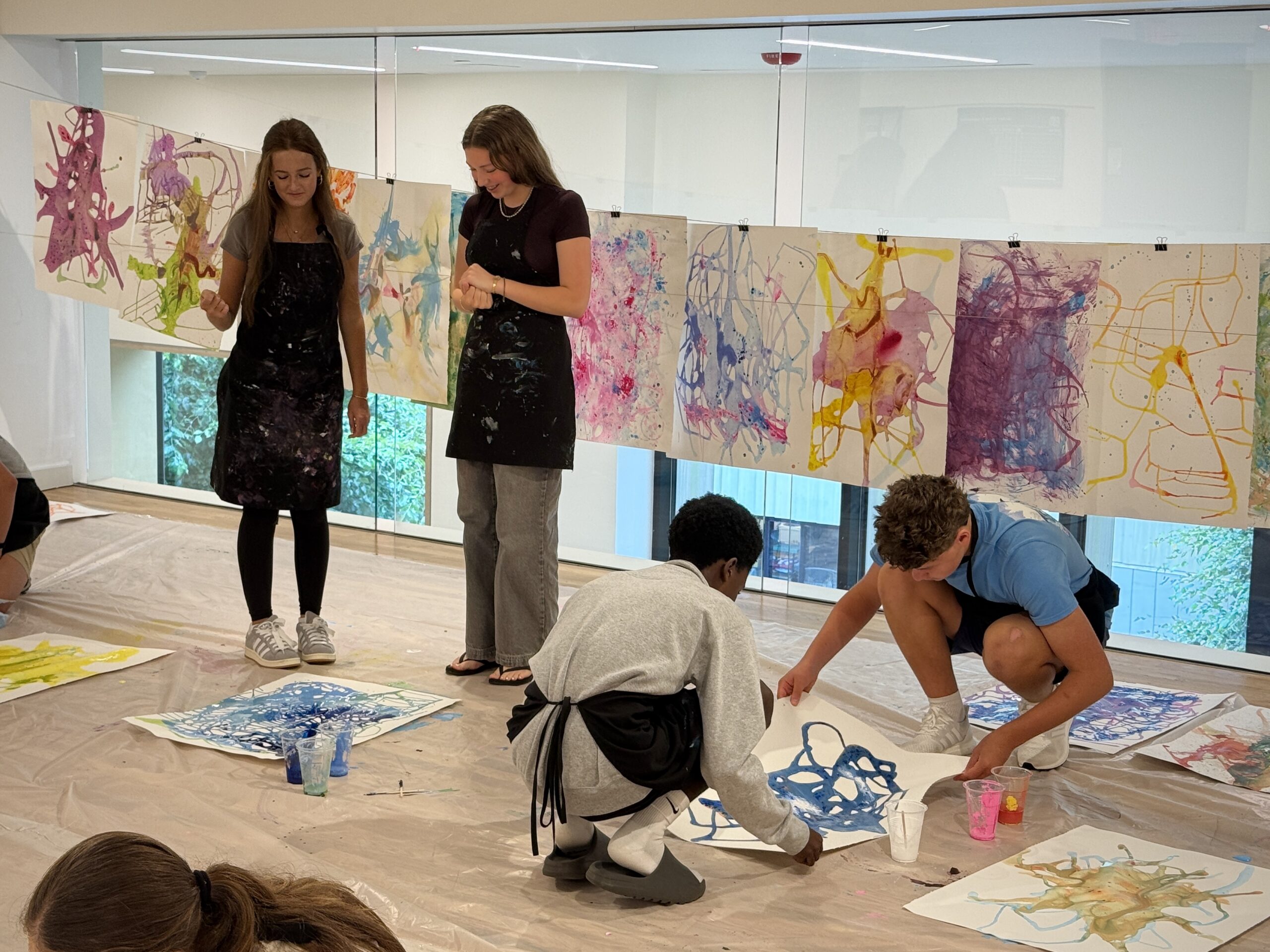
Students in Visual Arts Foundations started the year exploring a new approach to creating art. Rather than searching for inspiration and planning out an entire idea, students jumped straight into the creative process, collaborating with their peers to let inspiration form organically.
The result was a series of projects that took students on an odyssey through different artistic mediums. From collage to photography to painting, students explored how ideas can be translated and reimagined through creation.
Students might not know who they are as artists when entering this course, so we aim to expose students to many different ways to make art. Through this work, we hope students can discover what excites and inspires them as = artists.
Amelia Walske, Upper School Visual Arts
STEP ONE: Pour Paintings
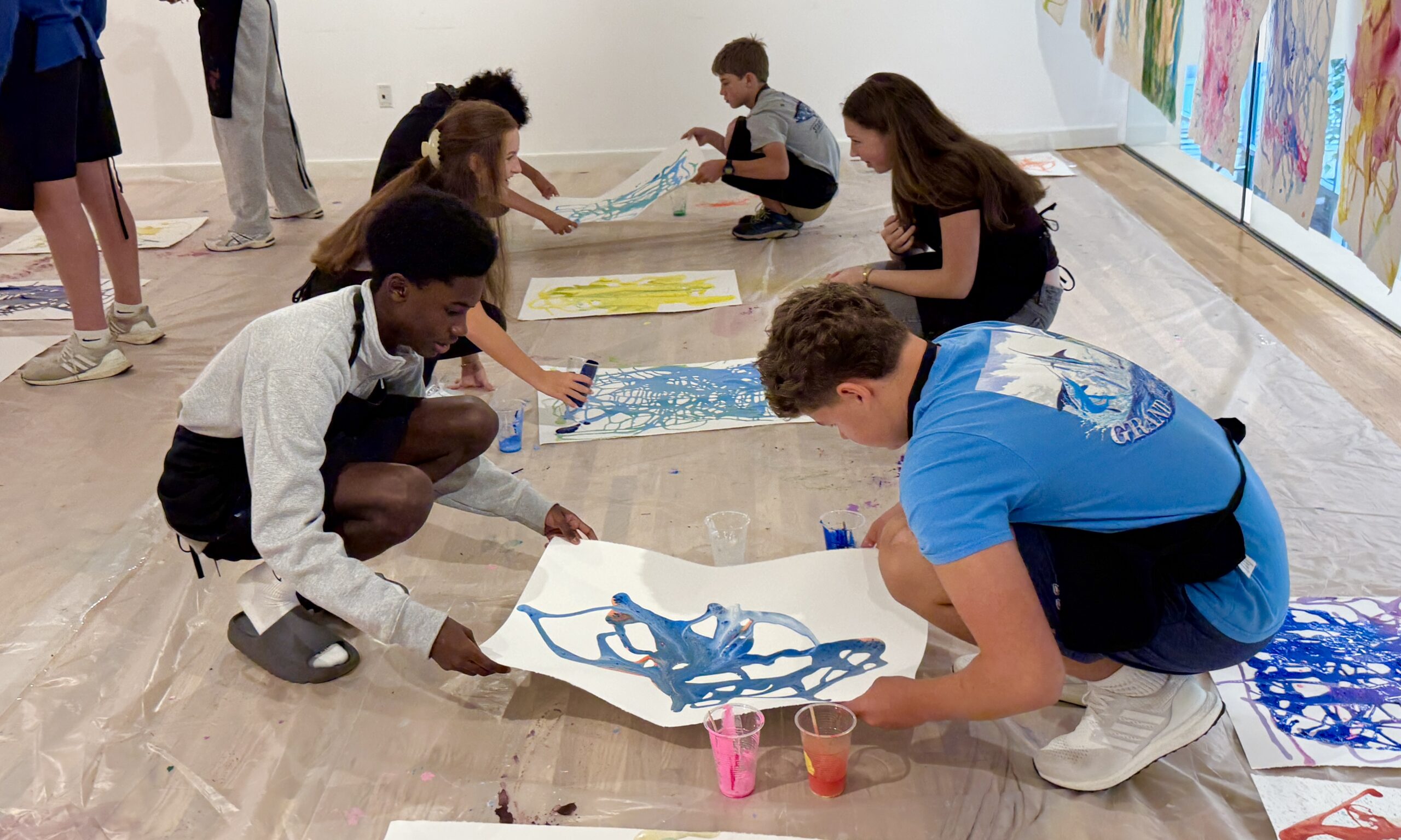
The project kicked off in the Griffin Gallery, where students worked in pairs to create pour paintings. The task relied heavily on communication and iteration as students collaborated as a team to guide their paint across a canvas. Initial nerves quickly subsided as students debated color choices and mixed paint, coordinated techniques, and laughed at the unpredictability of the work.
“I had the most fun doing the pour paintings because there’s no getting it wrong,” shared James Shanley ’30. “We got to try new things and create our own way of doing the painting. My partner and I had a certain style that we found accidentally, but it ended up being really cool and a bunch of people liked it!”
STEP TWO: Collage
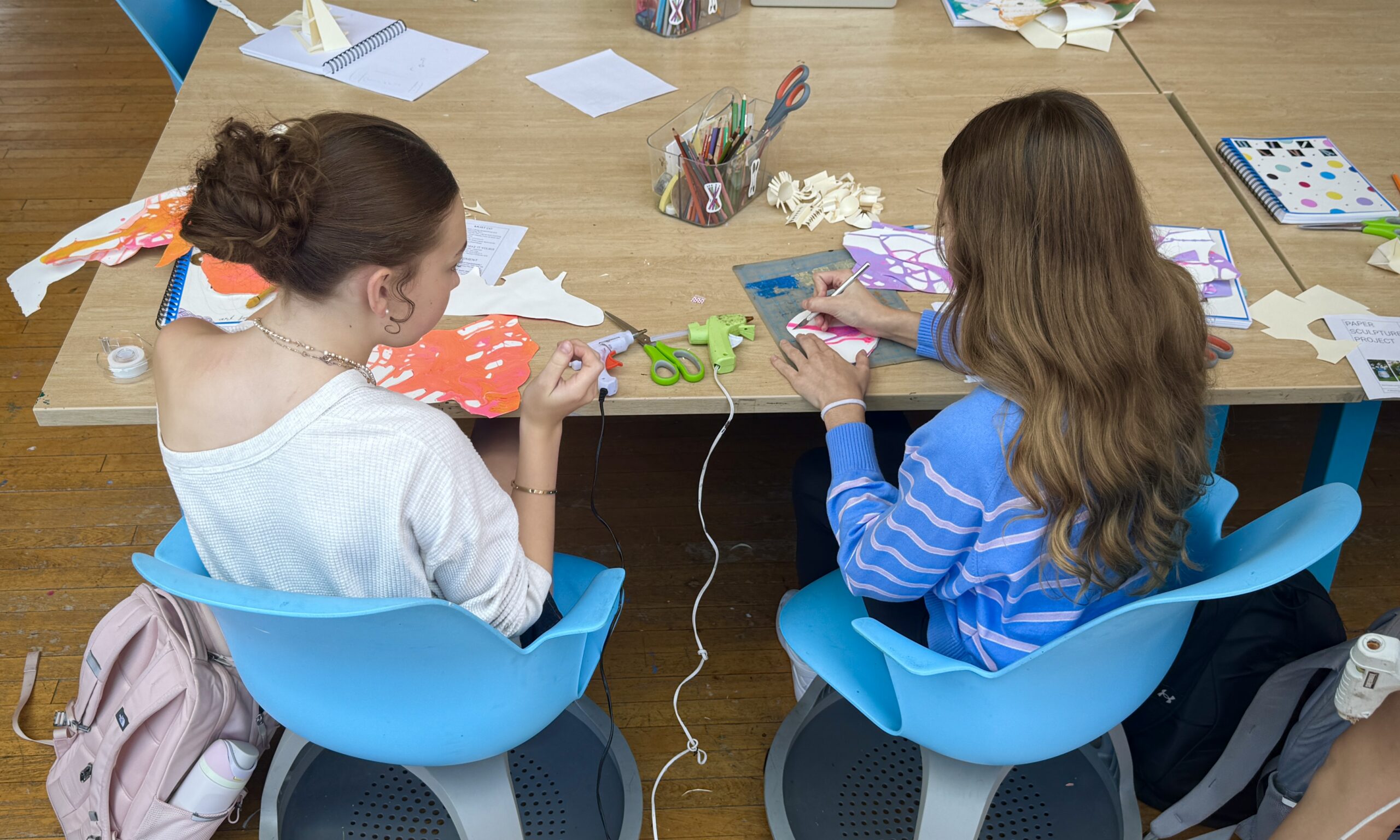
Students used their pour paintings as materials and inspiration for collages, finding ideas within the colors and shapes that organically formed in their work. The subjectivity of this approach ensured that no two students settled on the same ideas; where one student identified colors and textures resembling celestial bodies, another saw visual motifs associated with baking.
Translating ideas across mediums is an approach intentionally designed to mirror the work of artists. “Artists make bodies of work; they move from one thing to the next,” shared Visual Arts Teacher Rebecca Roberts. “You start in one place and you let the journey unfold, then you end up somewhere else.”
STEP THREE: Sculptures
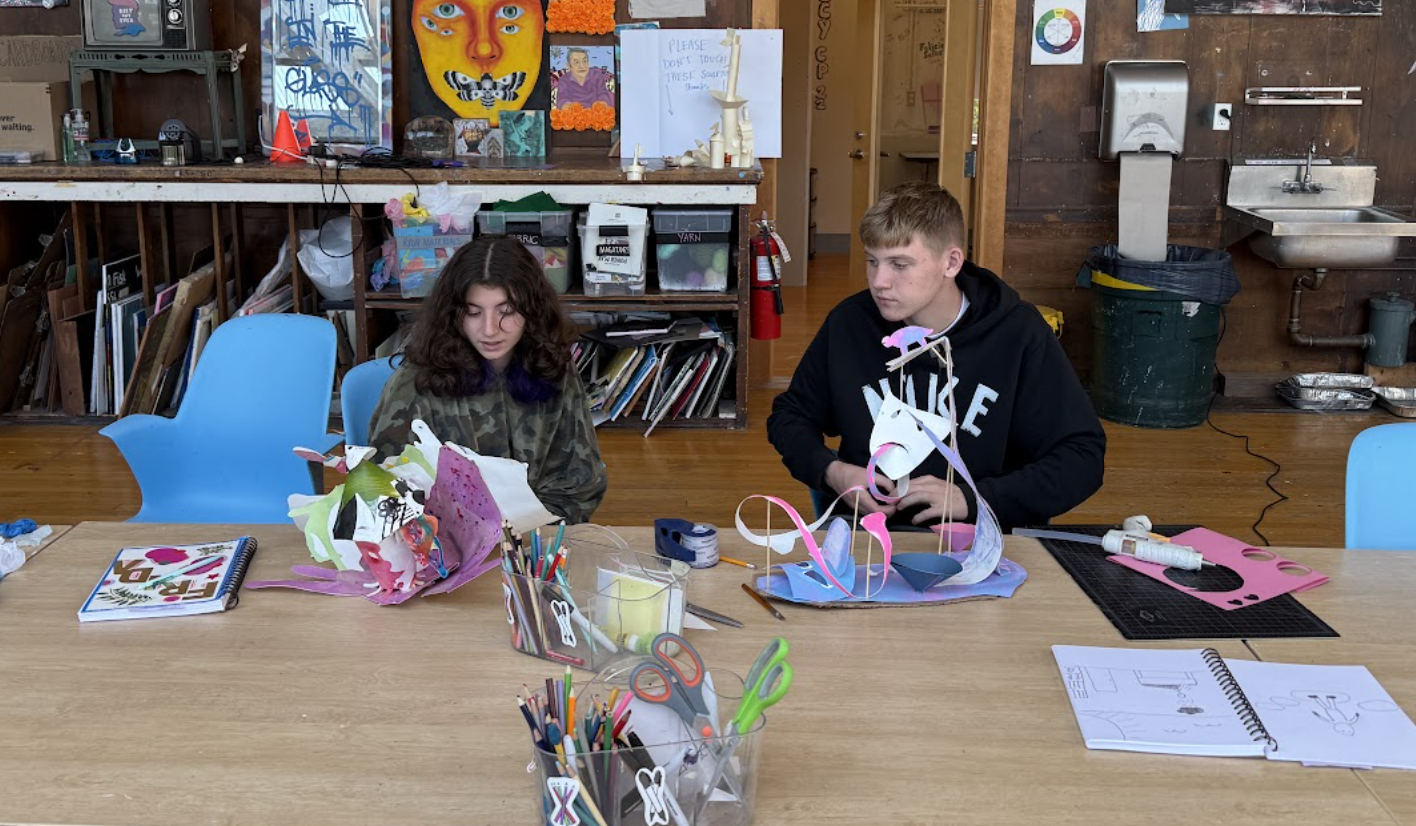
Students faced a unique challenge as they began the next project of the series: translating their work into three dimensions. “Building sculptures with our pour paintings was probably the most challenging part of this work,” shared L’mar Hibbert ’30. “We had to cut them up, make them stable, and have them be viewed from different angles.”
To create their sculptures, students pushed their materials beyond their original forms, deconstructing their collages and paintings and introducing new materials to create abstract structures. Students studied different approaches to material manipulation that allowed for artistic expression.
We had to figure out how to make the sculptures look interesting from every angle while still showing the artwork that we originally made. I thought that was a pretty creative experience.
James Shanley '30
STEP FOUR: Photography and Viewfinding
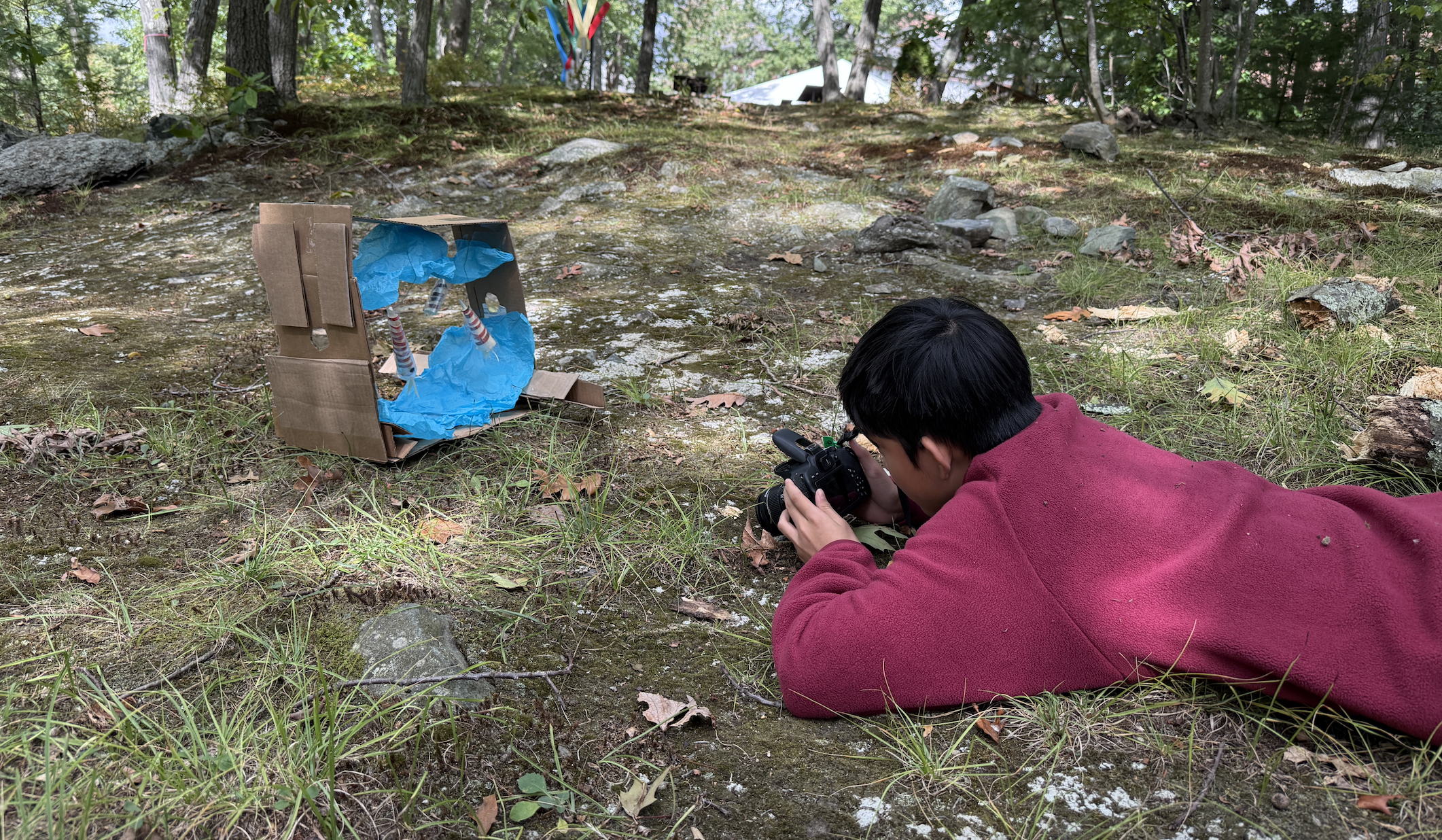
After making their work three dimensional, the next step was to make it appear larger than life. The class brought their sculptures outside and experimented with photography, learning how changes in perspective, composition, and scale could transform how their work was seen. Students placed their sculptures in different settings around campus, using photography to make the abstract structures appear monumental.
The process introduced students to photography as another way of interpreting their work. Rather than simply documenting their sculptures, students considered how the camera could change the way their work was understood.
STEP FIVE: Painting
The final step brought the series full circle. Students went back to their photographs, cropping and reframing them until they discovered new compositions that caught their attention. They then used those images as inspiration for a final painting. By the end of the project, their original pour paintings had taken on several new forms, with each step leading to something students could not have predicted at the beginning.
Across this series of projects, students were encouraged to follow their ideas rather than work toward a predetermined final product. Each step provided a new starting point, giving students the opportunity to experiment with materials, observe their work in new ways, and discover where their ideas could take them.
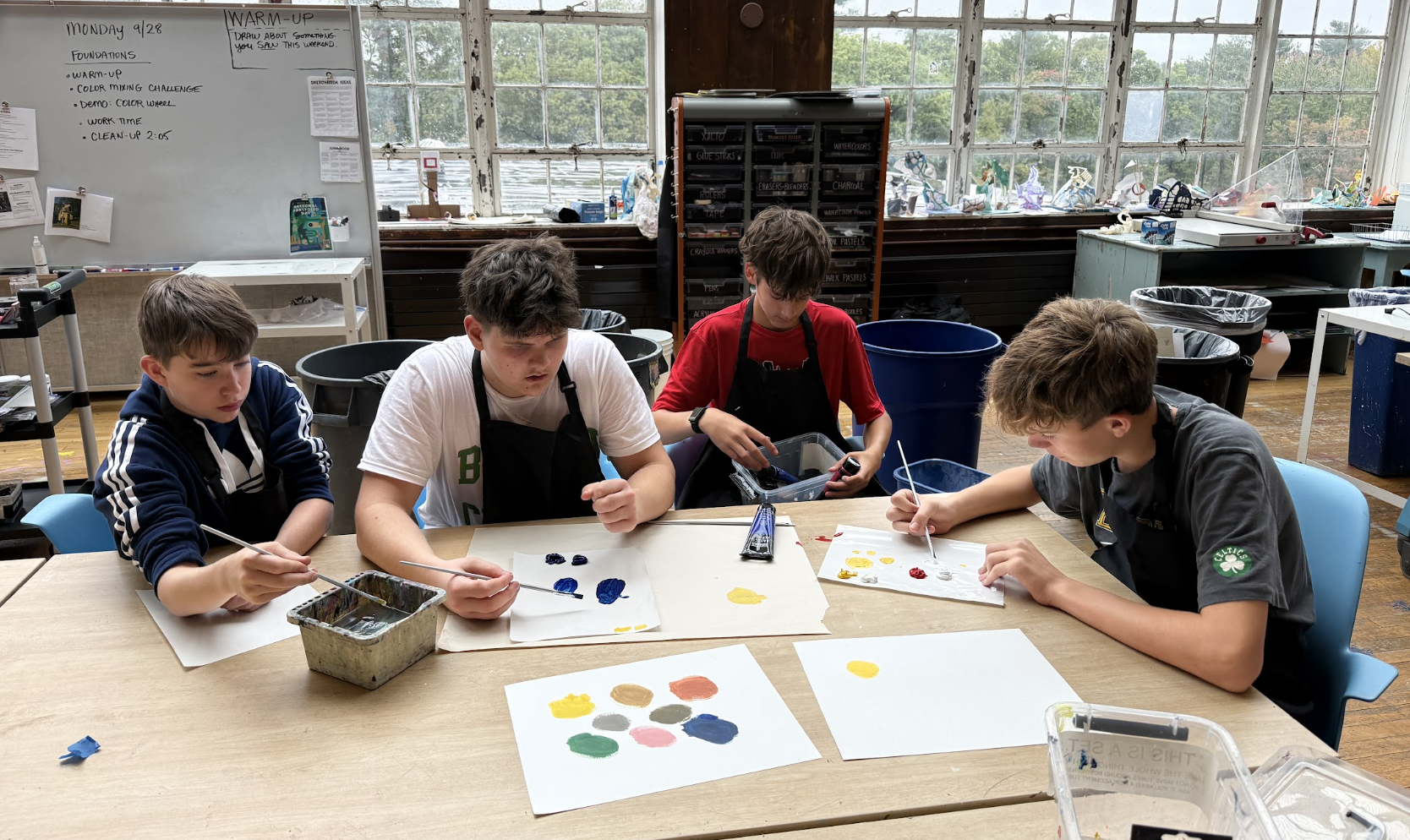
Student work from Visual Arts Foundations is currently on display in the Griffin Gallery.
One of my biggest goals is to have students pay attention and look at things, think about what they’re seeing, and have confidence in their imagination. Whether that’s with poetry or a math problem, I want them to know that they can always come up with ideas.
Rebecca Roberts, Upper School Visual Arts